
Episode 187
Ep. 187: SportsLegs & Air Quality: The Canary in the Coal Mine of Climate Change?
In this episode:
Welcome back to another episode!
Leslie Keener, the mastermind behind the Running Up for Air series, joins us to discuss how her initiative is turning endurance sports into a battleground for air quality awareness. Picture this: runners scaling mountains, huffing and puffing not just from the effort, but also from the smog. It’s a wild concept that started when one guy realized he was training for a race in a polluted valley while breathing in what could only be described as a toxic miasma. Talk about a wake-up call!
Leslie takes us through the evolution of this project, which has grown from a one-man show to a series of races across multiple states, all aimed at raising funds and awareness for air quality issues. We discuss how air quality is the canary in the coal mine for larger environmental crises, making it a topic that transcends politics and unites people from all walks of life. It’s fascinating and a bit terrifying to think that the air we breathe can serve as a harbinger for climate change. But there’s hope! Leslie shares success stories of how these races have not only raised funds but also educated participants about the importance of clean air—because let’s face it, nobody wants to run in a cloud of smog.
Of course, we can't skip our beloved medical mailbag segment, where we tackle the latest in supplement nonsense—this time, a product called Sport Legs. It claims to reduce lactic acid so you can run longer, faster, and without the burn. Sounds like a dream, right? We dig into the science (or lack thereof) behind it, and let’s just say, the results might not exactly make you want to whip out your credit card. This episode is a blend of passion, advocacy, and a healthy dose of skepticism, all wrapped up in a conversation that’s both enlightening and entertaining. So if you’re ready to tackle some serious issues while having a laugh, you’re in the right place!
Segments:
[07:54]- Medical Mailbag: Sportslegs
[28:04]- Interview: Leslie Keener
Links
Transcript
We really had to say we understand this is all related.
Speaker A:Our mission is still about air quality because frankly, the research is pretty evident now that shows air quality is pretty much the canary in the coal mine for greater climate issues that are going to start happening in an area.
Speaker A:So measuring air quality is one of the primary ways you can tell that your climate overall is changing where you live.
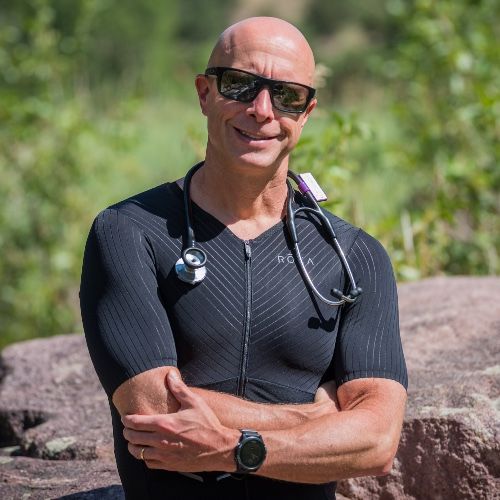
Speaker B: ,: Speaker B:I'm your host, Jeff Zankoff, the tridoc, an emergency physician, triathlete, triathlon coach and multiple Ironman finisher.
Speaker B:Coming to you as always from beautiful sunny and far too warm Denver, Colorado.
Speaker B:Far too warm.
Speaker B:Yes, it's unseasonably warm Christmas this year.
Speaker B:It's been a little bit crazy.
Speaker B:The voice to begin the program, that one that you heard just before I started talk was that of my guest today.
Speaker B:That is Leslie Keener.
Speaker B:Leslie is the Salt Lake City based director of the Running up for Air Race series, a series that benefits a charity that works to bring awareness to air quality and tries to show runners and endurance athletes all across the country in an ever growing number of events how they can impact local air quality and air quality across the country.
Speaker B: the final medical mailbag of: Speaker B:We are going to be looking into the benefits, or at least purported benefits of something that you take before working out.
Speaker B:It is a supplement called Sport Legs.
Speaker B:Is this something that you should be thinking of as something that is going to benefit you in your workouts or is it something that you can potentially take a pass on?
Speaker B:We are going to look at the what science there is on that supplement that comes from Colorado, actually just up the road in Longmont, Colorado.
Speaker B:We are going to take a look at that supplement and give you a sense of whether or not it is something that you can use on this Boxing Day to use the money that you get from any gifts you may be returning to the store today or over the weekend.
Speaker B:Should you use that money to buy Sport Legs or is this something you can give a pass?
Speaker B:We'll let you know very shortly.
Speaker B: l episode of this podcast for: Speaker B:In the year of multisport we had a sensational Ironman Pro series.
Speaker B:We had a interesting T100 professional series as well.
Speaker B:That went throughout the year.
Speaker B:It began all that time ago back on the North American side anyways, at Oceanside, where we had a, as always, fantastic professional race and ended just recently at the Le Quinta race, where at least in North America, at the same time, we had races in Bahrain, we had races in Qatar, we had races all over the world.
Speaker B:And in between we were treated to just a sensational amount of racing both professionally and in the age group ranks.
Speaker B:Throughout the year there were stories that are memorable, like the epic battle that we saw in Kona this year between the women at the front of the race, Lucy, Charles Barkley and Taylor Knipp.
Speaker B:I don't think that will be a story that, that anyone will soon forget.
Speaker B:We had tremendous racing in Nice, the final time that we will see the Ironman World Championship battled for in such an amazing place with its incredibly difficult course, where we saw a Norwegian rookie take the win on the men's side, of course, a Norwegian rookie took the win on the women's side as well.
Speaker B:After Nib and Charles Barkley had their incredible collapses late in the marathon, we had 70.3 world championship races that went equally exciting.
Speaker B:We had the men coming down to a sprint finish with Jella Gaines taking the tape over Christian Blumenfeld.
Speaker B:And on the women's side, Lucy Charles Barkley redeeming herself for what happened in Kona with the win at the 70.3 distance.
Speaker B:And along the way we had all kinds of excitement in the T100.
Speaker B:We had, of course, Hayden Wilde just dominating the circuit despite having a horrific bike crash early in the year.
Speaker B:After really starting off very well, he was derailed by a really bad bike crash and made just a tremendous recovery to be able to come back on the back half of the season and win pretty much everything in sight.
Speaker B:The T100, though, didn't really distinguish itself this year.
Speaker B:They had that fiasco in Dubai.
Speaker B:They had a lot of fits and starts, as has been the case as this organization continues to try and find its footing.
Speaker B:They now have a big merger coming with World Triathlon and they are going to be essentially taking the reins from World Triathlon, it would seem.
Speaker B:And yet I find myself wondering, can this organization that doesn't really have this great of a track record, are they the ones that we want to be representing triathlon at the level of the Olympics?
Speaker B:I guess we're going to find out because I don't really see that we're going to have much of a say in the matter or much choice.
Speaker B:So Time will tell.
Speaker B: We'll see what happens after: Speaker B:So we'll see what happens.
Speaker B: And: Speaker B:We have seen great growth here together and that is a testament to your continuing to tell others about the podcast that I adore bringing to you and that obviously you like listening to because you have shared it with people.
Speaker B:You have continued to leave ratings and reviews and that means the world to me and I can't thank you enough for it.
Speaker B:We've seen great growth in numbers.
Speaker B:We seen continued interesting questions coming through on the tridarc Podcast Facebook group and by email.
Speaker B:And with those interesting questions, the podcast looks really healthy.
Speaker B: Heading into: Speaker B:The interns are busy doing research on all of the things that you keep asking about, so keep it coming.
Speaker B:I am excited to continue this journey with you.
Speaker B:It is something that I very much enjoy doing and something that I am hopeful will continue to A source of information for all of you as we move into the new year.
Speaker B: As: Speaker B:If you are living anywhere in the Western Hemisphere, you will know what I'm talking about.
Speaker B:I don't really want to insert too much of the real world into the what I guess is a respite from that.
Speaker B:Here on the tridog podcast we all have to acknowledge that things are not necessarily that easy on a day to day basis.
Speaker B: is going to get you moving in: Speaker B:I look forward to being with you, to helping you find your way forward and as always bringing you information on what the best means are to train, to race and to recover.
Speaker B:Thank you for being here.
Speaker B:I am absolutely privileged and find it to be a true honor to be speaking to you every couple of weeks.
Speaker B:With that, let's move to the Medical Mailbag.
Speaker B:Coach Juliet will be here with me.
Speaker B:Just on the other side of this.
Speaker B:It's this is the Boxing Day edition of the Tridoc Podcast.
Speaker B:It is time for the Medical Mailbag.
Speaker B:We have.
Speaker B:We are cycling through our serotonin that we have from Our turkey dinner last night.
Speaker B:We have enjoyed all of our new gifts, our new technology that we're going to be employing in triathlon next year.
Speaker B:But joining me right now to talk about all of this and of course answer a new question from a listener, is my friend, my co host, Juliet Hawkman.
Speaker B:How are you, Juliet?
Speaker B:Are you enjoying your Boxing Day morning?
Speaker A:I am, I am.
Speaker C:Do you know the origin of why this is called Boxing Day?
Speaker B:Oh, I'm so glad.
Speaker B:I have read various versions of the books.
Speaker B:I've read two things.
Speaker C:What have you read?
Speaker B:Yeah, so the big one and the one that's like, always stuck with me is it's just about you put things back in the box and you bring it back.
Speaker B:But that always seemed, I don't know, too flippant.
Speaker B:But I think there's probably something British to it.
Speaker B:So why don't you give me the British version?
Speaker C:So I've heard that secondary one as well.
Speaker C:Not so much.
Speaker C:So you take it back to the store, but you put all the decorations away.
Speaker C:Away in boxes and you pack up Christmas.
Speaker C:Yeah, But I think that its real origin is this is actually the day that you gave gifts to all the help.
Speaker C:And so you gave boxes of gifts to all of your huge household staff of 25 or 30 people, from the footman to the dairy maid to the right.
Speaker C:I don't know.
Speaker C:Whatever.
Speaker B:And that because lords are leaping, the maids of milking.
Speaker C:The maids of milking.
Speaker C:Because Christmas Day they were serving you.
Speaker C:Right.
Speaker C:And then on the next day they get the day off and you give them gifts.
Speaker C:That's what I thought about.
Speaker C:And my family's British.
Speaker C:I feel like I have a little bit of a credible source.
Speaker B:I like that.
Speaker B:I like that.
Speaker B:I like that.
Speaker A:What did you heard?
Speaker B:Just what I said about putting things away and about returning things to the store.
Speaker B:And I always liked the Bob and Doug McKenzie version, which was you have Boxing Day and that's followed by Wrestling Day.
Speaker B:That was very nice.
Speaker C:I had not heard that one.
Speaker B:You haven't heard the takeoff, eh?
Speaker B:You haven't heard their version of the Twelve Days of Christmas?
Speaker B:No.
Speaker B:I'll send it to you afterwards.
Speaker B:Anyway, we are actually recording this before Christmas, but you will be hearing this after Christmas.
Speaker B:We certainly hope that you all had a wonderful holiday and that you will now sit back next to the fire, enjoy whatever gifts that you did get, and listen to another episode of the Medical Mailbag.
Speaker B:And we have a listener question to answer.
Speaker B:We always love when we get those.
Speaker B:So what are we looking at today, Juliet?
Speaker C:So this Question.
Speaker C:Or this product, I was saying to you before we started recording, is probably amongst the most outrageous.
Speaker A:I'm just going to put it out there right away.
Speaker C:I'm just going to show my bias.
Speaker A:From minute one here.
Speaker A:This is one of the most ridiculous products I think I've seen.
Speaker C:Anyway, it's a product called Sport Legs and it is from a company in Longmont, Colorado.
Speaker C:So your home state.
Speaker C:And what it claims to do is to basically reduce the production of lactic acid during a workout so that athletes can perform, can push through the pain, push through the burn, or perhaps reduce.
Speaker C:Eliminate the burn altogether and push themselves to another level.
Speaker C:Workout after workout.
Speaker C:And you dose yourself according to your body weight.
Speaker C:And they've been reviewed and acclaimed by such huge medical sources like USA Today and Beisley Magazine, so it must be true.
Speaker C:But I know that your intern team did a deep dive on this too.
Speaker C:Understand what this product said it does and the science behind it claims.
Speaker C:So what did you guys find out?
Speaker B:Nina Takeshima was.
Speaker B:The Internet looked at this, and she started our meeting by saying this was one of the easier ones I've had to do because it was a pretty straightforward answer.
Speaker B:The concept behind Sport Legs is.
Speaker B:I don't really know where this theory came from, but it's an interesting one and we should just give a little bit of background to it.
Speaker B:So I was telling you before we started that biochemically and physiologically, our bodies strive to maintain what.
Speaker B:What's called homeostasis.
Speaker B:And we have all of these very intricate and complex sort of systems that are just all working to make sure that no matter what we do to ourselves, the internal milieu remains as constant as possible.
Speaker B:So you want to go out and run in the heat.
Speaker B:We have all of these systems that are going to work to cool you off.
Speaker B:You want to go ski in the cold, you have a whole bunch of other systems that are gonna work to raise your body temperature and keep you warm.
Speaker B:You wanna drink a whole bunch of free water.
Speaker B:Well, that water's gonna get absorbed and start to dilute your electrolytes, your sodium and all of the.
Speaker B:You have a ton of different processes that all happen automatically to get rid of that free water, to make sure that your electrolyte levels stay as quick, constant as possible.
Speaker B:So the concept or the theory that Sport Legs is based on is leveraged on this idea of homeostasis.
Speaker B:And the idea is that our cells don't like to produce lactic acid, which is true.
Speaker B:It's not something they do normally.
Speaker B:They really produce lactic Acid under conditions where there is an outstripping of supply and demand.
Speaker B:So our body is.
Speaker B:We're pushing our body to do exercise or do whatever it is we're doing beyond the ability to provide oxygen to fuel the exercise.
Speaker B:And once we do that, then our cells tip over into what's called anaerobic metabolism and start producing lactic acid.
Speaker B:And this results in.
Speaker B:You can feel the lactic acid, if it feels uncomfortable, it makes you feel a little bit nauseous when it gets into the bloodstream, it makes that sort of burning sensation in your muscles, at least temporarily, and then it all resolves, goes away.
Speaker B:The idea is that these folks at Sports legs have come upon is that, well, the body doesn't like to have lactate, so maybe we could saturate the system with lactic acid beforehand.
Speaker B:And that way we will shut down all of your cellular mechanisms because we'll load up, we'll show the cells that, hey, look, there's all this lactic acid around.
Speaker B:And so your cells are going to now shut down the processes by which lactic acid is going to form.
Speaker B:And therefore we can inhibit this process.
Speaker B:So by providing exogenous lactic acid, endogenous lactic acid won't form.
Speaker B:And so therefore, we're going to allow you to now be able to perform with a higher VO2 max, so they say, and you won't produce lactic acid.
Speaker B:It's going to be this amazing sort of idea.
Speaker B:And on paper it sounds great, but the question is, you know, does it actually work?
Speaker C:Does it work?
Speaker C:Yeah.
Speaker B:If you go to their website, and this is a great example, and we've talked about this, Juliet, I've said, I've told you, like, a lot of these things go to their website, look at, look for their science, right?
Speaker B:And to their credit, Sportlegs has a science page, and on their science page, they list a bunch of papers.
Speaker B:The problem with these papers that they list are that none of the studies they talk about actually talk about their product or actually talk about the mechanisms that are actually being used in this whole idea.
Speaker B:They say that Sportlegs is a supplement that's composed of lactate compounds.
Speaker B:So you and I were talking before, I should clarify.
Speaker B:Lactic acid is what our cells produce that dissociates into a hydrogen ion, which is the acid, and then lactate, which is an anion, a negatively charged compound, lactate can be combined with other positive chemicals.
Speaker B:So you can make calcium lactate, you can make magnesium lactate.
Speaker B:And that's what these guys have done.
Speaker B:They've packaged calcium lactate, magnesium lactate, vitamin D, and they put it into a capsule.
Speaker B:You take this capsule and then you flood your system with lactate, so they say, and you're supposed to take it 30 minutes before exercise, you're going to get your blood lactate levels high.
Speaker B:Now, lactate, interestingly, can be used as a source of fuel.
Speaker B:And our bodies, when we produce, when we get into anaerobic metabolism, we're producing all this lactate.
Speaker B:That lactate gets cycled back into our processes, our metabolic processes, and actually gets used as a fuel.
Speaker B:It's not particularly efficient, but it does work.
Speaker B:But taking in all this lactate ahead of time doesn't really work that way, simply because our body would much prefer to do aerobic metabolism using glucose.
Speaker B:So having all this lactate sitting around, basically your liver is going to clear it very rapidly because the liver clears lactate quickly, turns it into bicarbonate.
Speaker B:So I thought it was interesting because we have, on one hand, we have all these products and all these companies telling you take bicarb, take lots of bicarb to buffer your lactate.
Speaker B:And now we have another company telling you, take all this lactate, Lactate.
Speaker B:Yeah, yeah, just fill yourself up with lactate.
Speaker B:It's going to do so well.
Speaker B:So on their site, again, they tell you why or what they're giving you, and they tell you they have all this science, but none of the science is actually related to their product and whether or not it works.
Speaker B:So we went out and really, we as Nina.
Speaker B:Nina went out and she found a few studies.
Speaker B: From: Speaker B:A randomized crossover.
Speaker B:Crossover pilot clinical trial.
Speaker B:It's all in the title in terms of how they did the study.
Speaker B:Everything's there except what the results were.
Speaker B:And that's great.
Speaker B:So basically, they took a bunch of people, they gave them this oral lactate, they popped them onto a cycle ergometer and then they crossed them over so that they were on one hand getting the experimental stuff and then they were getting the placebo and they compared and wouldn't it.
Speaker B:Nothing, zip.
Speaker B:They looked at VO2 peak, VO2 ventilatory threshold, they looked at lactate threshold relative to placebo, they looked at all kinds of stuff and there wasn't a hint of difference between placebo or loading with lactate in these athletes.
Speaker B:And they had 15 athletes here, nine of them men, six of them women.
Speaker B:So again, a nice distribution.
Speaker B:Yep, yeah, good distribution.
Speaker B:That study, not particularly Revealing in terms of any real benefit, we have another one, effective magnesium lactate dihydrate and calcium lactate monohydrate, which is exactly what you're finding in this compound on 20 kilometer cycling time trial performance.
Speaker B: s is from a little while ago,: Speaker B:Only nine recreational to competitive athletes, mostly men, but two women in there.
Speaker B:They did four separate trials on four separate days with a minimum of one day recovery between.
Speaker B:They did one VO2 max test to determine fitness and perceived exertion.
Speaker B:And then they did three 20 kilometer cycling trials and they were consuming placebo or sports legs before one hour before each of these trials.
Speaker B:And so again, they didn't know what they were taking.
Speaker B:They crossed over.
Speaker B:They served as their own, their own control.
Speaker B:And there was again no difference in anything.
Speaker B:No difference in the time that it took for them to do the 20k, no difference in the power they put out, no difference in their heart rate.
Speaker B:Perceived exertion was slightly higher for the placebo.
Speaker B:I don't really know what that I'm supposed to take away from that, given that's a very subjective sort of thing.
Speaker C:Yeah, yeah, yeah.
Speaker B:And then we just.
Speaker B:That was the only two real studies we found on this.
Speaker B:We did find another one.
Speaker B:Effects of oral lactate consumption on metabolism and exercise performance.
Speaker B:Just basically talking about the theory of all of this and really just not giving it.
Speaker B:It didn't look an experiment at all.
Speaker B:So basically there's really not a lot out there on this.
Speaker B:But what there is out there on this is that it doesn't work.
Speaker C:Right.
Speaker B:And I was quite surprised to see a very slick website with some pretty big anecdotes, big testimonies about how.
Speaker B:What did they say about the Tour de France?
Speaker C:Yeah, it's legal to use and you won't get.
Speaker A:It works and it.
Speaker C:You won't get kicked out of the Tour de France.
Speaker C:I think was the line, something like that.
Speaker C:Yeah, actually works and you won't get kicked out of the Tour de France.
Speaker C:It's funny that you have that reaction to the website because first of all, the name, I immediately thought of frog legs.
Speaker C:Maybe I was hungry, I don't know.
Speaker C:But anyway, that was my funny.
Speaker B:When I'm hungry, I don't think of frog legs.
Speaker A:I don't either, but I don't know.
Speaker C:Who, I don't know.
Speaker C:Anyway, that was my first thought, like who, what marketing committee sat around and came up with that name.
Speaker C:But anyway, and then when I went to the website and I saw the way it was laid out, I thought, oh my God, I could have written, I could have created this website.
Speaker C:This is like a five panel standard WordPress website.
Speaker C:There's nothing exciting about it.
Speaker C:There's, it's, I don't even think it's a great website.
Speaker C:But anyway, I was, I may have been pre biased.
Speaker C:Yeah.
Speaker B:The interesting thing though is that I started looking around and this is out there like people are using those, people using it and it's not, it's not inexpensive.
Speaker B:I guess as supplements go, it's one pack of 120 is 35 bucks.
Speaker B:And depending on how much you weigh, you have to take as many as, I think you have to take as many as four or five of these tablets before your exercise.
Speaker B:Now there were a couple of things that came up also in looking at some of these other studies, Nina found a paper looking at just like oral supplementation with lactate.
Speaker B:And she found that a lot of these times when you take these oral lactate supplements, most of it doesn't even get into your blood.
Speaker B:So even if the theory about saturating your blood was sound, the practice is not actually bearing out because the stuff you're putting into your gut is not making it into your bloodstream, at least at levels that would do what the theory suggests it might do.
Speaker B:Yeah, but it's all predicated on this idea that doesn't make a whole lot of sense because we see in medicine patients who come in with extraordinarily high lactates for a couple of different reasons.
Speaker B:You can develop lactate because There's a type 1 lactic acidosis is where you're basically, your system is just not, you're not getting enough oxygen to your cells.
Speaker B:And that happens in shock, basically.
Speaker B:And then there's type 2 lactic acidosis, which is oxygen delivery is fine, but your mitochondria are not working properly because they're inhibited by a poison or a medication or whatever.
Speaker B:And in those situations then lactates can they just skyrocket.
Speaker B:You'll see patients with lactates of normal lactate is less than 4.
Speaker B:We'll see patients with lactates of 30, 40, just crazy numbers.
Speaker B:And in the type 1 lactic acidosis, which is just think about an athlete, it can get high 10, 12, it gets pretty high.
Speaker B:And just the fact that it's rising doesn't stop the production.
Speaker B:Like it just doesn't happen that way.
Speaker B:We know from real world situations of illness that the rising levels of lactate does not inhibit further production.
Speaker B:So it seems Crazy to me that somebody would think that saturating the blood with lactate in a healthy person would somehow inhibit the production down the road.
Speaker B:The other thing I wanted to point out is that, and this came up in a study, understanding what is lactic acid and its impact on performance.
Speaker B:A lot of people had this idea that delayed onset muscle soreness, or just that soreness you have in your legs after a hard effort for several days.
Speaker B:People thought that was related to lactate and that there's.
Speaker B:You have to wait until the lactate gets cleared out of your muscles.
Speaker B:That is not the case.
Speaker B:We know better now.
Speaker B:We know that lactate is actually cleared very rapidly, usually in the order of no more than half an hour to an hour after you cease exercise.
Speaker B:Any burn or any discomfort you feel in your muscles afterwards is related to the micro tears and really just the damage you've done to your muscles, which is, we know, is necessary to actually build them up and make them stronger and more resilient.
Speaker B:And that's part of training.
Speaker B:Right?
Speaker B:So when you do a hard effort and you feel sore afterwards, it's not from lactate.
Speaker B:It's from that micro trauma that has to be repaired.
Speaker B:Lactate initially, though, does cause some burn.
Speaker B:When you get anaerobic, you may feel some burn in the muscles that can be due to the lactate locally, but that goes away very quickly, as we know.
Speaker B:So it's yet another one.
Speaker B:Like you said, this one's a little bit.
Speaker B:But yeah.
Speaker B:And this was.
Speaker B:This came from a listener.
Speaker B:I do want to give credit to the listener.
Speaker B:It was Forrest.
Speaker B:Ellis.
Speaker B:Right.
Speaker B:I think that was the name.
Speaker C:I don't remember if you mentioned who it was.
Speaker B:I sent you the name, but I believe that was the name.
Speaker B:Forest Ellis sent us in.
Speaker B:So thank you very much.
Speaker C:No, Ellis, the other way around.
Speaker C:Ellis Forest.
Speaker B:Ellis Forest.
Speaker B:I apologize.
Speaker C:Thank you.
Speaker C:Ellis.
Speaker B:Ellis Forest.
Speaker B:Thank you for sending that question in, Ellis.
Speaker B:Actually, I think was curious because I think he had tried it and wanted to know if it was worth continuing.
Speaker B:And so, Ellis, I want to tell you, please save your money.
Speaker B:Use your money for something better.
Speaker B:This is definitely not really good use of funds.
Speaker C:There's so many things to spend our money on in triathlon, we might as well spend it on something that works.
Speaker B:Yeah, I would send any unused product over to Gus.
Speaker B:Cat, we're still trying to locate.
Speaker B:Oh, God, our friend.
Speaker B:Hey.
Speaker B:He's always looking for shortcuts.
Speaker C:Yeah, apparently.
Speaker C:Okay.
Speaker A:You'Re gonna find out it really.
Speaker C:Is a person and not a chat bot.
Speaker C:And then you're gonna be in trouble.
Speaker B:No.
Speaker B:No trouble here.
Speaker B:No trouble.
Speaker C:Yeah.
Speaker B:All right.
Speaker B: got for this last episode of: Speaker B: have a good one coming up in: Speaker B:2020.
Speaker C:Yes.
Speaker B:The why question.
Speaker B:I'm looking forward to that.
Speaker B: you have any last wishes for: Speaker C:Yesterday was the shortest day of the year.
Speaker C:It also happened to coincide with the last day of Hanukkah for those of you who celebrate that.
Speaker C:And so I feel like now everything is just going.
Speaker C:The days are getting longer.
Speaker C:Light is returning.
Speaker C:You can look at this in all kinds of ways, metaphorically.
Speaker C:Hang in there for these last few dark days, and we'll see you at the beginning of the year.
Speaker B:I love that you mentioned that, because I love to tell my kids, like, oh, I could totally feel the day's longer today.
Speaker A:This morning is 7:00'.
Speaker D:Clock.
Speaker C:I'm like, it's still dark.
Speaker C:Okay.
Speaker B:Yeah.
Speaker B:Yeah.
Speaker B:But it's like, what?
Speaker B:It's a minute or two longer the day today.
Speaker B:I don't care.
Speaker B:The day is finally longer than it was yesterday.
Speaker B:And I love to send our friend Kelly a message on this day and tell her, you're on the downswing.
Speaker B:We're on the upswing.
Speaker C:Yes.
Speaker A:You should explain that.
Speaker C:Kelly lives in Australia, so she's opposite.
Speaker B:Yeah.
Speaker B:Of course, she lives in a place where it doesn't.
Speaker B:Winter is not really much to fuss about, but, yeah, I.
Speaker B:Same as you as heading to December 21st just drives me nuts.
Speaker B:And then as soon as we're on the other side of that, I just feel so much more buoyant.
Speaker C:It's a good thing to convince yourself.
Speaker A:Of, since we still have to weather.
Speaker C:January and February, but it's nice.
Speaker B:Yeah, but I could do it.
Speaker B:I could do it.
Speaker B:Now the hard part's over.
Speaker B:The sad part for me is that the summer solstice just feels like it comes way too early.
Speaker B:Yeah.
Speaker B:I just feel like July and August.
Speaker B:I don't want the days getting shorter.
Speaker B:They need to stay longer.
Speaker B:All right, enough about that.
Speaker B:All right, guys, we really appreciate you being here for another year.
Speaker B:We are so grateful.
Speaker B:I just can't say enough about it.
Speaker B:And thanks.
Speaker B:And thanks for all your questions.
Speaker B:Please keep them coming.
Speaker B:We have nothing but enthusiasm to get your questions answered and to help you understand and where you should be spending your money for the best thing, best ways to train, best ways to recover, and the best ways to race.
Speaker B:All right, we will see you next time, Juliette, in a new year.
Speaker B:Enjoy the last Waning Days and Happy New Year and we'll talk to you then.
Speaker C:Same to you.
Speaker C:Thank you.
Speaker B:My guest on the podcast today is Leslie Keener.
Speaker B:Leslie currently serves as the program director for the Running up for Air series, or rufa, a collection of endurance events that has been created to amplify informed dialogue and empower organizations that are actively working on air quality solutions.
Speaker B:The proceeds from up for Air events are directed at carefully selected nonprofit groups who demonstrate high value influence strategies.
Speaker B:RUFA currently has seven races across four states of the United States and is looking to expand both within the US and internationally in the near future.
Speaker B:In addition, RUFA, in partnership with Patagonia, has hosted an International Day of Clean air that saw 252,000 people participate, but for now in a much smaller group of people, just the two of us.
Speaker B:Leslie is here to chat with me on the Tridoc podcast and I couldn't be happier.
Speaker B:Leslie, thank you so much for taking some time to join me here today.
Speaker A:Yeah, of course.
Speaker A:Thanks for having me.
Speaker B:So we got a chance to meet on the Global Sustainability Group where we were talking about clean air and air pollution, really as it pertains to endurance sport.
Speaker B:And that's where I learned about the really, I think, exciting series that you have been working with.
Speaker B:Can you tell my listeners a little bit about where it came from, what was the genesis of it it and how it got to be where it is today?
Speaker A:Sure.
Speaker A:It has a really interesting background in that it was essentially one man who really wanted to make a difference.
Speaker A:Our founder is Jared Campbell, who a lot of people might know from his Hard Rock 100 or the Barkley Marathons fame.
Speaker A:He's been in a lot of those documentaries.
Speaker A:But while he was training for particularly the Barkley Marathons, that race is in early spring.
Speaker A:So what that means is his heaviest training here in Utah was in the thick of our winter.
Speaker A:And so what he is famous for is finding really awful bushwhacky routes straight up and down a mountain.
Speaker A:He gets a lot of vert really quick.
Speaker A:We have one particular mountain featured in Salt Lake Valley that's called Grandeur Peak and particularly the west side of it.
Speaker A:It's about 2.2 miles up and you gain 3,300ft in those 2.2 miles.
Speaker A:That was his training ground for Barkley.
Speaker A:He would do laps up and down grandeur.
Speaker A:And what we have here in Salt Lake in the winter is something that we now call an inversion and is commonly known as that where the cold air traps pollutants below the Cloud level, particularly because we're in a valley between mountains.
Speaker A:So Jared was experiencing this phenomenon where he started at the bottom at his house in Salt Lake.
Speaker A: t point in time, this is like: Speaker A:We just have cloudy days in the winter.
Speaker A:It's cloudy.
Speaker A:He starts ascending up the mountain at some point, about a third of the way up or halfway up, you get above the clouds, which we know now is the inversion and it's a bluebird day.
Speaker A:And he was, this was top of mind where he was summoning the mountain, realizing that the clean air was up top, descending back into it every time and thinking, wow, my family and friends are all living in this, this can't be good.
Speaker A:And what can we do about this both to bring awareness and to bring change.
Speaker B:Can I just interrupt you for just a second because I want to hear the rest.
Speaker B:But we also deal with that inversion here in Denver.
Speaker B:I just want to point out that when you talk about the inversion, you're not talking about necessarily trapping the warm air, which is what is happening, but you're trapping pollutants.
Speaker B:Really.
Speaker B:The cloud was not moisture.
Speaker B:The cloud is actually smog and air pollution.
Speaker A:Yes, that's correct.
Speaker A: inction to make is that early: Speaker A:And that is a lot of the language we heard is, oh, this we get really cloudy days in the winter.
Speaker A:People were describing it as cloudy, but not understanding it was because the cold air of moisture was trapping the warmer air beneath.
Speaker A:But that warmer air also contained things that you do not want to be breathing, which are that particulate matter which tends to get stuck underneath that cold layer of air.
Speaker B:So he sees that when he ascends the mountain, he gets into the cooler, cleaner air and from that decides he wants to do what?
Speaker B:Exactly.
Speaker A:So he had learned from a friend about an organization called Breathe Utah, which did work on air quality issues on a local level, mostly at a legislative level.
Speaker A:And he decided he was going to run a one man fundraiser and he was going to essentially do a like a jump rope for heart type idea where he was going to see how many laps he could do up and down the peak within 24 hours.
Speaker A:And people pledged money to him for doing that feat of endurance.
Speaker A:Everything that got pledged to him during those first few years he then donated to Brave Utah.
Speaker A:And it became a little bit just of an organic thing where other runners in the valley or friends of his started saying, oh, I'm going To join you for a lap, or I'll join you for four laps, or I'll join you till I can't run any longer.
Speaker A:And in that way, the fundraiser became larger and larger, and that really turned into.
Speaker A: In: Speaker B:And how many people participated that first year and how much money was raised?
Speaker A:Oh, that's a really good question.
Speaker A:I want to say, on average, in the early years, we were looking at about $100,000 raised, which was a huge sum for a very small group of people.
Speaker A:I think it really caught on at first, and that's what really led the growth of people in other cities to say, this is a really cool idea.
Speaker A:We also have this problem, and we want to do this as well.
Speaker B:So where are the other seven race or the other six races currently being held?
Speaker A:Great questions.
Speaker A:Right now we have four in Utah.
Speaker A:We have one about.
Speaker A:So Salt Lake City is the main one.
Speaker A:We have one that's an hour north of us in a city called Ogden.
Speaker A:One that's about an hour south of Salt Lake in Provo area.
Speaker A:And we also have one in Moab.
Speaker A:So those are the four in Utah.
Speaker A:And then we have one in Denver area that's called Stoughton Rock State Park.
Speaker A:We also have one in.
Speaker B:I'm like, I've never.
Speaker B:No.
Speaker B:First of all, I don't know where that state park is.
Speaker B:Second of all, I didn't even know this event existed in my, like, hometown.
Speaker A:Yeah, it's a great one.
Speaker A:I have since learned that a lot of runners say that it is particularly known for being very windy and very icy all winter, and it's a maximum testing ground of how much you're willing to endure in the winter months by running there.
Speaker B:Yeah, probably not for me, but all the same.
Speaker B:Okay, that's five.
Speaker B:Where are the other two?
Speaker A:And then we have one in Montana in Missoula.
Speaker A:And then we have two in Washington, one east of Seattle and one in Bellingham.
Speaker A:Yep.
Speaker A:And so that is our current roster, but expanding quickly.
Speaker B:And all the funds are going to charities that are local to each of the races.
Speaker B:Or are they coming back to you and being dispersed from there?
Speaker B:How does it work?
Speaker A:Our format is that we really want each race location to partner with.
Speaker A:Typically, it's one organization.
Speaker A:There are a few places that partner with more than one, but organizations that are local to where that race is held, that are working actively on local air quality issues.
Speaker A:We want to provide a great experience on race day and an introduction to this topic and the community around this topic.
Speaker A:But our ultimate goal is that we're hooking people up with these other partner orgs and so that they feel like they now have a relationship with that organization.
Speaker A:They're attending other events throughout the year, they're doing advocacy work with those organizations, so that.
Speaker A:That this is just really the starting point of them kind of diving into making an impact on the issue.
Speaker B:I want to focus a little bit on Utah because I have not spent a ton of time in that state, but the time that I have spent there always strikes me as such a study in contrasts.
Speaker B:You have a state that has just incredible natural beauty in so many places and in so many ways.
Speaker B:Clearly a very large population that is very interested in environmental stewardship and yet a government and clearly a large number of the population that is just not interested in environmental stewardship.
Speaker B:We see, for example, I think of the two places that I've spent the most time, one of them is St. George, middle of a desert, a growing city that is clearly unsustainable.
Speaker B:It is already exceeded what its resources could possibly sustain.
Speaker B:And it has.
Speaker B:It shows no signs of stopping.
Speaker B:And then Salt Lake City, the other place that I've been to, a really beautiful area, but almost like an environmental disaster in slow motion with the disappearance of the Great Salt Lake.
Speaker B:The name sake of the city, when I was there for.
Speaker B:When I was there recently, which is really just the second time I've been there.
Speaker B:It was the first time I had a chance to go up to a high point and recognize that you just could not even see the lake.
Speaker B:It's receded so far and I've read quite a bit about why that is and all of the powers that are at play and all of the different warring factions about water rights and everything else.
Speaker B:So.
Speaker B:So how much have you run into resistance in terms of actually seeing the fruits of your labor result in real change?
Speaker B:And how much have you been encouraged by the fact that you clearly have this groundswell of support?
Speaker A:Yeah, it's been a really interesting place to navigate that.
Speaker A:I think that is one of the reasons that we focus on air quality.
Speaker A:We are not ignorant to the fact that air quality is part of the larger climate disruption, climate change issue.
Speaker A:Because of our roots, where we started using any terminology around climate change or any of those words is automatically very divisive and could be turned off quickly and for some reason Air quality is an issue that everyone has been able to unite behind.
Speaker A:So even from the political level where people, politicians maybe have said things about climate change not being an issue or that's not top of their priority on their agenda, air quality is something that a lot of people have recognized is an issue, particularly in the city or in the Salt Lake County.
Speaker A:That is something we've always been able to get behind and be able to reach both sides of the aisle about some interventions to help that.
Speaker A:The challenge for us has been as we go to other states, there's a lot of other states that deal with some air quality issues, a lot of other air quality environmental issues.
Speaker A:Maybe it's more of a wildfire smoke issue and there aren't these designated charities that are just dealing with air quality, we've really had to say, we understand this is all related.
Speaker A:Our mission is still about air quality because frankly, the research is pretty evident now that shows air quality is pretty much the canary in the coal mine for greater climate issues that are going to start happening in an area.
Speaker A:So measuring air quality is one of the primary ways you can tell that your climate overall is changing where you live.
Speaker B:You're trying to backdoor things a little bit, work on the air quality.
Speaker B:Maybe they'll get their head out of the sand and recognize everything else that's going on.
Speaker B:On.
Speaker B:Yes, not a bad strategy.
Speaker B:Anything that gets people to open their eyes.
Speaker B:That's how I always think about it.
Speaker B:You're not supposed to be able to see the air.
Speaker B:If you can see the air, there's a problem.
Speaker B:And while everybody just tries to pretend because, you know, you can't see temperature when it's hot, people just, they go where it's air conditioned and it doesn't bother them anymore.
Speaker B:But if you can see the air that's supposed to be invisible, that's obviously a problem.
Speaker A:Yeah.
Speaker B:What kinds of successes have you had?
Speaker B:You're obviously your successes for you are fundraising.
Speaker B:But what have been some of the tangible successes that your fundraising has led to?
Speaker A:I think the first success we experienced early on was just pure education.
Speaker A:So there were a lot of endurance athletes that said I had no idea, like, I would never think twice about running regard.
Speaker A:I didn't even know how to look up the AQI or that AQI should perhaps dictate when I train or where I train.
Speaker A:So I think education was an early win.
Speaker A:I think in a lot of areas now the education is a little bit more progressed.
Speaker A:And I don't think we're coming across many people that have not heard of these issues before, particularly in the endurance space.
Speaker A:Where we'd like to have more of an impact is we traditionally see undervalued populations are living in the areas of worse air quality and they don't know it necessarily.
Speaker A:They don't have the education now.
Speaker A:So I do think we have the opportunity to educate a greater audience versus the extreme endurance athlete that has traditionally been who our participants are.
Speaker A:And then I think activism, I would list as second just the fact to get people thinking about what are the little changes they can make in their everyday lives that reduce their carbon footprint and lead to better air quality.
Speaker A:How can people have conversations with their circles, their friends, their family about this issue and why it affects them?
Speaker A:I think everybody has a story to tell around it and just getting people to have the conversation feels like a huge win versus where we were 10, 15 years ago, where no one was having this conversation.
Speaker A:And then of course the funds like ultimately we are partnering with these organizations because we believe in the work that they do, we believe in the continuing events and education that they're providing to the local public.
Speaker A:So giving them more funds to do the real work, especially when that impacts legislation, I think is a big part of it.
Speaker A:That, that feels really great just to know that we have a small part in helping these people that are fighting the good fight.
Speaker B:Can you give me a sense of some of the groups you've worked with?
Speaker B:I read in the intro about how you partner with organizations that are carefully selected groups who are going to demonstrate high value influence strategies.
Speaker B:Can you paint a picture of maybe one of those groups and what they do and what they look like?
Speaker A:Sure, yeah.
Speaker A:I'll start local because that's one of our longest standing relationships.
Speaker A:But here in Utah, our longtime partner has been Utah Clean Energy as well as Breathe Utah, both fantastic organizations that are using a huge amount of their funds to go towards legislation education through in the local community.
Speaker A:Breathe Utah focuses a little bit more on affecting legislation.
Speaker A:They're really involved during the legislative sessions with trying to push bills and acts through that will bring about more clean energy or better awareness about air pollution.
Speaker A:And then Utah clean energy is just at the forefront of really, I would say, number one, trying to electrify everything that they can in the state or get clean energy as a source in the state.
Speaker A:A huge amount of grants for putting solar panels on buildings, a huge amount for getting wind farms and solar farms and things like that throughout the state, getting people to transition.
Speaker A:And really I think one of the things they've helped Me with the most is understanding all of the rebates when they were out there, really making sure that people understood how to take advantage of those, what the cost benefit analysis of those things really were.
Speaker A:And they do a really good job of simplifying.
Speaker A:If you are a homeowner, here's a list of easy wins.
Speaker A:Here's something that might take a little bit more money.
Speaker A:If you're currently renting, here are some things you could do here.
Speaker A:If you're an owner of a business, here's some things you could do.
Speaker A:They do a really great job of spelling out little easy wins, that if a lot of people do those things, it can make a big difference.
Speaker B:And what are your personal feelings about where we're at right now?
Speaker B:Because I know myself, it's hard to stay optimistic.
Speaker B:And we're in a time right now where it seems like we can see the writing on the wall, and yet it just seems like more and more people just want to grab more paint and just paint more on the wall.
Speaker B:I just, I feel like for every one of you, there are a lot more people with a lot deeper pockets trying to do the opposite.
Speaker B:So I know you wouldn't be in this line of work if you didn't retain some degree of optimism.
Speaker B:But how do you see things unfolding.
Speaker A:Like many of us, vacillating, like daily or hourly sometimes.
Speaker A:But I think there, there are some things lately that I've heard that give me a lot of hope.
Speaker A:The momentum of the clean industry, especially clean energy industry, is going to.
Speaker A:And there's very little that can stop that because there's finances behind it.
Speaker A:I think it's a hard time.
Speaker A:We do need to ride out a wave of it being less important, but I don't see it going away.
Speaker A:I think if we look at a worldview, we see that much of the world is still progressing along the same rate of cleaning things.
Speaker A:There's a lot of good news out there coming from other countries.
Speaker A:So that gives me hope.
Speaker A:And then there's a lot of good information lately too, that says regardless of what might happen at a federal level, really the biggest difference that's going to happen is what happens on your state and your local levels that's going to make a bigger climate difference than any large law that gets handed down.
Speaker A:I suppose that could be good or bad, depending on where you live.
Speaker A:But it gives me hope that there's.
Speaker A:It's still worth getting very engaged at your local level and figuring out what you personally can do to be part of the solution.
Speaker B:You mentioned earlier the AQI and the importance of getting used to incorporating that into your own personal exercise routine.
Speaker B:That was a big part of what we talked about, you and I, as part of that panel.
Speaker B:I for one felt like it was almost revelationary in a way, because while it was something that I have thought about, I don't think I recognized that it was that much of a on the front burner for a lot of these big organizations that were at that webinar.
Speaker B:What was your takeaway?
Speaker B:And just for listeners who may not know what I'm talking about, there was a webinar recently on air quality and its impact on endurance sport, and both Leslie and myself were panelists on that.
Speaker B:And it was hosted by Global Sustainability and Sport.
Speaker B:And there were many large sporting organizations.
Speaker B:Ironman was represented.
Speaker B:World Triathlon, UCI, just Soccer and various other large sporting organizations from around the world were represented, which I found very impressive.
Speaker B:And just to hear the discussion around how much air quality is actually being taken into consideration for these events, I thought was to me quite surprising because I it seemed to me that it was not.
Speaker B:It was something I thought about personally, but it wasn't something that they were thinking about.
Speaker B:So what did you take away from that conversation?
Speaker A:Yeah, I think my biggest takeaway was similar to yours in that I was just so impressed with the breadth of the different types of sports that were there, listening in, and the number of countries represented.
Speaker A:I really didn't know what to expect going in.
Speaker A:And to see that variety of people that were also thinking about this topic left me really hopeful and really amped up that this is on people's radar and that they are considering it as they plan events going forward.
Speaker A:Yeah, and I do think things are going to have to change.
Speaker A:Seasons of sports might have to change.
Speaker A:Timing of events was one thing we talked a lot about.
Speaker A:I think we're all going to have to pivot based on what environmental conditions are presented to us in areas of the world for the events that we love.
Speaker B:Now for the Running up for Air series, it occurred to me I thought about this right away when I heard about it.
Speaker B:You're starting low, you're starting within the inversion and then running up to the cleaner air.
Speaker B:So that means you're exposing everybody almost purposely into the more polluted air.
Speaker B:Is there any ethical considerations to doing it that way?
Speaker B:Or are you doing it really just because, hey, they'd be down here exercising anyways?
Speaker B:We want to show them the difference and we want to show them what the potential good benefits are if the air was cleaner.
Speaker A:There are definitely some considerations there.
Speaker A:I think the first thing that is a consideration is, number one, do you want hundreds of people driving to an event during a period where you're trying to get people out of their cars?
Speaker A:So the first thing that we try and do is we do carpool, shuttle everybody in the events that it's possible to.
Speaker A:We also incentivize carpooling or using public transport to get to the event in the cases that we aren't able to allow a shuttle.
Speaker A:And we've had some really cool shuttles over the years, all electric.
Speaker A:We had electric buses that held 50 people.
Speaker A:We had shuttle buses that were.
Speaker A:We were testing it, essentially, and some things went wrong and we learned from it.
Speaker A:But it was great.
Speaker A:We got to be part of the development of a electric shuttle bus that hopefully is coming to market soon.
Speaker A:Electric 12 passenger vans, which are coming to the market more and more.
Speaker A:That's one sense of it where we do need to be responsible.
Speaker A:The second part of it is we do monitor the AQI throughout the week of the race.
Speaker A:There's some better technology now where you can predict what the AQI might be a few days out.
Speaker A:We are.
Speaker A:We're communicating that if we see it could be a really bad air event at the start line.
Speaker A:So our ethos has always been, if it is an art quality issue on the day of, you're going to get refunded, we're not going to make you participate.
Speaker A:We've also had a exercise mask partner in the past.
Speaker A:The company's name is Iranium out of Sweden, and we have tested a lot of masks to try and run in.
Speaker A:This one has been the winner so far.
Speaker A:We always give people the choice.
Speaker A:Do you want to mask up?
Speaker A:Do you not want to run today?
Speaker A:Do you want to wait till later and see if it clears up?
Speaker A:That is the irony of it.
Speaker A:I think people are running in that weather anyhow, for the most part.
Speaker A:Hopefully we're not forcing anyone to do that.
Speaker B:How have you modified your own exercise routine to take into account.
Speaker A:Oh, boy, that's a whole podcast.
Speaker A:I have an interesting personal story in that.
Speaker A: I moved to Salt Lake City in: Speaker A:I was in the soccer world for many years, coached professionally and collegiately played as well.
Speaker A:So I had been an athlete all my life.
Speaker A:I moved here within about two years of moving here.
Speaker A:Coaching for a few hours a day, probably outside.
Speaker A:Coaching for four or five hours a day.
Speaker A:As well as my own exercise routine.
Speaker A:I developed some pretty serious lung issues and went to a pulmonologist and for the first time in my life was diagnosed with lung disease and asthma.
Speaker A:I've been contending with that for about 15 years now.
Speaker A:I am pretty rigorous about I don't do well when the AQI is high.
Speaker A:It's actually forced me to move twice.
Speaker A:I've moved higher in elevation twice since I've lived here.
Speaker A:I now live at 7,500ft, so we rarely get poor air this high, but sadly it's coming to our valley back here as well.
Speaker A:I have the purple air monitor at my house.
Speaker A:One inside, one outside because indoor air can sometimes be worse in the winter and I will definitely limit and I'll stay indoors and run on the treadmill and run my air filters.
Speaker A:If it's bad enough, then I know it's going to set me back.
Speaker A:Worse than that worked out outside would.
Speaker B:Wow, that was quite the answer to what I thought was an easy question.
Speaker A:Isn't that a great answer?
Speaker A:I wish I didn't have that answer, but that's one of you.
Speaker B:You certainly have personal experience then to bring to your work.
Speaker B:I guess that must be rewarding in terms of what you're doing.
Speaker B:So that's good.
Speaker B:Leslie Keener, I cannot thank you enough for spending some time talking about this today.
Speaker B:It's been a really interesting conversation.
Speaker B:Leslie is the program director for the Running up for Error series.
Speaker B:If you'd like to know more about their events, I will have a link to the website where you can find out more and see if there's one near you.
Speaker B:And that will of course be in the show notes and I hope that you will check it out.
Speaker B:If not to participate, then perhaps to make a donation or at least to learn more.
Speaker B:Leslie Keener, thank you so much for joining me today.
Speaker B:It's been a real pleasure talking to you and I wish you all the success for your events in the coming year.
Speaker A:Thank you so much.
Speaker B:Waves.
Speaker D:Hi, my name is Denise Haslik and I'm a teammate of the Tridock and a proud Patreon supporter of the Tridock Podcast.
Speaker D:The Tridock Podcast is produced and edited by Jeff Sankoff, along with his amazing interns, Cosette Rose Anita Takashima.
Speaker D:You can find the show notes for everything discussed on today's episode, as well as archives of previous episodes@www.tridocpodcast.com.
Speaker D:do you have questions about what was discussed on this episode?
Speaker D:Have a question about some hot new gadget or trend that sounds too good to be true that you'd like the Tridock to sanity check on a future episode.
Speaker D:Send Jeff an email at triodocloud.
Speaker D:If you're interested in coaching services, be sure to check out tridockcoaching.com or lifesportcoaching.com where you can find information about Jeff and the services that he provides.
Speaker D:You can also follow Jeff on the Tridoc Podcast, Facebook page, Tridot Coaching on Instagram and the TriDoc coaching YouTube channel.
Speaker D:And don't forget to join the Tridoc Podcast private Facebook group.
Speaker D:Search for it and request to join today.
Speaker D:If you enjoyed this podcast, do the Tridock a solid and leave a rating and a review.
Speaker D:And if you haven't already, be sure to subscribe to the show wherever you download it.
Speaker D:And of course, there's always the option to become a supporter of the podcast@patreon.com the music heard at the beginning and end of the show is radio by Empty Hours and is used with permission.
Speaker D:This song and many others like it can be found at www.reverbnation.com.
Speaker D:be sure to visit and give small independent bands a chance.
Speaker D:The try dot Podcast will be back back again soon to answer another medical question and chat with another amazing person in the world of multisport.
Speaker D:Until then, train hard, train healthy.