
Episode 193
Ep. 193- Inside the Triathlon World with Matt Hanson + A Return to Saunas
In this episode:
In a lighter segment, the show takes a detour into the whimsical side of triathlon training, with a humorous look at sauna use among athletes. The hosts joke about the absurdities of heat acclimation protocols, like sweating it out in a sauna to prepare for hot races. They dive into the science behind sauna use, discussing its benefits for recovery and performance enhancement. While the conversation is peppered with sarcasm and playful banter, there’s also a genuine exploration of how athletes can safely incorporate sauna sessions into their training routines without pushing themselves to dangerous extremes. The hosts reflect on personal experiences with sauna use, sharing tips and tricks while keeping the tone light and engaging. This segment balances the serious discussions with humor, making the technical aspects of triathlon training more accessible and entertaining for listeners, reminding everyone that even serious athletes can have a good laugh about the quirks of their sport. The episode also features a lively discussion about the new 20-meter draft rule in triathlons, which has sparked quite the debate among competitors. Matt reflects on his recent podium finish at Ironman New Zealand and how the new drafting regulations played a role in the race dynamics. He notes that the 20-meter rule changes the game significantly, especially for strong cyclists and those who typically gain advantage from drafting. He provides insight into how the rule might impact race strategies and outcomes, especially in larger fields. As they discuss the upcoming races, including Ironman Texas, there’s an undercurrent of excitement about how these changes will unfold in real-time competition, making predictions about future races feel like throwing darts in the dark. Matt’s perspective as both a competitor and a coach adds depth to the conversation, highlighting how athletes must adapt to ever-evolving race conditions and rules.
Segments:
[7:41]- Medical Mailbag: Saunas
[32:19]- Interview: Matt Hansen
Links
Transcript
Yeah, I mean, I entered, I was a college professor and came to the sport, leaving the classroom wanting to be able to look back on my career and know if I had what it took instead of wondering what if.
Speaker A:And at that point my only real goal was to be a world champion.
Speaker A:Obviously that hasn't happened yet and maybe that's not going to be in the cards.
Speaker A:But right now things are shifting a little bit.
Speaker A:I still want to see how high up into the pro series I can get.
Speaker A:I'd love to have another bowl from Kona.
Speaker A:So there's a lot on the results side of things I can still go after.
Speaker A:But I've got a family now.
Speaker A:I've got a little kid who's just two.
Speaker A:So she's just about to the point where she sort of, kind of almost understands what I do.
Speaker A:And I want to be able to be the same influence to her that my parents were on me and.
Speaker A:And that means a lot more.
Speaker A:Whether that's through race results or through her being able to see how I approach day to day.
Speaker A:She's probably not quite old enough to understand that, but that's the driving factor right now.
Speaker A:To keep trying to do things the right way is to hopefully be able to say, I'm half the parent that mine were to me.
Speaker B: ,: Speaker B:I'm your host as always, Chuck Sankoff, the tridoc, an emergency physician, a triathlete, a triathlon coach and a multiple Ironman finisher.
Speaker B:With you as always from beautiful sunny Denver, Colorado.
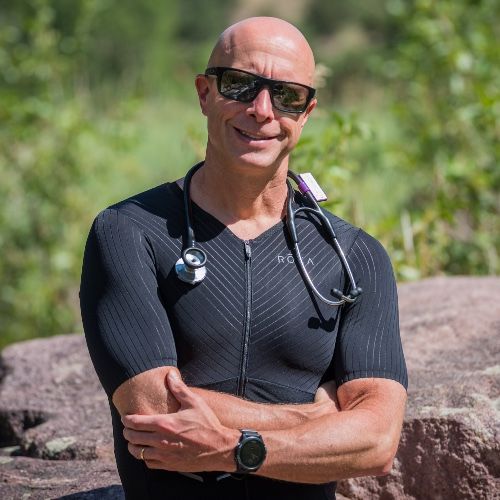
Speaker B:You heard my guest at the beginning of this episode before my voice and that was that of Matt Hanson.
Speaker B: uss his very busy schedule in: Speaker B:He's going to talk about what he perceived to be the impact of the new 20 meter draft zone and how he did pull out such an excellent result at Ironman New Zealand recently and what he's looking forward to for the rest of this season.
Speaker B:He's also going to spill a little bit of tea when it comes to what his anticipated future will be in the sport of triathlon and all of the things that he thinks or sees going on in the world around us.
Speaker B:He thinks it's going to play out in triathlon as the year progresses.
Speaker B:So that's going to be coming up a little bit later on.
Speaker B:Before that I will be joined by my friend and colleague Juliette Hockman.
Speaker B:She is of course a coach with me at LifeSport Coaching, and we will together be tackling the Medical Mailbag Question this question is one that has been asked of me in the past.
Speaker B:It's a subject that I covered quite a long time ago in an earlier episode, but we're revisiting it because there is some more recent literature and it's a question that I've been a few times more recently.
Speaker B:And it's related to saunas particularly.
Speaker B:Are saunas beneficial for heat acclimation when going to do a race?
Speaker B:Are they helpful for recovery and can they augment performance?
Speaker B:So we're going to be looking at the evidence on that and bringing you what we think is an answer that can help inform your own racing, recovering and training as you decide whether or not you want to incorporate sauna use into your own lifestyle as you Races in Warmer climates before all that though, I just want to take a moment to comment on the fact that the North American season has begun at long last.
Speaker B:We had the debut of the new race in Little Elm just outside of Dallas Fort Worth this past weekend.
Speaker B:It was an event that was unfortunately marred by a nasty little weather event.
Speaker B:There was a huge windstorm that came in the night before the race.
Speaker B:It resulted in the swim unfortunately being cancelled.
Speaker B:Not a great debut for a new event on the calendar, but what are you going to do?
Speaker B:It is unfortunately the way the cookie crumbles these days.
Speaker B:We know that more and more we're going to see climate impact on our races.
Speaker B:We've talked about that before and this was just the latest example.
Speaker B:It was, however, really nice to see Lionel Sanders return to the triathlon circuit and have a not terribly unexpected sensational day.
Speaker B:Given the fact that the race was cancelled, the 20 meter draft zone was likely to allow for a strong cyclist like him to get to the front to deal with the heavy headwinds and still come out on top.
Speaker B:And indeed he did.
Speaker B:He had a great day.
Speaker B:A little bit surprising to see Ben Kanute right behind him just about a couple of minutes back, but really nice to see Ben having a resurgence of sorts.
Speaker B:Hopefully that is a sign of things to come.
Speaker B:We unfortunately won't see Lionel again next week when the Oceanside race takes place.
Speaker B:Lionel is going to be lining up at Ironman, Texas in just a couple of weeks after that, so we can look forward to seeing his return to the Ironman racing scene and see if he's able to secure a Kona slot early this year and The Oceanside race is going to be an exciting one.
Speaker B:We can look forward to just an absolutely stacked start list on both the men's and women's side.
Speaker B:It's going to be an opportunity for the first time to see some real heavy hitters coming out.
Speaker B:And although we've had some really good races on the other side of the world this weekend we're going to see Geelong and the T100 race in gold coast feature some really big names in our sport.
Speaker B:The Oceanside race is really going to be the first time that we're going going to see just an incredible field on both the men's and women's side and it's going to be really fun to see how it all plays out.
Speaker B:I for one, am interested to see how the 20 meter draft zone is going to impact those races.
Speaker B:Oceanside is the first time we're going to have a really big field potentially coming out of the swim close together and then you have a very long kind of flat beginning of that bike course.
Speaker B:So it's not really going to break things up particularly quickly.
Speaker B:And I'm interested to see how that is going to impact things.
Speaker B:When you have the cyclists having to sort themselves out.
Speaker B:Is someone going to want to get to the front right away?
Speaker B:Is somebody going to want to put in the real sustained effort that's going to be required to move their way along to get through a long string of cyclists because they have to pass everybody 45 seconds at a time?
Speaker B:That's going to require a really big effort if you have a very long field of cyclists spread out.
Speaker B:So it's going to be interesting to see how it all plays out.
Speaker B:I am for one going to be watching it from afar.
Speaker B:I will be actually Traveling on the 28th and making my way down down south for a dive trip.
Speaker B:So I'll have to read all about it.
Speaker B:But I'll be counting on you, my listeners, to let me know what your thoughts are on the draft zone and how it impacts these races.
Speaker B:I hope that you will head on over to the Tridog podcast, private Facebook group and let me know.
Speaker B:Leave your comments on how you think the 20 meter draft zone has impacted races such as Ironman, New Zealand and Little Elm so far, and what your thoughts are about how it might impact the race at Oceanside coming up next weekend.
Speaker B:All right, that's what I've got to say on this matter.
Speaker B:For right now, let's move on to an interesting medical mailbag topic that being the subject of saunas.
Speaker B:Can they help you Acclimate for races in warm weather.
Speaker B:Can they help you improve your recovery?
Speaker B:And can they augment performance no matter where you're racing?
Speaker B:We'll have a look at the evidence that's coming up right after this break.
Speaker B:Well, it's that time again for the medical mailbag.
Speaker B:And while I have recovered and I'm coming to you with my voice restored, I'm so sorry to say that the same cannot be said.
Speaker C:It's almost like you've been kissing me.
Speaker B:Which we know is over the Internet.
Speaker B:I somehow managed to pass the nefarious viral ailment.
Speaker B:I do, I want to say, by the way, I really appreciate the people who reached out and wished me well and said that they could tell that I was ill in the last episode.
Speaker B:So now I hope that you will also convey your well wishes.
Speaker C:No, don't worry.
Speaker B:Coach Juliet Hockman, who joins me with lots of phlegm.
Speaker C:I don't get here.
Speaker B:No, but you know, come on, it's still unpleasant.
Speaker C:No, I'm just.
Speaker C:Everybody is sick right now.
Speaker C:I mean, I think all my athletes have been dealing.
Speaker C:It's not Covid, it's not flu.
Speaker C:It's just the seven day, you know, green gunk.
Speaker C:So here we are.
Speaker B:It's the time of the year.
Speaker B:It's that time of the year.
Speaker C:It sure is.
Speaker B:My daughter, she's dealing with it.
Speaker B:She is hoping to be all mended by the time the weekend rolls around because she's off.
Speaker B:We're off to New York City for Nike Indoor Nationals.
Speaker B:Very exciting.
Speaker B:Who puts a major event like that in New York City?
Speaker B:Do you have any idea what I'm going to be going through to try and navigate a 13 foot pole vault bag with poles inside?
Speaker B:So I called several, like car, shuttle, like Uber.
Speaker B:I called all these people and they laughed me off the phone because none of them knew what I was talking about, I'm sure.
Speaker B:So I'm gonna have to now rent a car and like renting a car already.
Speaker C:Just get an Uber Excel.
Speaker C:Just get an Uber Excel and stick it out, stick it across.
Speaker B:They won't.
Speaker B:They refused.
Speaker B:I've called.
Speaker B:They refused.
Speaker B:Not gonna do it.
Speaker C:Yeah, See, I think you gotta ask for forgiveness rather than permission.
Speaker B:Yeah.
Speaker B:If I show.
Speaker B:If they show up and I'm standing there with the bag, maybe.
Speaker B:Right.
Speaker B:Anyways, so now I have to deal with parking and oh, by the way, the congestion toll that New York has put in place, which I support.
Speaker B:I support the congestion toll.
Speaker B:I think it's a good thing.
Speaker B:But.
Speaker B:And I would not have rented a car to pay for the, you know.
Speaker B:But now alas, we're going to be.
Speaker C:It's the price of being a pole vaulting dad.
Speaker B:It is, it is, yeah, it is.
Speaker B:But we're going to have a nice time.
Speaker B:I'm seeing a good friend of mine and Kelly Pois who you've.
Speaker B:We've, we've made reference to many times.
Speaker B:Lucy Brash is a phenomenal triathlete who has retired from multi sport.
Speaker B:She is now a sensational marathoner.
Speaker B:I think her fastest is like 3:01 maybe.
Speaker B:I mean she's legitimate.
Speaker B:She actually, I think she went under 3.
Speaker B:I think she ran 250.
Speaker B:Anyway, she is legitimately, ridiculously fast.
Speaker B:So I am very much looking forward to hanging out with her and her husband Ben.
Speaker B:We are gonna have dinner.
Speaker B:She is coming to the event to watch Lauren Polt.
Speaker B:So it's gonna be, yeah, lots of fun.
Speaker B:And so like I said, hopefully Lauren will get past her own ailment and we're hoping you will as well.
Speaker B:Speedy recovery, Julia, I'm sure.
Speaker C:Thank you.
Speaker B:We have another medical question to answer, this one coming from not one individual but many.
Speaker B:So what are we gonna be Today
Speaker C:we are going to revisit the topic of saunas and whether or not they enhance athlete performance, athlete recovery, et cetera.
Speaker C:We know that saunas are often used particularly at this time of year as athletes are getting ready to race down south Oceanside, Puerto Rico, some of the races in Mexico, et cetera, Texas, if they live in the northern part of the United States, they use sauna in advance for heat acclimation.
Speaker C:Obviously athletes love to use sauna and whirlpool and other sort of in gym modalities, so to speak, to recover from their workouts as well.
Speaker C:But what can you tell us about the efficacy of sauna either for recovery or for heat acclimation or for just overall endurance athlete performance writ large?
Speaker B:It's a great question.
Speaker B:I really like this question because there's a handful of things that we've covered over the years that we have found pretty good evidence for.
Speaker B:This is one of them that has pretty good health effects and does actually have some evidence to suggest it's useful for athletes principally for heat acclimation.
Speaker B:But there's pretty good evidence for, for recovery and even for performance not in the heat.
Speaker B:So it's pretty good stuff.
Speaker B:I mean it's not overwhelming.
Speaker B:It's not like you're gonna sit in a sauna and suddenly become superman.
Speaker B:But I do wanna put a caveat to this because I think we do need to be chastened by some of the stories I've heard.
Speaker B:Kyle Smith, for example, professional triathlete, was doing amazing in Ironman New Zealand recently.
Speaker B:He was leading through the run, I want to say through like maybe 10k.
Speaker B:And then kind of the wheels came off and he ended up finishing, I think in the top 10.
Speaker B:But Kyle has had a tremendous amount of success on the T100 circuit.
Speaker B: And in January of: Speaker B:And so he had turned up the temperature in his exercise room really high.
Speaker B:He was wearing all kinds of extra clothing and he was exercising at high endurance, so high effort.
Speaker B:And he ended up pushing himself into significant rhabdomyolysis, ended up having to be hospitalized.
Speaker B:And it really affected his whole season last year.
Speaker B:Yeah, so you have to be a little.
Speaker B:I do wanna start with that caveat and say everything I'm gonna say about saunas and heat acclimation needs to be taken as, yes, there's some benefit here, but it's not one of these things that you can push too far because there is dangers.
Speaker B:We've heard there used to be sauna competitions and people have died.
Speaker B:So yeah, you need to be careful.
Speaker B:Okay, so what is the issue with saunas?
Speaker B:Well, I wanna thank Cosette Rhodes, the intern, who me find the literature and review the literature for this episode.
Speaker B:She took a look at principally the studies that have come out since I last reviewed this a couple of years ago.
Speaker B: And in: Speaker B:A lot of this is coming from Scandinavia where saunas are very popular.
Speaker B:Right.
Speaker B:So we have Laukonen and Sor.
Speaker B:This is from a paper I believe from Finland, of course, and they looked at the literature and they basically discussed the mechanisms by which sauna exposure alters body systems.
Speaker B:And they found lots of evidence to show that regular sauna use, and this is like 20 to 30 minutes a day, which is typical in Scandinavia, can lead to blood pressure reduction.
Speaker B:It can decrease oxidative burden and systemic inflammation.
Speaker B:So it's got an anti inflammatory effect.
Speaker B:It can improve endothelial function and that's basically the pliability of your blood vessels to vasodilate your blood vessels.
Speaker B:Because whenever you get in a sauna, the first thing your body does is it wants to shed heat.
Speaker B:So it vasodilates everything.
Speaker B:It just makes your endothelial function better.
Speaker B:It improves macrovascular function.
Speaker B:It results in a reduction in lipids and fatty acids.
Speaker B:It improves glycemic metrics.
Speaker B:Cardiorespiratory function is improved because sitting in a sauna actually increases your heart rate and respiratory rate.
Speaker B:So it's actually akin to an exercise stimulus.
Speaker B:So you get a benefit to your cardiorespiratory system similar to exercise.
Speaker B:When you sit in a sauna, there's an analgesic response because of an increase in endorphin levels.
Speaker B:There is increased norepinephrine synthesis resulting in autonomic nervous stimulation modulation.
Speaker B:The increased sweating facilitates the excretion of heavy metals like aluminum, cobalt and lead that we are exposed to in the environment.
Speaker B:There are cell level regulations by increase in heat shock proteins and then there is even an increase in neurogenesis, an increase in nerve rebuilding.
Speaker B:So all kinds of just really fascinating physiologic and systemic function improvements.
Speaker B: e previously mentioned and in: Speaker B:I'm sorry, I'm not sure.
Speaker C:I think it's lots of K's and lots of N's.
Speaker B:No, this one is a Hokas, but I'm not sure how to pronounce it.
Speaker B:But anyways, he did a systematic review looking at 14 studies.
Speaker B:Nine looked at acute sort of a one or two off sauna exposures.
Speaker B:Five of them were chronic at post exercise heat exposures and looked at athletic performance related to that.
Speaker B:And when you look at the acute recovery effects, it's a little bit mixed in.
Speaker B:Four studies using asana after exercise resulted in no measurable improvement in recovery or performance.
Speaker B:Another four studies showed clear beneficial effects and in one study there was negative effects.
Speaker B:So kind of hard to know what to take.
Speaker B:I look at neutral studies as being kind of a net, you know, nothing really.
Speaker B:I don't know enough about the individual studies here to comment the beneficial studies.
Speaker B:Often you know, when you have four of them you're like okay, there's probably a small signal here and a negative study we have to definitely take as something.
Speaker B:But overall it would seem that there is some degree of positiveness and then long term training adaptation possible benefits.
Speaker B:There was improved running performance, especially in hot environmental conditions, but no improvements observed for cycling performance or VO2 max, which I'm always fascinated when we see improvements in one sport but not in others, which I always find interesting.
Speaker B:Never know what to make of that.
Speaker B: tematic Review by Yamasaki in: Speaker B:Not necessarily looking at performance, but looking at blood measurements.
Speaker B:And this one found four studies found improvements in lipid parameters with 5 to 14% decreased in total cholesterol and 6 to 13% in LDL.
Speaker B:So that's pretty good.
Speaker B:And then you got even stronger effects if you combine sauna use with exercise.
Speaker B:This is pretty compelling stuff.
Speaker B:Just sitting in a sauna, which is, you know, we've talked about other things like the normatex, right?
Speaker B:They feel good, right?
Speaker B:Maybe they don't do anything, but they feel good.
Speaker B:And the idea of just sitting there is probably helpful.
Speaker B:Well, sitting in a sauna, we all know, I mean, I love sitting in a sauna.
Speaker B:I wish I had one in my basement.
Speaker B:I've asked for that several times, but I keep getting told no, no, I haven't gotten it yet, unfortunately.
Speaker B:But I love sitting in a sauna.
Speaker B:And to know that it's this much of an improvement on your health, I think is pretty cool.
Speaker B: Another Systematic Review in: Speaker B:General health was improved across cardiovascular health, pain management and respiratory conditions.
Speaker B:Exercise improvement, endurance performance improvements seen with a 32% increase in time to exhaustion during endurance tests.
Speaker B:I mean, that's pretty good.
Speaker B:Plasma volume increases and this is one of the things by which we know that exercise performance in warm environments, that's the mechanism by which a lot of this improves is the retention in plasma volume.
Speaker B:Also lower core body temperature during exercise, increased sweat rate, improved cooling efficiency.
Speaker B:These are all things that we see with sauna use and cardiovascular adaptations as well.
Speaker B: this is a study by Pakora in: Speaker B:These are all dry saunas over two weeks.
Speaker B:And the outcome measure was performance on a one hour submaximal running test and cardiovascular measures.
Speaker B:Resting heart rate decreased significantly.
Speaker B:Physiological strain index, decreased plasma volume regulation, blood protein concentration, red blood cell parameters during exercise and recovery all showed improvement and improved plasma volume restoration after exercise.
Speaker B:So a lot of signals here.
Speaker B:Yeah, and a lot of positive stuff.
Speaker B:My take home from this is that sauna use definitely improves overall health in a lot of different parameters.
Speaker B:Sauna use is great for heat acclimation.
Speaker B:If you're planning on doing a race and you live in a cold environment and you're going down to do a warm race, there are various protocols out there.
Speaker B:I Could tell you how I have adapted the protocols to my own use.
Speaker B:Depends if I'm going to a humid environment or not.
Speaker B:Because wet saunas have not been studied as much as dry saunas.
Speaker B:Wet saunas are significantly more uncomfortable.
Speaker B:They're harder to tolerate because the wet bulb temperature, which is a combination of not just the temperature but also the humidity.
Speaker B:The wet bulb temperature is much harder to tolerate.
Speaker C:And is a wet sauna just the one where you put the water on the stones?
Speaker B:The wet sauna, although putting water on the stones will increase the humidity.
Speaker B:But a wet sauna is truly the
Speaker C:steamer, the steam room.
Speaker C:Okay.
Speaker B:Okay.
Speaker A:Yeah.
Speaker B:A dry sauna is just those typical wooden saunas with the stones.
Speaker B:And I want.
Speaker B:I will make a distinction about the infrared saunas in a moment.
Speaker B:But the dry saunas are very effective.
Speaker B:What I have done, especially if I'm racing in a humid environment, if I'm going to Kona, if I'm going to Puerto Rico, if I'm going somewhere like Cabo or, you know, the races in Ecuador or whatever, then I try to get some of the time in a wet sauna.
Speaker B:And what I'll do is when I first start, it's very hard to really make.
Speaker B:I try to get to a half an hour, but it's really hard to make it through a half an hour just sitting there.
Speaker B:I always take.
Speaker B:Yeah, so I always take water.
Speaker B:Take a bottle of ice water with me.
Speaker B:Because drinking cold water can help regulate things.
Speaker B:It doesn't decrease the efficiency of all this other stuff.
Speaker B:But you have to be careful, right?
Speaker B:If you feel lightheaded, if you feel dizzy in any way, you gotta get out of there and cool yourself off.
Speaker B:But what I do is I go in and I try to sit for 10 or 15 minutes in the wet sauna.
Speaker B:And then if I can make it to 10 or 15 minutes, then I'll go sit in the dry sauna, which feels a lot cooler at that point.
Speaker B:And I'll sit there for, you know, five to 10 minutes.
Speaker B:So usually the first day or so I make it to about 15 or 20 minutes total.
Speaker B:But then after a week or two, I can build up to half an hour where I'm sitting in the wet sauna for 20 and I'm sitting in the dry sauna for 10.
Speaker B:And I don't really recommend going beyond that.
Speaker B:There's no need to.
Speaker B:I think that if you can make it that far, that's probably as far as you need to go.
Speaker B:Now, some people will say, well, I don't have access to A sauna, but I have access to a jacuzzi or a hot tub.
Speaker B:Is that the same?
Speaker B:I will say that there's no data on that.
Speaker B:I would suspect it probably is the same.
Speaker B:But you have to be super careful because those hot tubs are, you know.
Speaker B:So again, the reason a steam room feels so much hotter is because the water itself conducts much more heat energy to your body.
Speaker B:And when you're sitting in a hot tub, you're basically.
Speaker B:You're like the lobster, right?
Speaker B:You're just sitting, Right?
Speaker C:Exactly.
Speaker B:So you gotta be really, really careful.
Speaker B:Cause your body temperature can rise much more quickly.
Speaker B:You can't sweat.
Speaker B:I mean, you are sweating in there, but you're not losing any temperature from doing that.
Speaker B:So you have to be careful.
Speaker B:With hot tubs, you can do it, but you just gotta be careful.
Speaker B:Don't push the time till like, half an hour.
Speaker B:You're not gonna make it.
Speaker B:So all in all, I mean, this is a positive net, right?
Speaker B:I mean, even if the performance improvements are small, Although these studies would suggest they're not.
Speaker B:And my own personal experience has been that I feel much more comfortable when I show up at a hot, humid environment after doing these sauna protocols.
Speaker B:I don't sweat as much.
Speaker B:I feel much more comfortable in the warmer, humid temperature because I live in a very dry climate and humidity is really tough for me to adapt to.
Speaker B:But when I've done these protocols, I feel much more comfortable when I get there.
Speaker B:Now there are.
Speaker B:I know.
Speaker B:I can't remember if he's your athlete, but there's a life sport athlete who purchased one of those tents.
Speaker C:That was one of mine.
Speaker C:I was gonna bring that up.
Speaker C:Yeah.
Speaker C:As he's getting ready for Kona, he rode in a tent in his apartment.
Speaker B:Yeah.
Speaker B:So they sell those things where you could raise the temperature in there, raise the humidity in there, and do your bike trainer workouts.
Speaker B:And there's no question doing your bike workouts in the environment that you are preparing for is definitely a way to enhance this.
Speaker B:But you gotta be so careful.
Speaker B:You just have to be really, really careful.
Speaker B:Because we all saw what happened to Taylor and to Lucy Charles last year, right?
Speaker B:From overexerting in that kind of environment.
Speaker B:Well, if you're doing that alone in your home and there's nobody there to be alerted to the fact that you pass out in there, that's not a good situation.
Speaker B:No, and it is.
Speaker B:It's a fine line.
Speaker B:Even if you're staying on top of your hydration, you can still raise your body temperature to dangerous Levels.
Speaker B:So you have to be really, really careful.
Speaker B:I always tell athletes, if you're planning on doing one of these things where you're going to be working out in that kind of environment, turn the effort level way down, don't be a hero, don't do your hard efforts in there.
Speaker B:Make it an easier effort just to get the sense of the exercise in that environment.
Speaker B:And that will help and that will translate.
Speaker C:Right, Right.
Speaker C:So if you are not getting ready for a hot race in particular, and let's say you did have your sauna, your dream sauna in your basement, how often would you go in there per week and for how long?
Speaker C:Just for the other benefits that aren't necessarily about heat acclimation.
Speaker B:Well, I mean, we know the fins, right?
Speaker B:The fins and the Swedes are in there every day.
Speaker B:Every day.
Speaker B:And I think for good reason.
Speaker B:If I owned one of these.
Speaker B:Now, I want to point out that you can get small saunas for your home.
Speaker B:Sure.
Speaker C:We have one.
Speaker B:The thermal ones.
Speaker B:The thermal ones are the heaters that heat up the rock that then the rocks then heat the air.
Speaker B:And it takes a while, it can take an hour, two hours for that thing to heat up.
Speaker B:Right.
Speaker B:And it takes quite a bit of electricity to make that work.
Speaker C:Right.
Speaker B:And now there are these infrared saunas where the sauna itself doesn't really heat up, but you heat up because what it's doing is it's radiating infrared energy and that energy hits you and it heats you up.
Speaker B:So it's akin to sitting in a thermal environment.
Speaker B:But the environment itself is not getting nearly as hot.
Speaker B:It uses much less electricity, it heats up much more quickly.
Speaker B:It's quite convenient, though it's not been studied as much.
Speaker B:And there is some suggestion that it doesn't convey the same amount of health benefits.
Speaker B:Will it convey the same amount of performance benefits?
Speaker B:Don't know, because again, those haven't been studied.
Speaker B:I would say if I was going to buy one, I would probably buy one of those infrared ones.
Speaker B:Just because they're much cheaper.
Speaker B:Yeah, much cheaper, electricity wise.
Speaker B:And I've been in one now and I really enjoyed it.
Speaker B:I thought it was just like being in a regular sauna, just you're not breathing the hot air and you're not.
Speaker B:It's not as hot in there when you open and close the door.
Speaker B:But just the convenience of having it heat up so quickly is really nice.
Speaker C:Right.
Speaker B:So I would get one and I would use it, probably.
Speaker B:I mean, I would use it every day.
Speaker B:I mean, why not?
Speaker B:Right.
Speaker B:We know that a Hot shower helps you sleep.
Speaker B:I mean, I use a sauna before bed.
Speaker B:Right.
Speaker B:You know, just.
Speaker B:I mean, gosh, I could, I could envision doing that, using it a lot.
Speaker B:Like, it would.
Speaker B:Yeah, I could.
Speaker B:I could definitely.
Speaker B:Like, I. I looked into getting a steam thing for my shower and we.
Speaker B:Unfortunately, we thought it was wired, but it wasn't.
Speaker B:So I've never been able to get one in there.
Speaker B:But that's been something I've pined for.
Speaker B:I wish I could have it.
Speaker B:All right, well, so when you had asana, how often did you use it?
Speaker C:Well, it was at our sort of extended family house in New Hampshire on a lake.
Speaker C:And we had that house for 30 years.
Speaker C:I think.
Speaker C:I think I probably used it a half a dozen times in all that time.
Speaker C:I just didn't use it, really.
Speaker C:I know.
Speaker C:I just didn't use it.
Speaker C:I'm not a huge fan.
Speaker C:I think it.
Speaker C:I think it's not particularly relaxing for me, but I could see.
Speaker C:I don't know, I could give it another try.
Speaker C:We did go and do some sauna when we were in Austria last year for a wedding, and that was more relaxing.
Speaker C:It was bigger.
Speaker C:It had a window.
Speaker C:The home saunas are really like a closet and so you do feel like you're kind of closed in.
Speaker B:Yeah.
Speaker C:So I could see trying it again.
Speaker C:Yeah.
Speaker B:But it was funny cause we went to.
Speaker B:So we were in Salt Lake City, a family, and we had an Airbnb and it had this like little sauna in the basement and it was like a two person sauna.
Speaker B:So Adam and I were doing these big bike rides and after our bike rides, we'd come in and we were all excited, got in the sauna and it was wired for sound and it had like lights and.
Speaker B:Oh yeah, it was awesome.
Speaker B:The whole experience was great.
Speaker B:We loved it.
Speaker B:We had a blast.
Speaker B:So now we would love to have one.
Speaker B:It would be so awesome.
Speaker B:Cool.
Speaker B:Yeah.
Speaker B:So they're definitely like.
Speaker B:Listen, like everything else, they're a luxury.
Speaker B:It's not a luxury I have, nor am I running out to get one because I belong to a gym where we have them.
Speaker B:And I was going to say a
Speaker C:lot of people have them in their gym.
Speaker C:You could pretty much tack on 15 minutes, you know, after the.
Speaker B:There is no question that the steam sauna takes some getting used to.
Speaker B:Like, it's just.
Speaker B:It's not that comfortable.
Speaker B:And I mean, but once you're used to it, I really enjoy it.
Speaker B:I really enjoy them.
Speaker B:And like I said, if I've got a race coming up, and it's going to be in a humid environment.
Speaker B:When I've gone to Chattanooga, for example, where I know it's just so much more humid than here, I'll do the sauna protocol for two weeks before my race.
Speaker B:I'll extend it out to three or even four if I have the time.
Speaker B:That's sometimes the time, right.
Speaker B:You have to be able to fit it in.
Speaker B:Because I don't go to the gym till I do all my workouts.
Speaker B:I go to the gym to swim.
Speaker B:And what I was doing for my sauna protocol is I was going every single day to make sure I was getting into the sauna.
Speaker B:So that takes time, and so you have to be sure you have it.
Speaker B:But I think it's worth it.
Speaker B:And it's definitely.
Speaker B:I think the evidence is there, and I think it's one of those things that I would definitely add to the list of things that we would recommend for health, for wellness, and potentially for endurance, performance, and recovery.
Speaker B:It's hard to say for sure, but the signal seems like it's there.
Speaker B:And definitely, if you're going for heat acclimation, I think it's reasonable to consider that this would help.
Speaker B:So there you go.
Speaker B:It's nice when we have something positive, isn't it?
Speaker C:I know it is.
Speaker C:You can add it to your end of your list, Jeff.
Speaker B:Yeah.
Speaker B:Yeah.
Speaker B:It's exciting.
Speaker B:Well, this is episode 193, Juliette.
Speaker B:We said that at episode 200 we were going to do a recap, so.
Speaker B:Well, we're getting there.
Speaker B:We're getting there.
Speaker C:Yep.
Speaker C:Yep.
Speaker A:Good.
Speaker B:All right, well, that's it for another episode of the Medical Mailbag.
Speaker B:Juliet will be recovering and resting and back to health when we reconvene for the next one.
Speaker B:If you have a question that you'd like to hear us take on, please do consider sending it to us.
Speaker B:You could drop me an email@tridocloud.com you can head on over to the private Tridoc podcast Facebook group.
Speaker B:If you're not a member, please do ask to become one.
Speaker B:Answer the three questions.
Speaker B:I will grant you admittance.
Speaker B:You can join the conversation there and leave your questions for us.
Speaker B:You can also message us on Instagram.
Speaker B:There's all kinds of ways to reach us.
Speaker C:So many ways.
Speaker B:Anyhow, you reach us, we are happy to hear from you, and we would love to answer your question on a future medical mailbag.
Speaker B:Until the next time, Juliet, get some chicken soup, get some fluids, get some vitamin C, all the regular stuff, and we'll talk to you again.
Speaker B:Soon.
Speaker C:Sounds great.
Speaker C:Thanks so much, Jeff.
Speaker A:Bye.
Speaker B: sional triathlete since since: Speaker B: onman Chattanooga way back in: Speaker B:Most recently, he finished third at the Ironman New Zealand and Topa, the first Ironman Pro Series event of the season.
Speaker B:But Matt is more than just an accomplished triathlete.
Speaker B: also has been coaching since: Speaker B:He has a Bachelor of Arts, a Master's of Science in Exercise Science, and a Doctorate in education.
Speaker B:And somehow he's been able to find some time to take a break from all of that and join me from his home in Castle Rock, which is just down the road from where I am in Denver.
Speaker B:I'm so glad to have him here.
Speaker B:Thank you so much to Matt Sharp, my colleague on Tempo talks, for connecting us.
Speaker B:Matt Sharp, the other Matt in the equation.
Speaker B:Matt Hanson, thank you so much for joining me on the tridarc podcast.
Speaker A:The much better looking Matt.
Speaker A:Yeah,
Speaker B:he would, I'm sure, take exception to that.
Speaker B:Maybe taller.
Speaker A:No, he's the much better.
Speaker A:Yeah, yeah.
Speaker A:Okay.
Speaker B:Yeah.
Speaker B:Matt, congratulations on your recent success in topa.
Speaker B:How are you feeling after the long journey back?
Speaker A:Yeah, doing all right.
Speaker A:It's a long travel, but went as smooth as it could have, especially given TSA issues going on right now.
Speaker A:So can't complain.
Speaker B:Yeah, yeah, it has been.
Speaker B:It's funny, I just traveled.
Speaker B:I was in New York City over the weekend.
Speaker B:My daughter was participating at Nike Indoor Nationals and we had early day flights and Friday was a big travel day for spring break and we avoided a lot of the chaos.
Speaker B:We were quite thankful for that.
Speaker B:And then coming home on Sunday, really early morning to get out in New York City and again feel like we dodged a bullet there.
Speaker B:I think coming back from New Zealand, you didn't have to deal with too much, so that was probably a good thing.
Speaker A:Yeah, yeah.
Speaker A:All good.
Speaker A:And yeah, body's feeling good.
Speaker A:Got back to structure this week.
Speaker A:I got the body moving as soon as I could after the race, but back on the plan now.
Speaker B:Now I think it's a little unusual to see North American athletes participate in these early season races because of the issues we have with training outdoors.
Speaker B:And yet here you and Trevor Foley down there doing exceedingly well.
Speaker B:How do you manage the training over the winter months?
Speaker B:Did you go Somewhere warm in order to get a good block in, or do you just do a lot of training indoors?
Speaker A:Typically I do a lot of the training indoors, but this winter we've been pretty darn lucky with the Denver weather.
Speaker A:It's been pretty conducive to getting outdoors more times than not.
Speaker A:And so you really can't complain about that.
Speaker A:I mean, we got what, five inches of snow yesterday and it's all gone now.
Speaker A:Gonna be 80s by the end of the week.
Speaker A:The weather's been great.
Speaker A:I used to do early season camps, but yeah, have gone away from that.
Speaker A:I went to Florida for a week.
Speaker A:That was partly a sponsor thing, so I trained there for just a week.
Speaker A:But other than that, yeah, just home base in casserole.
Speaker A:But I've never been one to shy away from indoor.
Speaker A:I think you can do a lot of specificity.
Speaker A:You can prep for hot races and especially the races.
Speaker A:Early season races that I would target are ones that are conducive to prepping indoors, like Ironman Texas, which is on tap.
Speaker A:Next is long straightaways into the wind.
Speaker A:You have to keep power on the pedals.
Speaker A:You can't coast or you get punished.
Speaker A:So very, very similar to the conditions on a trainer.
Speaker A:And then you can obviously do the heat prep easier indoors than outdoors as well.
Speaker B:Matt Sharp and I have spoken of you often on Tempo Talks, our sister podcast.
Speaker B:We often refer to you as the busiest man in triathlon.
Speaker B:And you have already just referred to your next race coming up very short order.
Speaker B:You seem to be popping up at so many of these ra.
Speaker B:How do you do it?
Speaker B:How do you keep such a busy schedule and still manage to find the success that you do?
Speaker A:Yeah, I'm an old man, so long training blocks are just going to get me hurt.
Speaker A:Especially when I'm in Cass Rock.
Speaker A:I'm training alone completely.
Speaker A:Before when I was working with Julie, I was up in Boulder once or twice a week.
Speaker A:So I'd get some level of social interaction.
Speaker A:Right now gone, self coached.
Speaker A:And I'm doing everything alone.
Speaker A:So my interactions on a daily basis are my wife, my little kiddo and my dog.
Speaker A:And.
Speaker A:And when he starts talking back to me, I know it's time to go to another race.
Speaker B:Now, you were in Kona, right?
Speaker B:I think I got that right.
Speaker A:Well, last year was nice, so.
Speaker B:Oh, sorry, sorry.
Speaker B:Yes.
Speaker B:But and we talk about this a lot, about the need to have a bit of a break in order to reset the body and kind of get ready for the next season.
Speaker B:And how is it that you manage to peak at the right times.
Speaker B:So how do you manage that?
Speaker B:You want to peak late in the season to have the big day at the world championships, but then you want to be sure that you're rested enough to come back and be able to have a good season.
Speaker B:It's long though, especially if you start in early March the way you have.
Speaker B:So how do you structure your season to be sure that the wear and tear doesn't get to you?
Speaker B:You have time for recovery but still are able to peak when you want to.
Speaker A:Yeah, that's always the battle.
Speaker A:Right now might be in a little bit of a different situation where getting a Kona slot wasn't a foregone conclusion.
Speaker A:And so I raced until early December, but I tried to get the Kona slot at Ironman Arizona and fell a little bit short there.
Speaker A:So I carried fitness a long way all the way into December.
Speaker A:I'm racing a 70.3 first week there and then took the rest of December off.
Speaker A:Structure completely.
Speaker A:A week completely off.
Speaker A:Two weeks of just moving the body.
Speaker A:I probably ran 10 miles total between December 5th, when the race was and then Christmas Day.
Speaker A:And then when I went back to Iowa for Christmas.
Speaker A:I didn't bring a bike.
Speaker A:I just ran over Christmas to New Year's.
Speaker A:So I definitely took a cognitive break, which was what I needed at that point.
Speaker A:I felt good physically, but I was emotionally mentally tired and so I took a little bit of a break there.
Speaker A:Came into January and didn't really do much intensity.
Speaker A:I did no intensity on the run.
Speaker A:I just, just got the volume in.
Speaker A:So it was really just shut the brain off, go through the motions, tick the boxes, get the aerobic volume in early.
Speaker A:I was a little bit on the fence if I could get ready for March or not for Ironman New Zealand to do an Ironman in March.
Speaker A:I was originally planning to target Dallas, but dad guilt kicked in a little bit.
Speaker A:It was my kiddo's two year old birthday on that weekend of Dallas, so.
Speaker A:So I didn't need to race Dallas and I wanted to be there for her birthday so decided to go to New Zealand instead.
Speaker A:That worked out to be a good plan so far anyways.
Speaker B:Yeah, I'll say.
Speaker B:I want to ask you a little bit about that race.
Speaker B:It's the first race where we saw the debut of the 20 meter draft.
Speaker B:Been a lot of talk about how that would potentially benefit the stronger cyclists like yourself.
Speaker B:What was your impression that you came away with?
Speaker B:Did you feel that was a benefit?
Speaker B:Did you feel that was something that contributed to how you did in the race or.
Speaker B:Or is it just coincidence?
Speaker A:I think a lot of people would probably not put me in the category of stronger cyclists.
Speaker A:I definitely think it was a surprise on the broadcast and a lot of the comments that people have made to me after the race to see me.
Speaker A:You know, at one point right before the halfway, I was second overall in the race on the bike.
Speaker A:That hasn't happened for a number of years.
Speaker A:I think part of that was a lot of the competitors were still feeling out to approach the tactics in a 20 meter race.
Speaker A:Trevor hadn't caught up to us quite yet.
Speaker A:We didn't have much of a gap out of the water but I had a really, a really good swim so that definitely helped more for me than the 20 meter draft rule.
Speaker A:But yeah, it definitely is a different race now and I think the early season races are going to be learning experience for everybody.
Speaker A:We've done it at the PTO distance.
Speaker A:A lot of us has raced with the 20 meter rule but we haven't done it all that often in long course.
Speaker A:It makes it less punchy and so that's going to help help the better runners because you're not having to put in a bunch of surges if you're in the group.
Speaker A:Last year I don't think I rode in a group more than an hour for any race.
Speaker A:I was just on my own.
Speaker A:So that, you know, to me it's not going to hurt anything and it might help for some of the swim runners I think who have been really good swimmers and have been able to sit in on the bike, they're going to get punished.
Speaker A:So we might see some differences in the run times but.
Speaker A:But at the end of the day you still have to be able to put together a complete race and a tactical race and make the right decisions.
Speaker B:We've seen a lot of short course guys coming to Ironman and having just amazing success.
Speaker B:The ability to swim at a pace that I think a lot of the established pros were not necessarily prepared for is something that I think we just continue to marvel at as spectators, as people mortal watching this board.
Speaker B:But I wonder if this 20 meter draft zone is going to have the impact like you just mentioned.
Speaker B:These guys who can get out of the water so fast, but then they're coming out as a bunch, they can't stick together as a bunch.
Speaker B:They really need to do the work a little more on their own.
Speaker B:Do you think it's going to have that kind of impact that the Ironman organizers are hoping?
Speaker A:Yeah, definitely it's going to change the game significantly.
Speaker A:I mean every four years after each Olympic cycle, the swim gets faster.
Speaker A:That's just the way it's been.
Speaker A:If you look back, it definitely lines up.
Speaker A:The guys that aren't going to go for another Olympics or Christian is going to do both, come in and migrate to the longer distance and in general swim a little bit better than the established long course guys and then they bring some of the better swimmers forward a little bit more as well.
Speaker A:So that's definitely every four years that happens.
Speaker A:But if you look at a race like Marbella or 70.3 worlds this last year, when was it 48 guys came out of the water together.
Speaker A:I mean 48 times 20, that's a half mile of a string of guy, you know that's gonna break up.
Speaker A:You can't cover those moves near as easily as you can when it's, when it's shorter gaps.
Speaker A:So I think we'll see in bigger fields that, you know, Zealand only had 25 guys so that changes things significantly.
Speaker A:It's just not nearly as big of swim groups or bike groups.
Speaker A:I think Ironman, Texas, Geelong as well might be the first real examples of huge fields, flatter courses where we're going to see the true impact of that.
Speaker A:And that's going to affect not just the better swimmers, but it's also going to affect the guys that are coming from the back and having to put in instead of 8th of a mile surge now that the draft zone is nearly double, you have to put in a quarter mile surge or pass people.
Speaker A:If you got 20 people that's about a quarter mile.
Speaker A:So you gotta pass that entire group to get through em and then have the energy to break through otherwise you're dragging them along.
Speaker A:So it'll change the game significantly and it's fun.
Speaker A:It's making it more of an individual effort like it was originally meant to be.
Speaker A:And I'm happy that they made the change because yeah, we're going a lot faster than we were when the rule was originally put in.
Speaker A:So adapting.
Speaker A:They changed the rule books on fairings, they changed the rule books on other things.
Speaker A:But the 12 meter you were getting way more, more of a benefit than you were with a bottle down your shirt, for example.
Speaker A:So it's good that they looked at it and it'll just make for fair racing.
Speaker A:We might not see quite as fast at times overall, but at least the first year.
Speaker A:But I think people are still going to go plenty fast.
Speaker B:Yeah, I was going to ask you about a couple of the things you mentioned because I think about the guys like Lionel and Sam, who are notoriously slower swimmers, and they come out of the water and they've got these, you know, in a big race like Oceanside, I think Lionel's not going to be there.
Speaker B:I can't remember if Sam is going.
Speaker B:But they come out of the water and they've got this big pack ahead of them.
Speaker B:Just the idea of these 48 guys like you mentioned coming out of the water together, I can't even imagine how they sort themselves out.
Speaker B:With 20 meters, it just means someone's going to charge to the front and then everybody else has to slow down in order to give the accordion kind of room to expand.
Speaker B:But then if you have a really strong cyclist from behind, they've got to pass every person right away.
Speaker B:And that just means, like you said, a big surge for a really long time.
Speaker B:And then you, like you said, you have to do the math in your head.
Speaker B:Do I want to put out the effort, especially on a flatter course, to really do that at this point in the race?
Speaker B:And it really does, I think, change the calculus for the stronger cyclists who are not great swimmers.
Speaker B:And I wonder if this hurts them instead of helps them.
Speaker A:I think it'll be a little bit race specific.
Speaker A:In a race like Oceanside, there's going to be plenty of hills that break things up a little bit, and there's just a little bit of accordion and then gapping out, out.
Speaker A:And anytime you go from the downhill to an uphill, there's going to be people who allow a 20 meter to open up so you can slot in, you can find places to.
Speaker A:To cut in without breaking the drafting rules.
Speaker A:Whereas if it's a flat race like Ironman Texas, protecting your space is a lot easier as long as you're playing, paying attention, because there's not much change in speed.
Speaker A:You just get in, you lock in, and you just hold on to that yellow with a little bit of blue light from the race ranger and you just lock in.
Speaker A:And unless it's a really windy day, it's a lot easier to hold your space and you're not going to fall out and then come back in the legal area.
Speaker A:So that's my guess.
Speaker A:We haven't seen it yet, but I think the flatter courses will be hard.
Speaker A:A guy like Lionel is going to be able to catch the group better because people aren't going to be able to work and rotate on the front or get that benefit as much.
Speaker A:They'll catch them easier, but it'll be harder for them to go through the group.
Speaker A:So I think it definitely still benefits the Sams and the Lionels and the Trevors because they're just, they're so strong on the bike.
Speaker A:They can make that long ustain.
Speaker A:You have 45 seconds to pass.
Speaker A:So 45 seconds to pass each of the 20 guys and they're strong enough to do that.
Speaker B:You're just churning through at that same wattage and just holding it and just passing them all along.
Speaker A:Yeah, but then you have to.
Speaker B:Yeah, it's going to be interesting to
Speaker A:make sure you don't drag them around.
Speaker B:Yeah.
Speaker B:I thought Dallas was interesting this weekend because they had to cancel the swim.
Speaker B:Of course they left a 350 meter swim which at the time I was scratching my head going like why are they bothering with that?
Speaker B:But then I realized it was because they were doing this kind of time trial swim start.
Speaker B:And that made sense because sending off all the pros in a 350 meter swim wouldn't, wouldn't have accomplished anything.
Speaker B:But that made sense because it allowed for this spreading out once they got to the bike and made for, I think establishing that 20 meter zone pretty easy.
Speaker B:So yeah, it's pretty interesting to see how that's going.
Speaker B:Have you heard anything from the women?
Speaker B:Have the women made any comments?
Speaker B:Because we did see on the broadcast of New Zealand, we saw how the women can get caught up with some of the age group men and how that can continue to cause problems especially in a two lap race as we see in New Zealand.
Speaker B:Have you heard anything from them?
Speaker A:Yeah, that's going to be an issue.
Speaker A:New Zealand was a little bit different because we were passing 70.3 athletes from the beginning.
Speaker A:I haven't heard, you know, beyond one or two just talking about their individual race.
Speaker A:I haven't heard anything specifically about that.
Speaker A:But yeah, the age grouper is having a different rule than the, the pros.
Speaker A:The pro women could cause issues but the way that it's supposed to be enforced anyways is if an age grouper wants to get in with a group they have to pass the entire group.
Speaker A:They can't slot in into women who are 20 meters equally even though they only have a 12.
Speaker A:So they can't slipstream the pro group.
Speaker A:Now they have to have a Marshall there that's going to make sure that that's fair.
Speaker A:And so that discrepancy in rules is going to have to mean that there's a Marshall at the front end of the race just for the age group men to try to reduce that interference.
Speaker B:Right?
Speaker B:Yeah.
Speaker B:Yeah, you could see how, especially when it comes to who Kona at the end of the year, that could be fraught.
Speaker B:So a lot of things to be
Speaker A:determined to give a little bit of a bigger gap at Kona between the start of age group race and the start of the women's pro.
Speaker A:Women.
Speaker A:Yeah.
Speaker B:Yeah, we'll see.
Speaker B:We'll see how that works out.
Speaker B:What do you have going on for your season?
Speaker B:As I said, you're generally a very busy guy.
Speaker B:We've heard how you're doing Ironman Texas already.
Speaker B:So not a lot of rest and recovery for you.
Speaker A:Yeah, I mean, that's 45 days between races I think is plenty.
Speaker A:It's an awkward amount.
Speaker A:You have to actually do some training between instead of just rolling into the next one.
Speaker A:Yeah, I'll do basically doing the pro series now.
Speaker A:Got a good score on the board.
Speaker A:So it makes sense to just stick with the pro series races.
Speaker A:The plan is to do Ironman Texas, Happy Valley.
Speaker A:I'll do Chattanooga 70.3 as QR is been a longtime partner of mine and they're out of Chattanooga, so it just makes sense to be at that race any opportunity.
Speaker A:I get it.
Speaker A:It's a race I've done well in the past, so good memories there and good people to take care of me while I'm there.
Speaker A:So that makes sense.
Speaker A:But that's the only non pro series race I'll do, so I'll do that one and then Happy Valley, Boise, probably Kalmar and then Kona.
Speaker B:This is a busy season.
Speaker B:A lot of travel in there too.
Speaker B:Are you or your fellow pros at all concerned with what's going on?
Speaker B:Obviously, we're all concerned with what's going on in the world.
Speaker B:And I want to preface this question by acknowledging that what's going on in the world takes huge precedence over triathlon.
Speaker B:But with the T100 and Ironman increasingly invested in the Middle east, has there been any discussion amongst the pros as to how this impacts especially the immediacy of the PTO and to some of the Ironman races that are out there?
Speaker A:I mean, obviously the PTO had to cancel a race and that they had to cancel their opener.
Speaker A:And that's never a good thing.
Speaker A:And like you said, it was a necessary thing to do.
Speaker A:I think triathlon is probably going to be affected less than a lot of the other sports.
Speaker A:Like obviously what's going on with the World cup and the Iranian women's soccer team.
Speaker A:That's much worse than anything that could ever happen to Ironman at this point or to triathlon.
Speaker A:So yeah, it's going to be impacted and you can't plan your season around the what ifs.
Speaker A:You kind of have to make a plan, adjust when things happen.
Speaker A:When you're racing in a global world, then there's going to be global issues sometimes and you just have to roll with it when that comes.
Speaker B:Yeah, and you mentioned your age, you didn't mention a number.
Speaker B:But you refer to yourself as an old man.
Speaker B:You have been at it now for this is your 12th year as a professional.
Speaker B:So what's the future hold for Matt Hansen?
Speaker B:Do you anticipate just sticking in the gap?
Speaker B:Clearly you're having great success so there's no rush to get out of it.
Speaker B:You still love it.
Speaker B:Do you still see yourself doing this for you had a lot of professionals retire last year, so, so that's why I asked the question.
Speaker A: ded being one of the Class of: Speaker A:There was a lot of them and some of them were a bit of a surprise.
Speaker A:But yeah, I'm having fun.
Speaker A:I'm, I'm enjoying it more days than I'm not.
Speaker A:There's obviously a few more tough days than there used to be.
Speaker A:Bodi has more days where it doesn't feel great than it used to.
Speaker A:But yeah, I know what the alternative is and I get to make a living with my legs right now and travel a little bit.
Speaker A:So as long as I can still make the body do what it needs to do to prepare to be successful on the course, then yeah, I'm gonna right now anyways.
Speaker A:I think middle of last year I might have had a different story when I could barely stand up out of bed some days with the way my back was treating me.
Speaker A:But I seem to be on top of it again.
Speaker A:So yeah, as long as the good days are outnumbering the bad, I'm gonna stick around.
Speaker A:So hopefully at least another year after this one is the current plan, but we'll see.
Speaker A:And then after that I've hopefully done what I need to do to be able to make coaching my, my full time gig when I need to rely on that.
Speaker A:I've worked hard to develop the team that I have now of both myself and then my assistant coaches, but also earning the athletes trust that I've got for now and hopefully that is maintained throughout the career and that I've done learn things the right way to be able to promote the business after racing.
Speaker A:You know, getting podium results isn't the number one way of getting new athletes.
Speaker B:And when you look back on your very storied career.
Speaker B:Is there anything that sticks out as a highlight?
Speaker B:And sometimes that's not one of the victories.
Speaker B:Sometimes it's something that happened during a race or something, a lesser race.
Speaker B:Is there anything you look back that kind of sticks out that you reflect on as being something that you really treasure as a memory?
Speaker A:I think I've been fortunate enough to put together a lot of good days, and the wins are always amazing.
Speaker A:They're few and far between, and they're always memorable.
Speaker A: y have to say that Daytona in: Speaker A:And part of it was because I don't think there was a single person that would have considered me for a top five and myself.
Speaker A:I was looking at it like, you know, if I get into the top 10, that makes the year good.
Speaker A:Like, I got paid at the end of the year.
Speaker A:That's always a good way to enter the off season.
Speaker A:And, yeah, just everything ended up going my way in the race and ran up into second, and that was a huge confidence boost.
Speaker A:Coming out of the world being shut down, it kind of showed the work that I had been able to put in during that long block without racing.
Speaker A:And it was a lot of fun on the day, too.
Speaker B:Is there anything left for you to do?
Speaker B:Is there anything that just on your list of things that you'd like to accomplish before you're done with this?
Speaker B:Yeah, I mean, I entered.
Speaker A:I was a college professor and came to the sport leaving the classroom wanting to be able to look back on my career and know if I had what it took, instead of wondering what if.
Speaker A:And at that point, my only real goal was to be a world champion.
Speaker A:Obviously, that hasn't happened yet, and maybe that's not going to be in the cards, but right now, things are shifting a little bit.
Speaker A:I still want to see how high up into the pro series I can get.
Speaker A:I'd love to have another bowl from Kona.
Speaker A:So there's a lot on the results side of things I can still go after.
Speaker A:But I've got a family now.
Speaker A:I've got a little kid who's just two.
Speaker A:So she's just about to the point where she sort of kind of almost understands what I do.
Speaker A:And I want to be able to be the same influence to her that my parents were on me.
Speaker A:And that means a lot more, whether that's through race results or through her being able to see how I approach day to day.
Speaker A:She's probably not quite old enough to understand that, but that's the driving factor right now to keep trying to do things the right way is to hopefully be able to say, I'm half the parent that mine were to me.
Speaker B:Yeah, it's amazing how when you have kids, your priorities shift a little bit and you view the world slightly differently and it's not a bad thing.
Speaker B:It's definitely not a bad thing.
Speaker B:Well, Matt Hanson, I can't thank you enough for taking time to join me on the Tridoc podcast today.
Speaker B:It's been a really interesting conversation.
Speaker B:I've really appreciated getting to know more about you and hear about your storied career, your impressions of the new draft zone and all of the other things going on in the world of triathlon.
Speaker B: nd the rest of your season in: Speaker B:Matt Hanson is the owner of Matt Hansen Racing, his coaching company.
Speaker B:He is a professional triathlete who was third at Ironman New Zealand just recently.
Speaker B: nman Texas and throughout the: Speaker B:Thanks again, Matt.
Speaker B:I really appreciate it talking to you today.
Speaker A:Thanks for having me on.
Speaker D:Hi, my name is Justin Rayfield.
Speaker D:I'm a proud Patreon supporter of the Tridog Pocket Podcast, the only show that's more addictive than carbs before a long workout.
Speaker D:Produced and edited by the one and only Jeff Stinkhoff, along with this dynamic duo of interns, Cosette Rhodes and Nina Takashima, who are so amazing they make
Speaker A:superheroes look like they're on a coffee break.
Speaker D:You're looking for the scoop on all things discussed today.
Speaker D:Dash over to www.tridockpodcast.com for show notes and a treasure trove of past episodes.
Speaker D:Got a burning question that's keeping you up at night?
Speaker D:Or maybe just something you're curious about?
Speaker D:Fire off an email to jefftrydocloud.com and who knows, your question might just be the star of a future episode.
Speaker D:If you're on the hunt for coaching services that'll make you faster than a greased lightning bolt, zip over to try.coaching.com or lifesportcoaching.com Trust me, it's like finding a shortcut in a mitt.
Speaker D:You'll thank real it.
Speaker D:Lastly, don't just stalk your ex on social media, follow Jeff too.
Speaker D:Catch all the action on the Tridock Podcast Facebook page.
Speaker D:Double tap those picked on Try Out Coaching Instagram and binge watch the try do coaching YouTube channel.
Speaker D:Hey, why not join the cool kids in the Tridock Podcast Private Facebook group.
Speaker D:Just search, click and you're in.
Speaker D:This podcast tickles your funny bone or pumps up your adrenaline.
Speaker D:Show some love with a rating and response review.
Speaker D:Subscribe to Never miss out on the fun.
Speaker D:If you're feeling extra generous, become a Patreon native.
Speaker D:Podcast@patreon.com Try podcast.
Speaker D:And lastly, I want to give a big shout out to Radio by Empty Hours for the killer intro and outro music used with a high five and thank you.
Speaker D:Discover them and other indie gems@www.reaverbnation.com and support Little guys making big waves.
Speaker D:The Tridoc Pacast will be back on faster than you can say.
Speaker D:Is it race day yet with more medical music than another chat with the multisport maven?
Speaker D:Until then, train like a beast.
Speaker D:Enjoy the podcast.