
Episode 201
Ep. 201- From Chemo to Kona: Jim's Epic Comeback Journey + the Risks of Overtraining
In this episode:
We answer a listener question about overtraining syndrome-what is it, how is it diagnosed and what can be done to prevent it and treat it once it is established. Unfortunately the literature is not robust on this subject as you shall hear but it does seem to be something that most Agers will not have to concern themselves with too much. Then, Jim Logan’s journey is one for the books—literally. This episode dives headfirst into his incredible story of battling stage 4 colon cancer and turning adversity into a springboard for inspiration. You heard it right; Jim has flipped the script on his diagnosis, finding gifts in the most unexpected places—like better relationships and newfound purpose. He’s not just trying to survive; he’s thriving, training for the Ironman World Championship, and raising funds for the Ironman Foundation—all while promoting his book, “Just Keep Trying.” So, whether you’re racing or just trying to keep your head above water, Jim’s insights on resilience and the power of perspective are sure to give you a kick in the pants to keep pushing forward. Get ready for a dose of motivation and a reminder that sometimes, life’s biggest hurdles can lead to the most beautiful outcomes!
Segments:
[12:15]- Medical Mailbag: Risks of Overtraining
[44:29]- Interview: Jim Logan
Links
James's Facebook page@instagram.comstage42025 on InstagramJames's Website
Transcript
Free audio Post production by alfonic.com the.
Speaker B:Whole thing just feels right.
Speaker B:And I love what I'm doing now to the point where I call it a gift.
Speaker B:Cancer's given me many gifts.
Speaker B:I wouldn't be going to Kona without cancer.
Speaker B:My relationships are better than they've ever been.
Speaker B:Cancer gave me time.
Speaker B:Time gives you opportunities.
Speaker B:What you do with the opportunity is up to you.
Speaker B:But this is what I'm doing.
Speaker B:So trying to give back to the community that's just given so much to me.
Speaker B:And if I could help anybody through my journey, through my testimony, that's what I plan to do from now on.
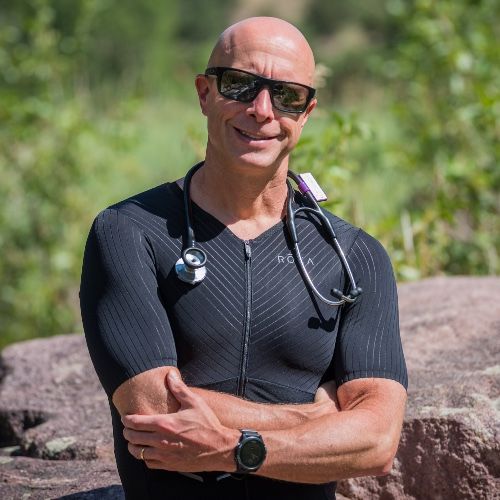
Speaker C: ,: Speaker C:I'm your Host, as always, Dr. Jeff Sankoff, an emergency physician, a triathlete, a triathlon coach and multiple Ironman finisher.
Speaker C:Coming to you as always from beautiful, sunny Denver, Colorado.
Speaker C:The voice you heard at the beginning of the program was that of my guest on this episode, Mr. Jim Logan.
Speaker C:Jim is an accomplished triathlete himself.
Speaker C:He's been in the sport for pretty much as long as I have done a host of different events at all different distances and he has had a remarkable personal history.
Speaker C:He is a cancer survivor, has undergone numerous surgeries to take care of an aggressive type of cancer.
Speaker C:He has come back from chemotherapy as well as multiple surgeries and continues to perform at the Ironman Distance.
Speaker C:He is a member of the Ironman Foundation.
Speaker C:He has been to Kona once as a legacy athlete and is returning as an Ironman foundation athlete this year, raising funds as part of that endeavor.
Speaker C:And he has written a book about his experience and about what keeps him going.
Speaker C:And I have to say my conversation with him was incredibly uplifting, very inspiring and I know that you are going to enjoy it.
Speaker C:That is coming up a little bit bit later on in the program.
Speaker C:It is something that I'm really looking forward to bringing to you because I was not aware of Jim or his story and it was something that I took a lot out of and I'm looking forward to sharing it with you.
Speaker C:Before we get to that, I am going to have a Medical Mailbag segment with my friend and colleague Juliette hoechlin, coach at LifeSport Coaching.
Speaker C:She and I will be towing the line at the Oregon 70.3 coming up a week from this weekend.
Speaker C:If you are going to be at the Oregon race, I hope that you will come and find us.
Speaker C:Juliette will be giving numerous talks leading into the event.
Speaker C:She will be speaking on the stage for the event several times.
Speaker C:I will be there in support.
Speaker C:I will be there competing as an athlete as well.
Speaker C:And we would love to say hello, so we hope that you will come and say hi to us.
Speaker C:We will also be doing a life sport swim on Saturday morning, so if you want information about that, please do drop us a line.
Speaker C:We'd love to have you out and show you the ropes for a race that both of us have done several times and continue to love very much.
Speaker C:The subject of this medical mailbag is going to be overtraining syndrome.
Speaker C:It is something that you've probably heard about numerous times.
Speaker C:We have mentioned it with respect to professional athletes like Sam Laidlaw, who we pined might have been a victim of this very kind of ill defined problem that can result in athletes having a very prolonged off period where they struggle to return to their previous form.
Speaker C:He seemingly had this issue after his failure to repeat as a champion in Kona.
Speaker C:He had won the race in Nice and then in Kona had a remarkable blow up on the Queen K during the run and I had surmised that perhaps he was overtrained.
Speaker C:Coming back from that, we talked about what that could mean, but we didn't really go into what overtraining syndrome was.
Speaker C:We had a listener question just recently about overtraining syndrome and so we are going to look at the literature.
Speaker C:What does the evidence say about it?
Speaker C:How is it defined, how can you avoid it and how can you come back from it?
Speaker C:If you are somebody who is concerned that this might be something that applies to you, we will be looking at all of that and that's coming up very shortly.
Speaker C:Before we get to that medical mailbag segment, I just want to take note of a couple of things that have been in the news of triathlon recently.
Speaker C:First of all, we had the Roth race take place just last weekend.
Speaker C:That as always, is an incredibly popular race on the triathlon circuit.
Speaker C:It is an iron distance event that is under the Challenge brand and it looked to be yet again just a sensational day.
Speaker C:The aforementioned Sam Laidlaw took the win for the men and we had a women's Victor, Alanis Siffert, a professional that personally I had not heard of.
Speaker C:She took the victory over a very much favored Lucy Charles Barkley, who was a late entrant into the race, but just looked to be a spectacular day.
Speaker C:A buddy of mine, friend of the podcast Triathlon Joe, was there.
Speaker C:He has posted several reels, talked about his wonderful experience at that event and it continues to be just a really great event on the triathlon circuit.
Speaker C:And I imagine it will continue to be for years to come.
Speaker C:The other piece of news is a little bit less encouraging.
Speaker C:It has to do with the cancellation of Ironman nice and the 70.3 race on the same day.
Speaker C:This was due to the heat dome that has affected much of Europe over the past couple of weeks.
Speaker C:And because of the anticipated very high temperatures and the inability of the French Triathlon Federation to assure the safety of competitors over such a big course on a day where temperatures were expected to really soar, they did the most prudent thing that they really felt was necessary and that was to cancel those events.
Speaker C:Obviously this is a huge deal.
Speaker C:They had to cancel it very close to the race day.
Speaker C:I believe they cancelled it the day before the race.
Speaker C:And for athletes who have traveled so far, who have invested so much time and money, this is just a personal, on a personal level, obviously for them, a catastrophe.
Speaker C:Everybody that I have seen posting about this, everybody that I've read talk about this has been very circumspect about it.
Speaker C:They understand why the decision was made and for the most part they are while disappointed, understanding and have been quite grateful to Ironman for the fact that Ironman has been very gracious in the opportunity that they have given.
Speaker C:They have offered athletes one of three options.
Speaker C: he ability to sign up for any: Speaker C: Nice in: Speaker C:That race is going to be moved into September, which I think is a brilliant idea and something I'm going to talk about a little bit more in a second or to get their money back for their race for.
Speaker C:So I think those are three really good options.
Speaker C:And a bad situation is often made a lot better by how an organization responds.
Speaker C:And to me, this is yet again another example of Ironman under new leadership responding to athletes in a way proactively that can really help soften the blow of a really disheartening kind of moment.
Speaker C:So good for them and I'm happy to see them do that and step up and do something that seems right for the athletes who were affected by something that was clearly out of their control, out of Ironman's control.
Speaker C:But this movement of the race from July to September is, I think, what we're going to start seeing pretty much across the board.
Speaker C:We're here in Colorado right now.
Speaker C:I can't work out outside.
Speaker C:The air quality is so bad.
Speaker C:We are seeing wildfires across the Rocky Mountains with smoke plumes coming from California and Utah and from Colorado itself, blowing over the eastern plains of Colorado and just affecting Denver on a daily basis.
Speaker C:I participated in the SBT Gravel a couple weeks ago.
Speaker C:It was a fantastic event, but it too was affected by really poor air quality in the days leading up to the event.
Speaker C:Fortunately, the race itself was spared, but it continues to be a major problem.
Speaker C:We've seen that the Silver Rush 50 mountain bike race has been canceled this weekend, as well as several other long distance endurance events up in the mountains, all being threatened or canceled because of air quality or even the fire itself causing problems.
Speaker C:So as long as we continue to see these impacts of climate, high temperatures, fire risk, air quality problems brought on by both of those two things together, I think that we are going to see more and more events pushed from the what used to be considered the best months of the year, June, July, August, moving earlier and later into the year.
Speaker C:And so we can anticipate that it's going to impact how we train.
Speaker C:We're going to have to see stop seeing months like September, October, November as sort of off season.
Speaker C:And those are going to end up being real peak season months for training.
Speaker C:December, January are no longer going to be times of taking the foot off the gas.
Speaker C:We're going to have to be ramping training up at that time in anticipation of seeing races starting as early as March or April.
Speaker C:And this is really, I think, a very sad state of where we're at right now.
Speaker C:We personally, I've always loved summer.
Speaker C:I look forward to summer.
Speaker C:I look forward to the events that come in summer.
Speaker C:And with these really big changes that we're seeing coming on so quickly, we're gonna have to make these changes and we're gonna have to adapt to them.
Speaker C:And we're really not gonna have a choice because I think the idea of having these events at the times that we're used to having them, it's just not gonna be tenable.
Speaker C: sode about this idea that the: Speaker C:I'm not sure what people are thinking when they schedule these events.
Speaker C:At times when we know the temperature and humidity are going to be very high and put athletes in jeopardy, organizers are just going to have to get their heads wrapped around the fact that the window for having these kinds of big events is going to have to shift.
Speaker C:And more and more I think we're going to be facing cancellations movements of events and organizers are just going to have to think that, look, we need to think about climate, we need to think about fires, we need to think about air quality when we schedule these events.
Speaker C:And it's a lot safer for everybody, for our event itself to go on and for the athletes who are participating in them to move these events into months when it's much more likely to actually happen.
Speaker C:What do you think about all this?
Speaker C:Am I way off base?
Speaker C:Are we going to have to give up our summers for events and activities?
Speaker C:Or am I just wrong?
Speaker C:Are we just in a period where things are just a little bit off kilter and we can expect things to come back to normal?
Speaker C:Have you been impacted by events being canceled or moved?
Speaker C:I'd love to hear.
Speaker C:And were you impacted by what went on in Nice?
Speaker C:Did you go all the way over there just to find out the race was canceled?
Speaker C:And if so, what did you think about the offers that were made by Ironman?
Speaker C:And what was your choice in terms of the options that were made?
Speaker C:Did you select to get your money back to move to next year or to move to a different race this year?
Speaker C:I'd love to hear it.
Speaker C:Please do send me an email@tridocloud.com or alternatively, you can head over to the private Facebook group for the Tridoc podcast.
Speaker C:Just search for Tridoc podcast on that platform.
Speaker C:If you're not already a member, answer the three easy questions again, you admittance to the group.
Speaker C:You can join the conversation there, share your thoughts about any of these questions or anything else you ever hear on the program, and we would love to have you as part of the discourse over there.
Speaker C:All right, that's all I've got to say on this matter for now.
Speaker C:I'm sure there'll be more of this conversation upcoming in the Medical Mailbag as well as on future episodes.
Speaker C:But for now, let's take our conversation to the Medical Mailbag and get to the question of overtraining syndrome.
Speaker C:What is it?
Speaker C:How can we prevent it?
Speaker C:And how can we deal with it if it's something that affects us?
Speaker C:That's coming up right after this short break.
Speaker A:It is time once again for that segment of the program when I'm joined by my friend and colleague remotely for the last time.
Speaker A:I say the last time, but what I really mean is the last time before we're together again in person in about a week from after this episode comes out.
Speaker A:Juliet Hockman, lifesport coach and friend of mine for quite a while now.
Speaker A:Juliet, welcome to the program it's episode 201.
Speaker A:We've entered the new 100.
Speaker A:We had some great feedback from our look back.
Speaker A:I do want to call out.
Speaker A:I'm sorry, I'm blanking on your name.
Speaker A:I'm so sorry, I forget what your name was.
Speaker A:But there was a young lady who reached out and said you didn't mention the saunas because in the last hundred episodes, you revisited saunas and said that saunas were beneficial.
Speaker A:And I actually went out and got a sauna based on that episode.
Speaker A:And so I very much appreciate that feedback.
Speaker A:And I wrote back to her and I said, you are absolutely correct.
Speaker A:But the reason I didn't include it was because technically, saunas were part of our first 100 when I had reviewed them the first time.
Speaker A:And I had.
Speaker A:We had included that in our first list.
Speaker A:So I didn't want to include it again.
Speaker A:But she was absolutely correct and I appreciated that feedback.
Speaker A:We got a lot of other good feedback of people saying, that woman is.
Speaker D:On task, that she noted that.
Speaker D:I'm impressed.
Speaker A:Yeah.
Speaker D:Wow.
Speaker A:And we had a lot of other people feedback saying they really enjoyed and they couldn't believe that it was such a small list.
Speaker A:And yeah, it was great.
Speaker A:I really enjoyed that we did that.
Speaker D:Yeah, it was fun.
Speaker A:We will be together in Salem again.
Speaker A:This is the third year running that we are doing this race together.
Speaker A:I'm very much looking forward to it.
Speaker A:Things are terrible here in Denver.
Speaker A:We're facing a ton of air quality alerts.
Speaker A:I have not been able to.
Speaker A:I have not been able to train outdoors for quite a while because the air quality is so bad.
Speaker A:So how's it going out there?
Speaker D:Well, I am knocking on all the wood that I can see within reach.
Speaker D:So far, so good.
Speaker D:I mean, we had extremely dry winter and spring.
Speaker D:I mean, reservoirs and water levels and snowpack are just down historically low.
Speaker D:And so everybody has been holding their breath.
Speaker D:There was even some talk about whether they should cancel the fireworks the other night.
Speaker D:But so far, so good.
Speaker D:So if we can just hang in there.
Speaker D:Yeah.
Speaker D:No big fires in Oregon so far.
Speaker A:I was talking with a friend of mine who lives in Seattle.
Speaker A:She said it's been quite cool and rainy.
Speaker A:Have you not been affected by the same amount of rain last week?
Speaker D:There was a little bit, but it was like typical rain.
Speaker D:When it does rain in the summer in the Pacific Northwest, it's never that drenching rain you get in the Northeast or the Midwest where it just pours.
Speaker D:It was more.
Speaker D:Yeah, we did have a couple nice days of rain, but Just compared to what we need, it's nothing.
Speaker D:It's like.
Speaker C:Yeah, yeah.
Speaker D:So, yeah, fingers crossed you were out.
Speaker A:For your Salem kind of pre race, Nick.
Speaker A:And the river is moving.
Speaker D:It's awesome.
Speaker D:It's moving.
Speaker D:Yeah.
Speaker D:It's a little shallower than usual.
Speaker D:You feel like you're coming over that rock bank a little bit sooner, but it's still not.
Speaker D:You're still going to have people making the mistake of standing up.
Speaker D:If you're listening to this and you're going to do 70.3 Oregon, do not stand up.
Speaker D:But.
Speaker D:Because it looks like you can.
Speaker D:But I never touch the bottom still.
Speaker D:I mean, it looks like you can, but I don't think you can.
Speaker D:So, yeah, it'll be super fast again.
Speaker D:It'll be exciting.
Speaker D:It's the usual flume ride.
Speaker D:It's going to be fin good.
Speaker A:I mentioned in the monologue about life sport doing a guided swim on Saturday morning.
Speaker A:Do you want to give some details about that?
Speaker D:Sure.
Speaker D:So actually there's quick shout out to the Ironman folks.
Speaker D:They have organized for both 70.3 Oregon and 70.3 Washington, a new event on Friday night.
Speaker D:So if you're there early, there is an event called Currents to Kicks, which is you get to swim the river.
Speaker D:And this is actually both Oregon and Washington.
Speaker D:Both of them have similarly fast swims.
Speaker D:So you can swim the river and then there's a 2.1 mile run right after that and they're gonna run you through transition and it's gonna be chipped and metals and the whole thing.
Speaker D:And I think it's like 75 bucks.
Speaker D:So if you want to swim the river and do.
Speaker D:And family members can join.
Speaker D:I can't remember the minimum age, but something like 14 or something.
Speaker D:It's chipped.
Speaker D:It's, it's, it's supported in the water so everyone feels really safe.
Speaker D:So that's one thing which you'd look at, you should look into for both those races if you are going to Oregon or Washington.
Speaker D:And then yeah, we do a sort of informal event which is intended really just for life sport athletes on Saturday morning.
Speaker D:But we always get all kinds of hangers on who come and maybe they hear about it the day before or maybe they hear about it on this podcast and all the time.
Speaker A:Maybe you never know.
Speaker D:You never know.
Speaker D:And it's just fun.
Speaker D:I mean, it's not chipped.
Speaker D:There are no safety boats.
Speaker D:It is at your own risk.
Speaker D:I want to emphasize that you should bring a swim buoy, a visibility buoy for safety.
Speaker D:But Jeff and I will be there swimming the river at 8 o' clock at the swim start with whoever happens to show up.
Speaker D:We'll give a quick little overview, talk about the course.
Speaker D:We've both swum it and raced it several times now and it's just a great way to preview the swim course.
Speaker D:It won't take anything out of your hide in terms of exhausting.
Speaker D:You'll be down the river in anywhere between 20 and 35 minutes.
Speaker D:So it's worthwhile doing so that you take the jitters out for race day.
Speaker A:And I want to be clear, it's not a life sport event.
Speaker D:No, it's not.
Speaker A:Juliet.
Speaker A:Juliet and I with our life sport athletes, we just give them a little preview of the swim course and if you want to come and meet us, we'll be at the swim start on Saturday morning and we'll do that.
Speaker D:Yeah, we definitely will.
Speaker D:And it's always very funny because there's always other people in the vicinity.
Speaker D:And then Jeff and I start talking about the course and the people who are in the vicinity start to creep closer and closer, glom on and glom on.
Speaker D:And all of a sudden there's a huge pack of athletes going down the river and it's fun.
Speaker D:So come on along if you'd like to.
Speaker C:Yeah.
Speaker A:The other thing I wanted to just get your thoughts on was what happened with Ironman France.
Speaker A:Yes, you heard France and Nice were both canceled.
Speaker A:Ironman France and Nissan.
Speaker A:France and Nice both canceled.
Speaker A:Yeah.
Speaker D:Y.
Speaker D:And then they shortened the event at Frankfurt, wasn't it?
Speaker D:Frankfurt?
Speaker A:Yes, at Frankfurt.
Speaker C:Yep.
Speaker D:Yes.
Speaker A:And then so I have been saying for a little while now that I think that organizers are going to be forced to move these events out of the summer months and into the fall and spring.
Speaker A:And indeed I'm hearing now that Ironman kudos to Ironman.
Speaker A:This was something that they had no control over, but they're offering athletes the option.
Speaker A:They're giving their money back.
Speaker A: vent or they can come back in: Speaker A:And the race in 27 is now scheduled for late September.
Speaker A:So I think this is what we're going to start seeing is we're going to start seeing these events move out.
Speaker A:What do you think?
Speaker D:But do you trust Nice now?
Speaker D:Because now, you know, double sort of back to back.
Speaker D:First they say, sorry, Iron man, you're going to have to cough up all this extra money for 20, 26 worlds.
Speaker C:Right.
Speaker D:And that was a mayoral decision for sure.
Speaker D:Political, whatever, financial.
Speaker D:Now of course, they didn't have any control over the weather.
Speaker D:But one can't help wondering, I mean, by American standards, it wasn't that hot, you know, but there's no AC in Europe and I get it.
Speaker D:And they weren't prepared for it.
Speaker D:But if you're an athlete and maybe you've been like, you're looking at Nice, I don't know if I would sort of put the outlay, the financial outlay to go back to Nice.
Speaker D:It's sort of like two strikes.
Speaker D:I don't know.
Speaker D:I know that one wasn't their fault,.
Speaker A:But I think we have to remember that the European standards for health are more stringent.
Speaker A:So I wasn't terribly surprised that stringents for water safety are different over there as well.
Speaker A:We've seen that.
Speaker A:That they have.
Speaker D:Well, they're less stringent for black people.
Speaker A:Here in some countries.
Speaker A:Yeah.
Speaker A:Yeah.
Speaker A:So it's not that surprising to me.
Speaker A:But you have to go by what your local government does and it is what it is.
Speaker A:I don't know that this is a nice thing.
Speaker A:I think this is just a reflection of a bunch of a confluence of different things.
Speaker A:I think that the Ironman in Nice is safe.
Speaker A:I really do.
Speaker A:It's a big event for the economy there.
Speaker A:It's a big event for the community.
Speaker A:It's been.
Speaker A:It's one of the longest standing events on the triathlon circuit.
Speaker A:It goes back decades.
Speaker A:So I would be very surprised to see that go away.
Speaker A:I am not surprised to see them move it to a cooler time of the year, though, because I think you know that.
Speaker A:Yeah.
Speaker A:And summer is a big time for tourists.
Speaker A:Tourism in general is a season where you're less likely to be anyways.
Speaker D: Do you think that Worlds in: Speaker A:No, they already said it's not.
Speaker D:Oh, they already said it's not.
Speaker A:Yeah, yeah, they said it's not.
Speaker D:Oh, okay.
Speaker A:But I have concerns about putting 27 worlds in Tennessee Chattanooga in August.
Speaker A:Yeah, yeah.
Speaker D:I mean, I don't get it.
Speaker D:Like, why can't we do it in October?
Speaker D:It's usually in September.
Speaker B:October.
Speaker D:Why can't.
Speaker D:I don't understand why we can't push it later.
Speaker D:It must be something to do with local government.
Speaker A:I don't understand.
Speaker D:That's going to be so hot and sticky.
Speaker D:I know.
Speaker D:No, it's bizarre to me.
Speaker A:Potentially very bad.
Speaker A:Yeah.
Speaker A:Given all of these potential issues with temperature and humidity and everything else.
Speaker A:It's like when I saw the date come out, I was mystified.
Speaker A:I Was really surprised they did that.
Speaker D:Yeah.
Speaker D:No, I know.
Speaker A:Anyways, I guess.
Speaker A:Well, if you get a slot, are you gonna go?
Speaker D:I mean, I've been sort of building up to my 60th year.
Speaker D:Right.
Speaker D:I mean, next year is my 60th year.
Speaker D:Yeah, I know.
Speaker D:And so, I mean, I.
Speaker D:In two weeks, we may have to make this decision on the spot with credit card in hand.
Speaker D:Right.
Speaker A:I will not perform well in those kind of conditions.
Speaker A:And I'm not totally jazzed about going back to Chattanooga.
Speaker D:You've done it.
Speaker D:I haven't done it yet.
Speaker A:I don't know.
Speaker A:And then last I heard, the first races in Europe and Canada, people are not taking the slots.
Speaker A:Now, I don't know how much of it is.
Speaker A:Some of the commentary is hard to.
Speaker A:It's hard to understand.
Speaker A:Because people don't want to go to the US or is it because people don't want to go to Chattanooga?
Speaker A:It's hard to tell.
Speaker A:But, yeah, I don't know.
Speaker A:So we'll see.
Speaker A:I have to think about it, too.
Speaker A:So to be continued.
Speaker A:And that's assuming I even qualify.
Speaker D:Well, ditto.
Speaker A:There's no guarantee.
Speaker D:Yeah, no, no, no.
Speaker D:Never a guarantee.
Speaker D:Yeah.
Speaker A:Anyways.
Speaker A:All right.
Speaker A:We have a medical mailbag to take on.
Speaker A:We should probably get to that.
Speaker A:So what are we talking about today?
Speaker A:We do have a question.
Speaker A:I love when we have questions.
Speaker C:So let me talk about today.
Speaker C:Thank you.
Speaker D:Yeah, thank you.
Speaker D:Xenia Parker.
Speaker D:This comes from her.
Speaker D:Really appreciate you sending this in.
Speaker D:So she has a question about over training and how to detect it, how to prevent it, what we know about it.
Speaker D:Of course, there's conversation about over training versus overreaching and what that means.
Speaker D:And I know that you and your team have really dug into this, and it sounds like there's just not a whole lot of clarity.
Speaker D:It's not like you can say, oh, you're pregnant or you're not pregnant.
Speaker D:You're overtrained, or you're not overtrained, or maybe use your, you know, you've got the measles or you don't have the measles.
Speaker D:So it doesn't sound as cut and dry as this, which is, you know, you always, like when you can point to a problem, if you're going through a bad chapter in your training, you can say, oh, I am overtrained, and this is what I have to do about it.
Speaker D:But it doesn't sound like it's as black and white as that.
Speaker A:It's really not.
Speaker A:It's kind of frustrating.
Speaker A:And thanks to Cosette Rhodes, who was the intern that did the research on this, and she really did a great deep dive on this, found a lot of articles on the subject by a lot, a wide range of different, different people in different sports.
Speaker A:And it was frustrating because it's an ill defined kind of entity.
Speaker A:We all know about it.
Speaker A:The one I could think of most recently would have been Sam Laidlaw, who won Ironman.
Speaker A:Nice.
Speaker A:And then trained and came back and just raced all year long and then went to Kona and had that epic blow up during the run on the Queen K, really overheated and really was not able to come back and race again for almost a year.
Speaker A:Just kind of disappeared for a while while he had to recover.
Speaker A:And everybody thought, is this a guy who's really succumbed to overtraining?
Speaker A:And is this what we're seeing?
Speaker A:And probably to some degree that's what happened with him.
Speaker A:But in terms of actually defining overtraining, in terms of actually being able to identify it in any given athlete, it is just, it's nefarious.
Speaker A:Just to give some Context, an Article 12 by Kraher and Schwartz did a really nice job of giving this spectrum from functional overreaching to non functional overreaching to overtraining syndrome.
Speaker A:And the definitions here are that when we train, when we really do a hard workout, what we're doing is we are overreaching.
Speaker A:We're pushing our body past what we should be able to.
Speaker A:And we want to do that because that's how we adapt, right?
Speaker A:We push ourselves beyond what we are able to do in the hopes that during a recovery period, our body will adapt to allow us to then do more the next time.
Speaker A:That is functional overreaching.
Speaker A:There is a point though, if you do that too much or if you reach too far.
Speaker A:And I'll give you a great example.
Speaker A:I did the SPT gravel.
Speaker A:I made the mistake of doing the SPT trail the day before, which was this insane 10k race with like an insane amount of a vertical.
Speaker A:I did these things back to back and I spent the next week hobbling around, unable to walk because my legs were just shattered.
Speaker A:That I would argue is probably a little bit of non functional overreaching.
Speaker A:Overreaching pushed a little too far.
Speaker A:It actually caused probably a little more harm than good.
Speaker A:And the recovery period was more about healing than it was about actually gaining anything out of it.
Speaker A:And that's non functional overreaching.
Speaker A:And if you push non functional overreaching too much, if you are continuously doing things like that, eventually you can get to this period or this syndrome of overtraining.
Speaker A:And, and the main difference between these three things is the time it takes to recover and the duration that your performance is deranged, deteriorating.
Speaker A:And the problem is that it's really hard to know where you are in these.
Speaker A:I think we all know.
Speaker A:I think we all know when we're in that period of functional overreach as coaches, we see our athletes do functional overreaching all the time.
Speaker A:We get feedback from them.
Speaker A:We could see the data.
Speaker A:I could see that they're in a certain zone, be it heart rate or power or pace, and I'm glad to see that.
Speaker A:And then I could see when they do another workout a little later in the week that they've recovered because their heart rate is back in where it should be and everything looks good.
Speaker A:But it's a little bit harder to know when they have extended past that.
Speaker A:What kind of things do you look for to kind of get a sense that somebody's overreaching in a non functional way?
Speaker D:Yeah, I mean, a lot of it is anecdotal feedback in terms of I'm so tired, I'm so tired, but I can't sleep.
Speaker D:I'm, you know, I don't feel like training.
Speaker D:You know, when their power and their heart rate zones are totally wackadoodle, they're like not lining up at all.
Speaker D:But what's tricky about it is mental fortitude varies a little bit from athlete to athlete.
Speaker D:Right.
Speaker D:So you're trying to take their feedback very objectively.
Speaker D:But you also know that athletes, depending on what their athletic background is or where they are in the triathlon journey, or how much experience they have, or just so many things can color their perception on how they're feeling.
Speaker D:And so that adds very complicated layering on their anecdotal feedback, for sure.
Speaker A:Which is, I struggle that a lot.
Speaker A:I struggle with that too.
Speaker A:And I know, I've spoken to other coaches who also struggle with that, because you have some athletes who never say a peep.
Speaker A:And then you have athletes who will always say that, oh, that was really hard.
Speaker A:I'm feeling this, that the other.
Speaker A:And it's kind of hard to know, to tease through that, to know exactly where you're at.
Speaker A:So I totally get that too.
Speaker A:The other thing is, and I just want to go back to this paper because they talk about how proposed mechanisms for all of this physiologically include hormonal changes, immune dysregulation, inflammatory processes, changes in your autonomic nervous system.
Speaker A:But there's really no one thing that really explains it.
Speaker A:And it's probably some interplay of all of this.
Speaker A:And I think we all look for these symptoms, right.
Speaker A:This fatigue with sleep dysregulation, irritability is a big one.
Speaker A:I always hear emotional lability, the lack of motivation you mentioned, I think, too.
Speaker A:But again, those things can crop up a lot.
Speaker A:And just the presence of anyone or even more than one doesn't necessarily mean you're overtrained.
Speaker A:It just might mean that you've been pushing yourself.
Speaker A:Like, I know when I'm training for an ironman personally, or when I'm training athletes for an ironman, I go through these periods, and I know now because I've done enough of them that it's normal and that I'm gonna get a recovery week and it's gonna feel better.
Speaker A:And I think the big thing that distinguishes the overtraining from the functional adaptation is that you recover from the functional adaptation.
Speaker A:You will get back to an equilibrium, whereas with overtraining, you don't.
Speaker D:Right.
Speaker D:And that's why oftentimes, about three quarters of the way through a recovery period or, you know, three days in, I'll say, how are you feeling?
Speaker D:You know, how are your legs feeling?
Speaker D:How are you coming around?
Speaker D:And usually, you know, nine times out of 10, people are doing fine.
Speaker D:But when you're not recovering during the given recovery period.
Speaker D:Yeah.
Speaker D:Then you have to start to think about it and worry a little bit.
Speaker D:For sure.
Speaker A:Yeah, yeah.
Speaker A:You'll know this name.
Speaker A:You can.
Speaker A:Drup.
Speaker A:He's a physiologist from, I believe, the Netherlands.
Speaker A:He posts a lot on social media.
Speaker A:He does these little cartoons where he really nicely describes a physiologic process.
Speaker A: he published a paper back in: Speaker A:You don't just go from normal adaptation to maladaptation to overtraining.
Speaker A:Some people kind of go there linearly, but a lot of people will just trundle along doing normal things and then all of a sudden fall off a cliff.
Speaker A:And it's really hard to predict.
Speaker A:And a big part of the problem here is that there's no markers.
Speaker A:There's nothing you could check on labs.
Speaker A:There's nothing you can look for in the data that's going to tease this out.
Speaker A:At the end of the day, a lot of this just boils down to you're doing fine, and then very gradually, you're not.
Speaker A: randu Wallace and others from: Speaker A:We know it exists, we see the effects of it, but we cannot find a single way to reliably identify this and be able to predict that it's coming on.
Speaker A:Do you know how discouraging this is to read this literature as a coach and athlete?
Speaker D:Yes.
Speaker D:Yeah.
Speaker D:No, for sure.
Speaker A:The one thing I will say is that this seems to be a problem much more for people who are training at the very highest levels.
Speaker A:Like, this is not a typical age grouper problem.
Speaker A:This is a high level college athlete.
Speaker A:This is like to people who are making athletics part of their living, it's not so much an issue for the person has a job.
Speaker A:And listen, we get fatigued from and we get stressed, but that is a combination of factors.
Speaker A:And it's not just the physical exhaustion that seems to lead to this overtraining.
Speaker A:When you were rowing at that high level, was this something that you were aware of amongst teammates or.
Speaker A:Yeah, see, that's interesting.
Speaker D:No, no.
Speaker D:And you also have to remember rowing is a slightly different animal because in rowing nobody ever asks how you're doing because it's all about the boat.
Speaker D:And it's really.
Speaker D:I mean, maybe it's changed now.
Speaker D:This is a very long time ago, of course, but it was.
Speaker D:I don't ever remember in my entire rowing career being asked, juliet, how are you feeling?
Speaker D:How are you doing?
Speaker D:It was always, how's the boat feeling, what's going on in the boat, you know, et cetera.
Speaker D:And you never, you organized training around the entire team.
Speaker D:You never said, oh, Julia, you're doing this today.
Speaker D:And you know, Josephine, you're doing this today.
Speaker D:Everybody did the same thing at the same time.
Speaker D:So there was no individualized training at all.
Speaker D:So it may not be a great sport mindset.
Speaker B:Super interesting.
Speaker D:I don't know if it's changed.
Speaker D:I don't think so, because you still got to get eight people going in the right direction at the same rate.
Speaker D:And likewise there was actually.
Speaker D:This is a little bit of a non separate, but I'm going to chase it down anyway, there was and I don't know if there still is because I haven't been involved in a college program intimately recently.
Speaker D:But you never brought a boat in because one person wasn't feeling Very well.
Speaker D:Like, I remember one time in all those years of rowing where one woman had really, really bad menstrual cramps and the boat came in and everybody was like, horrified that this boat didn't finish their workout because of one individual.
Speaker D:You would never bring a boat in if someone wasn't feeling well.
Speaker D:And likewise, if you're doing indoor training on ergometers in the winter, which you have to do if you go to school in the Northeast, if one person stood up in the middle of an erg workout where all the ergs, like 30 ergs are lined up and like bailed, you're never trusting that person in your boat, like, ever.
Speaker A:Wow.
Speaker D:They're written off.
Speaker D:And so there's very much this element of group think.
Speaker D:And again, I don't know if it's changed.
Speaker D:This was the 80s and it may have changed, but I don't know.
Speaker D:But I'm just saying what it was like.
Speaker D:So anyway, no, an overtraining.
Speaker D:I mean, no, it wasn't really a factor for us in rowing.
Speaker A:That's interesting.
Speaker A:And the reason I ask you about the rowing is because what I came across when we were doing these, the literature search is overtraining does not just apply to endurance sport, it applies to all kinds of sports.
Speaker A:Like, we see it in resistance training, we see it in power training, we see it in.
Speaker A:It can happen across the board.
Speaker A:So it is a feature that is not unique to endurance sport.
Speaker A:I think it's more common in endurance sports, but it can be seen in other sports as well that don't have monumental number of hours spent running, biking and swimming, which I think is.
Speaker D:Well, rowing is considered an endurance sport.
Speaker D:We train as many hours as a triathlete would, just for a lot less racing time.
Speaker D:But what about in sports, like field sports?
Speaker D:Like, do you see it in soccer?
Speaker D:Do you see it in ice hockey?
Speaker D:Do you see it in, you know, baseball?
Speaker C:Yeah.
Speaker A:Baseball would be one where I would imagine you spend a lot of downtime in baseball.
Speaker D:You probably do.
Speaker D:Yeah.
Speaker A:Probably not.
Speaker A:You're out there just waiting for a ball to be hit your way.
Speaker A:I don't know.
Speaker A:I didn't see it.
Speaker A:I saw mostly referred to in either the cycling, running, weightlifting, resistance type training.
Speaker A:None of these talked about field sports, but I can't believe it wouldn't affect them.
Speaker A: f the more recent papers from: Speaker A:So for those of you who have not listened to the podcast for a long time, one of the very first episodes of the podcast I did, I addressed the female athlete triad, which is a low energy availability thing that was first described in ballet dancers, but then later became to be recognized very frequently in female runners and eventually in female athletes across the board.
Speaker A:And it basically, it's a triad.
Speaker A:It's low energy intake leading to dysregulated menstrual cycles leading to calcium loss and fractures in the.
Speaker A:So stress fractures in the weight bearing bones.
Speaker A:And this is commonly seen in sports where weight and image, body image are considered to be a big part of the sport.
Speaker A:That's why it was seen in ballet dancers, but it was also described in runners, gymnastics, diving, things like that.
Speaker A:And it came to then be understood to be also in males.
Speaker A:But males don't suffer the fractures as much.
Speaker A:And the reason for that is because in women there is so much integration between the menstrual cycle and bone health.
Speaker A:And with men, when men have low energy intake, they tend to get muscle wasting, but they don't tend to lose calcium as much.
Speaker A:And so while they can get stress fractures, and they often do, they don't get them to the same degree, nor do they get them in the same places as women do.
Speaker A:All of that.
Speaker A:To say that low energy availability and reds seem to have a great deal of overlap with over training syndrome.
Speaker A:And now there seems to be this movement in the sport science kind of field to think how much of this is overtraining, how much of this is actually red and how much of it is just an extension of this is a version of reds, which I think is pretty interesting.
Speaker D:I mean, it makes total sense to me.
Speaker D:Right, because when you have women, it is predominantly women.
Speaker D:But yes, men have reds as well.
Speaker D:It's the same, you know, they're expending more calories and energy than they're taking in.
Speaker D:Right.
Speaker D:Which causes all kinds, you know, unhappiness, exhaustion, depression, poor sleep, and then all the bone density issues.
Speaker D:And you just, you can't sort of go on.
Speaker D:I mean, there's so many overlapping symptoms here that it doesn't surprise me.
Speaker D:And it's just maybe we're better able to define reds because we do see the stress factors, the lack of you getting your period, you know, those sort of immediate outcomes of women eating too little to fuel their activity.
Speaker A:Yeah.
Speaker A:And what I came away from after doing all of this is, look, we can't easily diagnose overtraining syndrome.
Speaker A:We can't easily predict who's gonna get it.
Speaker A:But I think that we can as age groupers and as coaches of age groupers come up with the way to make sure our athletes are less susceptible to developing this.
Speaker A:And to me, it's a two or three pronged kind of strategy.
Speaker A:Number one, make sure your athletes are getting and make sure you as an athlete are getting adequate caloric intake when you are in a training block, especially if you're training for big events like ironman or even 70.3.
Speaker A:That is not the time to be cutting calories.
Speaker A:You need to be fueling to train, you need to be fueling to recover.
Speaker A:And if you are cutting calories, you risk getting into this low energy availability.
Speaker A:And that is a cycle that only goes in one direction.
Speaker A:It's not a great idea.
Speaker A:The time to cut calories is when you are in a low training volume period.
Speaker A:This is not the time.
Speaker A:So that's number one.
Speaker A:Number two, make sure that when you are in this period where you are trying to overextend and get that training adaptation, you are doing so in a thoughtful manner.
Speaker A:So you're not doing it on successive days, you're not doing it without periodization, meaning that you build up your overtraining and adaptation and you build in recovery periods.
Speaker A:There are so many athletes who continue to not like to rest or not like to recover.
Speaker A:And that at this day and age, just, I still can't believe that's a thing.
Speaker A:Because clearly recovery helps, recovery prevents this kind of problem and recovery is so integral to healthy training.
Speaker A:And then the third thing is having a honest conversation with either your coach or with yourself or both, to make sure that you're staying on top of how you're feeling, how you're sleeping, how your motivation is.
Speaker A:And look, there are a lot of reasons to have disrupted sleep, to have disrupted motivation, but you want to tie it all together and say, I've not been sleeping well and I really am in the middle of a hard training block.
Speaker A:These two things could be linked.
Speaker A:So it's important to put it all together.
Speaker A:Do you have anything else you would add to that?
Speaker D:Yeah, I mean, I talk a lot with my athletes about sleep, right?
Speaker D:Just trying to get on regular sleep schedules, trying not to get everything done late at night, depending on the age of my athletes.
Speaker D:Because I coach athletes everywhere from 18 to 70.
Speaker D:Like I have a pretty wide ranging group, you know, sometimes when I'm working With younger athletes, especially younger guys, you know, I sort of, I'm almost in the mommosphere, you know, in terms of like, hey, let's make sure that, you know, you're, you're getting good food in.
Speaker D:Yeah, I know you are going out with the boys and that's awesome, but we don't need to be, you know, if you're in an ironman training block and you're spending two hours every night playing video games and you're losing sleep, maybe you can just, maybe you can put that on hold, you know, for whatever it is.
Speaker D:And so sometimes it's.
Speaker D:I do talk a lot about daily nutrition.
Speaker D:I do talk a lot about sleep.
Speaker D:I do talk a lot about, you know, recognizing that everybody has their own individual stressors, whether that's marriage or family or work or ailing parents or.
Speaker D:I mean, we could think of 30 and that those do have impact.
Speaker D:So to kind of give yourself some grace there.
Speaker D:And I also talk to a lot of athletes just about straight organization, like, you know, making sure that you, you find, you block time for yourself to train every day and you do it proactively so that the rest of the world doesn't kind of gobble that up.
Speaker D:And then you're all of a sudden getting on the trainer at nine o' clock at night.
Speaker D:So.
Speaker D:Yeah, so I think that you can't.
Speaker D:I think that, gosh, you know, the overreaching over training thing, you know, it's funny, I feel like when you, when we talk about, we recognize an athlete or we talk about potentially an athlete being overtrained, it's almost like we're accusing them of something they've done wrong.
Speaker D:Right.
Speaker D:I mean, it's sort of like we're pointing, oh, Sam Laidlaw, you know, he overtrained and now he's paying the price for a whole year or whatever it is.
Speaker D:I remember someone once sort of, I don't know, many, many years ago, accused, you know, Juliet, I think you're overtrained.
Speaker D:And I felt like I'd been hit, you know, and I was like, what?
Speaker D:And so we also kind of need to be able to desensitize that conversation a little bit, I think, to be able to say no.
Speaker D:I mean, let's, this is this very nebulous thing.
Speaker D:Let's try to figure out whatever we want to call it, however we want to label.
Speaker D:Let's try to figure out how to make sure that you are taking care of yourself and that we're taking care of you and that we don't get to that tipping point where it's really, really hard to come back.
Speaker A:Yeah, and I think that's a really good point and it's a very good way to end.
Speaker A:And I think overtraining for those who really are affected by it, it's a big deal.
Speaker A:Like, and that's something I don't think I emphasized enough, which is to say that this spectrum where it takes a variable amount of time to recover, like the normal stretch workouts that you recover from, that within a day or two.
Speaker A:If you're getting into the not helpful overstretching, that could take as much as a few days to a week to maybe even a couple weeks to recover from.
Speaker A:But true overtraining syndrome, that's months, sometimes years.
Speaker A:There are people, there are ultra runners.
Speaker A: t was a case report in BMJ in: Speaker A:These were three athletes who had really significant overtraining.
Speaker A:It took years for them to get back to even a protocol where they could start running again.
Speaker A:They were off for six months to a year doing nothing and to let their bodies recover and then they had to do this very gradual return.
Speaker A:I mean, it was awful.
Speaker A:So this is not a trivial thing, this overtraining syndrome.
Speaker A:And that's why I say most people when they think they're overtrained, what they really are is they're just overstretched a little bit and they need to take that as a warning and back off so that they don't get over trained.
Speaker A:So anyways, this is a great conversation.
Speaker A:It's a little bit frustrating because as we said, there's just no easy way to identify it, no easy way to predict it.
Speaker A:But I hope we've given you at least some sense of what it is, of the tools to prevent it.
Speaker A:And if you have any questions, please, you know how to reach us.
Speaker A:Probably the best way is we'd love to hear your experience with any of these things.
Speaker A:Head over to the Facebook private group where you can join the conversation.
Speaker A:We would love to hear if you've had any signs or symptoms of this, if you've actually dealt with it, how you came through, what you did to recover, things like that.
Speaker A:Xenia, thank you so much for the question.
Speaker A:It was a great one.
Speaker A:And we always encourage you to send your questions along to us.
Speaker A:You can send me an email@tridocloud.com you can drop it into the Facebook group where a lot of people have Done so including Xenia for this question.
Speaker A:Or you can walk up to us at Oregon 70.3 and you could come and tell us.
Speaker A:Hey, I've got a question for you to cover.
Speaker A:It actually has happened to me before at other races.
Speaker D:Yes.
Speaker D:And we love it when we get found at a race and someone comes and says hi.
Speaker D:Every once in a while someone's head will rip around.
Speaker D:They'll say, I recognize your voice, so please come say hi.
Speaker D:It just makes our day.
Speaker D:Don't be shy.
Speaker A:Absolutely.
Speaker A:Absolutely.
Speaker A:All right, that's all we've got for you this time.
Speaker A:We will look forward to chatting again in a couple of weeks time and hopefully to say hi to some of you in person at Salem.
Speaker A:Juliet, thanks for being here and we'll talk to you again soon.
Speaker D:Thank you, Jeff.
Speaker A:My guest on the podcast today is somebody who is very familiar with adversity.
Speaker A:And I'm not just talking about the kinds of adversity that we all encounter during our training and racing.
Speaker A:I'm talking about the kind of adversity that none of us hope to encounter during our lifetimes.
Speaker A:And yet so many of us will in some form or another.
Speaker A:James Logan was raised in New Jersey.
Speaker A: He moved to Atlanta in: Speaker A: In: Speaker A:That very same year they raised a son who is now 21.
Speaker A:And I can attest to the fact that he's thriving and doing well because he was our tech support guru in Jim's studio because he helped us get through some audio issues and we're able to now speak and hear each other quite well.
Speaker A: In April of: Speaker A:That was 27 months ago.
Speaker A:And currently he is fortunate to report that he has no evidence of disease and he's alive and doing well.
Speaker A:He is currently training for the Ironman World Championship in October, racing for the Ironman Foundation.
Speaker A:He is fundraising promoting his recently published book, Just Keep Trying.
Speaker A:Trying spelled the way all of us endurance sports athletes would spell it.
Speaker A:T R I hyphen ing.
Speaker A:But for today, for the next half an hour or so, I am pleased to say that he is going to join me here as my guest on the Tridarc podcast.
Speaker A:Jim, thank you so much for being here and welcome to the podcast.
Speaker B:Thank you.
Speaker B:Thank you so much for having me.
Speaker B:I really appreciate it.
Speaker A:Jim, tell me about that.
Speaker A:That Terrible day.
Speaker B:Yeah, it stuck up on me.
Speaker B:You're a doctor, so you probably know a lot more about this kind of thing than I. I did.
Speaker B:I never.
Speaker B:Cancer never crossed my mind.
Speaker B:I've always been a healthy person, worked outdoors and stayed fit and healthy my entire life.
Speaker B:I was the healthiest person I knew and the healthiest person people I knew.
Speaker B:At 59 and a half, I had been competing in long distance endurance sports for almost 40 years.
Speaker B:And it was just my lifestyle.
Speaker B:I was about 185 pounds, about 10% body fat.
Speaker B:Really peaking physically in every way imaginable.
Speaker B:Long term relationship, really good with my wife, my son, well adjusted, life was good.
Speaker B: extreme fatigue leading into: Speaker B:And the fatigue was so bad that I literally couldn't get up.
Speaker B:And I chalked it up to Ironman training for the most part.
Speaker B:But then it got real serious.
Speaker B:So I went in and had it checked out.
Speaker B:And I did plenty of health screenings and checkups, but I never did a colonoscopy for some reason, probably same reason, most people don't do it.
Speaker B:It's unpleasant.
Speaker B:And so we did the colonoscopy and that's what they came back with.
Speaker B:Stage 4 metastatic rectal cancer that advanced into the liver.
Speaker B:And they didn't give me much hope.
Speaker B:They said it was terminal and they said six months to two years.
Speaker B:But terminal defined as the end.
Speaker B:When I look back, it was really just the beginning of so many positive things that have happened in the last couple of years.
Speaker A:Your fatigue, was it related to the cancer?
Speaker A:Was it related to anemia from blood loss secondary to the cancer, Cancer?
Speaker B:I think it was just the cancer.
Speaker B:I don't know how much blood loss I was experiencing.
Speaker B:I did have some gastrointestinal issues.
Speaker B:When I look back, there probably were some symptoms that I overlooked.
Speaker B:Just because you know you have a symptom, you don't think stage four cancer, that's not the first thing that comes to mind, of course.
Speaker B:So I kind of put it off.
Speaker B:But one morning I woke up, got a cup of coffee, sat on the couch, fell asleep for six hours and didn't spill the cup of coffee.
Speaker B:I slept all throughout the day and I'm not a person who takes naps, so I knew something serious was going on.
Speaker B:But stage four terminal metastatic, these are all words that I didn't like or I was completely unfamiliar with.
Speaker B:So I was really caught off guard and spent probably about six months in shock and disillusion as I entered into the chemo world and started adjusting my life for the new scenario.
Speaker A:I want to take a moment and just remind my listeners.
Speaker A:Jim mentioned something very important which is that he hadn't had a colonoscopy.
Speaker A:We've talked about colon cancer recently on the program.
Speaker A:When we reviewed the paper that came out not too long ago about ultrasound ultramarathoners being diagnosed with or having a predilection potentially in an observation study showing higher rates of colon cancer at a younger age.
Speaker A:And so it's a reminder once you hit 50 or earlier, if you have a family history it is one of the most effective screening measures that you can do.
Speaker A:And it does have an important impact on extending life and decreasing morbidity.
Speaker A:So please, if you're in that age and you haven't yet had one, talk to your doctor.
Speaker A:Make sure your colonoscopy is on.
Speaker B:I think insurance covers it too.
Speaker C:Yes.
Speaker A:It does.
Speaker B:On your deductible.
Speaker B:So it's just a matter of scheduling it.
Speaker B:I think a lot of people avoid it just because I didn't mind the colonoscopy as much as I mind the prep.
Speaker B:The prep is no fun.
Speaker A:The prep is no fun.
Speaker B:It's true.
Speaker A:All right.
Speaker A:So you get your diagnosis.
Speaker A:You go through that six months of psychological.
Speaker A:Not much fun.
Speaker A:And then what was the turning point that made you realize that initial prognosis was incorrect?
Speaker B:Right after the initial diagnosis.
Speaker B:I'm in shock.
Speaker B:I have ironman Texas in two weeks and 000 chemo in three weeks.
Speaker B:So I decided to go do Texas.
Speaker B:I already trained for it where he paid for it.
Speaker B:So we went and did that road trip.
Speaker B:It didn't go well.
Speaker B:I made it about eight hours, maybe 80 miles into the bike and had to quit.
Speaker B:And I got home.
Speaker B:I was depressed.
Speaker B:I thought that was my last race.
Speaker B:But in about a weekend in typical Iron man fashion I signed up for Chattanooga 24.
Speaker B:Not knowing what shape I'd be in.
Speaker B:Equally bad shape.
Speaker B:I had already done six rounds of chemo.
Speaker B:I lost 30 pounds.
Speaker B:I had a level three skin infection.
Speaker B:I was really not doing well.
Speaker B:It felt like the cancer was killing me.
Speaker B:It felt like the chemo was killing me.
Speaker B:And after that race I really felt like the doctors said I was dying.
Speaker B:A couple weeks later I got a scan that showed a lot of the tumors had disappeared.
Speaker B:Almost all of them in my liver.
Speaker B:Which opened up a surgical option.
Speaker B:Light bulb went off in my head.
Speaker B:You're not dying and nobody knows the future you're living.
Speaker B:And this is.
Speaker B:There's a way out of this.
Speaker B:So I went from planning to die and worrying about dying to not worrying about dying and just worrying about living and, and using the time I have left to do the things I love to do and spend time with the people that I love the most.
Speaker A:Just going to pause there for a second because I think that's really important, what you just said, all of what you just said.
Speaker A:So moving forward then, you said this was after Chattanooga.
Speaker A:24.
Speaker B:Yeah.
Speaker B:So right after Chattanooga, that was late September, had the scan in October and we went straight in Emory with Dr. Juan Sarmiento.
Speaker B:Took 60% of my liver.
Speaker B:Fortunately, as the liver grows back and it grew back completely, the gallbladder, it turns out you don't really need that.
Speaker B:So.
Speaker C:Right.
Speaker B:That was like a wash. That was no big deal.
Speaker B:I do wish I had my rectum back, though.
Speaker B:I do miss that.
Speaker A:So you're left with what's called an ostomy.
Speaker B:So, yes, ileostomy for me because it's the small intestine where they.
Speaker A:So they took.
Speaker A:They took your whole colon?
Speaker B:Yeah.
Speaker B:And there's still an option to reattach, but we're waiting for some of those tissues to heal a little bit better.
Speaker B:So this may be temporary, it may not be.
Speaker B:I don't know.
Speaker B:We'll see as we get because there's some radiation damage, tissue damage, that sort of thing.
Speaker B:So it's healing, but not healing quickly.
Speaker B:So we're just.
Speaker A:So after your surgery, after surgery, how long were you out for?
Speaker A:I must say, that's a big surgery.
Speaker B:Let me tell you, of all the stuff I've been through, taking out the rectum was brutal.
Speaker B:I generally recover in half the time, whatever.
Speaker B:If they say four to eight weeks, I'm good in four weeks.
Speaker B:It was a six and a half hour robotic surgery.
Speaker B:And I liken it to the going in with a bunch of salad forks and just juggling your interior like tossing it like a salad.
Speaker B:I felt like I got hit by a truck or something.
Speaker B:The recovery was absolutely brutal and it took well over eight weeks.
Speaker B:And I was really concerned at some point that this may be.
Speaker B:You wonder, is this the time I don't come back from this?
Speaker B:But I did.
Speaker B:I clogged my way back and then I had to get used to the ostomy at the same time, which was quite an adjustment at first.
Speaker B:But just anything like a three legged dog, you hop around on three legs if that's what you have to do.
Speaker A:So tell people, laypeople, what's an ostomy?
Speaker B:The ostomy is basically they bypass the System that sends the food from your stomach through your small intestines to the large intestines and out through your rectum.
Speaker B:When they cut the tumor out of my rectum, they close off the larger intestine, and they tap into the smaller intestine.
Speaker B:Mine's actually an ileostomy, which is tapped into the small intestine, and they catch the waste product in your stomach and release it into a bag.
Speaker B:So you have the stoma, which is the hole, and the ileostomy, which is the.
Speaker B:The intestine.
Speaker B:So I say the small intestines are, like, about the size of your finger, like that.
Speaker B:The larger intestines are obviously much larger.
Speaker B:And I had a prolapse the first week of January this year.
Speaker B:Terrible way to start the year, which also led to the discovery of three new tumors, which is another nightmare, which we just beat, by the way.
Speaker B:But the prolapse was popping out of my stomach.
Speaker B:When I was training, my.
Speaker B:My intestines would pop out 4 or 5 inches.
Speaker B:First time scared me.
Speaker B:I went to the hospital.
Speaker B:They put table sugar on it and shoved it back in.
Speaker B:I thought there would be some surgical solution, but no, it was real, real easy.
Speaker B:And so for the last six months, I've been shoving it, shoving this prolapse stomach back in my stomach, because we couldn't fix it because I was on chemo.
Speaker B:We just fixed it two weeks ago, Kind of back to normal, if there's such a word.
Speaker A:All right, so let me back it up just a little bit for people.
Speaker A:Anybody who might not have caught all of that, anybody who has an interruption of their intestines because they either have a surgery where they can't be prepped properly, or they have a surgery where they have to remove parts of the intestine that are communicating with the outside, like the rectal vault.
Speaker A:Then surgeons will create what's called an ostomy.
Speaker A:An ostomy is just a opening, as Jim was explaining, opening to the outside.
Speaker A:And then whatever connects to that ostomy is how you define it.
Speaker A:So a colostomy would be the colon to the opening.
Speaker A:An ileostomy would be a.
Speaker A:The small intestine to the opening.
Speaker A:A urethrostomy would be for urine.
Speaker A:So if you have any cancers, you can actually connect a urethra or even the bladder to an outside opening.
Speaker A:All of these things basically allow for the transport of either food or urine wastes to the outside, where they are, as Jim was explaining, collected in a bag.
Speaker A:And that bag is sealed.
Speaker A:That bag is sterile and can be disposed of at a convenient time.
Speaker A:What he was talking about with the prolapse is that normally the intestine stays within that opening, but under certain conditions, it can come out and be protruding out through the ostomy, and that is called a prolapse.
Speaker A:When that happens, the intestinal tissues become edematous or swollen and they won't go back in.
Speaker A:And one of the things that we can do in the emergency department, as he mentioned, is put sugar on it.
Speaker A:And putting sugar on it actually causes some of the swelling fluid to extrude outside of the intestine and come out and dissolve the sugar.
Speaker A:And it actually shrinks the intestinal wall so that the wall can then be pushed back into the abdomen where it belongs, and it causes no harm.
Speaker C:All right.
Speaker A:I have come across, as I was telling Jim before the program, I have come across a Instagram profile recently of a woman who has ile.
Speaker A:I believe she has an ileostomy.
Speaker A:I think she has some kind of inflammatory bowel disease.
Speaker A:I can't remember what her issue is.
Speaker A:But she swims and she has been out there advertising for people.
Speaker A:The fact that she swims with an ostomy.
Speaker A:And this has been.
Speaker A:And she's doing this because she wants to make this less of an issue.
Speaker A:She wants to educate people.
Speaker A:And people might be surprised to learn that you're swimming in a pool when you have this bag attached to you that has basically intestinal waste coming into it.
Speaker A:How do you alleviate people's concerns about this?
Speaker B:I usually mine.
Speaker B:Mine is invisible, believe it or not.
Speaker B:So I usually wear my tri kit when I swim at the pool, so it stays pretty much concealed.
Speaker B:Although the people that are there, they're swimmers, they're triathletes.
Speaker B:They know I'm a cancer fighter, survivor, whatever you want to call it.
Speaker B:They also know that I have it.
Speaker B:You just can't see it.
Speaker B:People don't seem very much concerned with it.
Speaker B:Fortunately, we have a tremendous aquatic facility here, multimillion dollar facility that not a lot of people like to use.
Speaker B:So there's not a whole lot of people over there.
Speaker B:And the people that are there are very understanding of what I'm going through.
Speaker B:But I understand the stigma around the thing because people don't understand it.
Speaker B:The best way I can describe the way this thing is sealed is when they did my liver extraction, they did about an 8 inch incision from below my belly button up to my chest.
Speaker B:And they didn't stitch it and they didn't staple it, they glued it.
Speaker B:So if you can glue the Skin back together like that.
Speaker B:These medical adhesives are pretty crazy.
Speaker B:They also say that the water actually increases the bond.
Speaker B:I've never had a leak in the pool.
Speaker B:Yeah, I don't worry about it.
Speaker A:Right.
Speaker A:And so basically what he's referring to is the way the ostomy bag works is that there is a external component that has a, how do I describe it?
Speaker A:It's almost like a flat adhesive component.
Speaker A:And right in the middle where the ostomy is, there's like this plastic screw on kind of valve and that gets stuck onto the skin.
Speaker A:And then the bag screws onto that plastic valve and forms a watertight seal, a water and gas tight seal.
Speaker A:So that's why it is perfectly fine for people to swim with an ostomy.
Speaker A:They don't expose anybody to anything and it really should not be seen.
Speaker B:Yeah, it's just like a big, it's like a big sticker, like it's around like maybe, I don't know, 7 inch in circumference sticker.
Speaker B:They have all different kinds of bags for different activity levels.
Speaker B:Everybody finds one that works for them.
Speaker B:Everybody has a different shape of body.
Speaker B:So these things are really moldable and contourable.
Speaker B:Running seems to be the most difficult for me is where it puts the most pressure on the intestines.
Speaker B:But swimming is low pressure and then cycling seems to be okay as well.
Speaker A:Awesome.
Speaker A:What other issues have you had to adapt your training and racing?
Speaker A:When you have, have less intestines, you have less ability to absorb water and nutrients.
Speaker A:So how do you manage your nutrition when you're out there?
Speaker B:It doesn't seem to really.
Speaker B:I don't know, I've always said I have a stomach like a billy goat, I can eat just about anything.
Speaker B:So I've been fortunate in that way that it really, it hasn't been too much of an obstacle.
Speaker B:The biggest obstacles that I have is I entered this year, January of 26 with no evidence of disease.
Speaker B:First week of the year, the ileostomy prolapse, I went to the hospital, fixed that.
Speaker B:They did, did they did a scan to just check and found three golf ball sized tumors on my liver which had just reappeared.
Speaker B:We did six heavy rounds of chemo which caused a blood clot in my jugular which hospitalized me for seven days and we had to take the port out.
Speaker B:While I was in the hospital I got the news that I was no evidence of disease and then we were able to go in and fix the prolapse.
Speaker B:So the first six months of the year have been very Difficult.
Speaker B:Although I did manage to probably get 80% of my training program in.
Speaker B:I did really good, I thought, with the swimming, the biking, and the running.
Speaker B:Even under the circumstances.
Speaker B:I was doing that the whole time with my shoving my intestines back in the middle of a run or a bike or whatever.
Speaker B:Just.
Speaker B:It got to a point where I was doing it three or four times a day.
Speaker B:You just do what you have to do.
Speaker B:I kept telling myself, if you can't do this, you can't go to Kona.
Speaker B:And the only thing that stopped me was the blood clots.
Speaker B:So I've just restarted my program again, and fingers crossed I'll be able to get clear three months to Kona.
Speaker A:Jim, a lot of us sit at home and lament the fact that we have a workout to do.
Speaker A:I imagine that you celebrate the fact that you have a workout to do.
Speaker A:How have you kept such an incredibly positive attitude through all of this?
Speaker B:It evolved.
Speaker B:It didn't.
Speaker B:I've always been an optimistic person.
Speaker B:I've always been probably overly optimistic.
Speaker B:My glass isn't half full.
Speaker B:It's always overflowing.
Speaker B:Overly optimistic.
Speaker B:So I came into it with that kind of an attitude.
Speaker B:But.
Speaker B:But for the first six months, I was knocked off my foundation once I realized, no, doctor, nobody knows what the future holds and that a lot of my future is in my own hands.
Speaker B:I don't know how much longer I have to live, but I know how I'm going to spend the time between now and then.
Speaker B:So I retired from my home inspection business.
Speaker B:I wanted to live a life more purposeful, a life of service.
Speaker B:I found the Ironman Foundation.
Speaker B:I love the foundation.
Speaker B:I love Audra.
Speaker B:I agreed to raise money for them.
Speaker B: ronman, a dream of mine since: Speaker B:And then I wrote the book with the profits going to my fundraising goal of $100,000.
Speaker B:Until we reach that goal, if we can, the whole thing just feels right.
Speaker B:And I love what I'm doing now to the point where I call it a gift.
Speaker B:Cancer's given me many gifts.
Speaker B:I wouldn't be going to Kona without cancer.
Speaker B:My relationships are better than they've ever been.
Speaker B:Cancer gave me time.
Speaker B:Time gives you opportunities.
Speaker B:What you do with the opportunity is up to you.
Speaker B:But this is what I'm doing.
Speaker B:So trying to give back to the community that's just given so much to me.
Speaker B:And if I could help anybody through my journey, through my testimony, that's what I plan to do from now on.
Speaker A:I have a lot of Questions based on what you just said.
Speaker A:But I think one of the things we can all learn from is you mentioned your relationships are better.
Speaker A:Tell us how cancer and this diagnosis and the thought of dying made you repair a relationship and turn that into something positive.
Speaker B:I've always been.
Speaker B:My relationships were pretty good, but they're better now.
Speaker B:I'm closer to my wife than I've ever been.
Speaker B:And complacency is something that creeps up on everybody.
Speaker B:I think as you get older.
Speaker B:As I was approaching my 60s, my life was pretty settled.
Speaker B:Business was going well.
Speaker B:Didn't have to work that hard at that.
Speaker B:Been married forever and pretty happy with that.
Speaker B:So you get complacent.
Speaker B:You forget how good you have it.
Speaker B:So I've reminded my wife every day now since then, every day is more precious and more valuable.
Speaker B:We thought we had more time, but nobody really knows.
Speaker B:When the doctor told me I was terminal, turns out I was terminal before I was diagnosed.
Speaker B:We're all terminal.
Speaker B:We're all going to die eventually.
Speaker B:You just kind of come to accept the fact that you're going to.
Speaker B:That you're going to die.
Speaker B:You don't know when.
Speaker B:Maybe I know why.
Speaker B:Who knows?
Speaker B:But my father.
Speaker B:My relationship with my father, which I talk a lot about in the book, was always pretty good.
Speaker B:But him watching me go through this has added a level of respect that he has for me that has made me very proud.
Speaker B:To make my father proud is probably the greatest accomplishment of my life.
Speaker B:And for him to respect me as an equal, as a man.
Speaker B:I said the greatest accomplishment of my life.
Speaker B:So.
Speaker B:So those are just two examples.
Speaker B:But family, friends, I've been able to go to each and every person and explain to them how valuable they are to me.
Speaker B:And then they get to do the same back.
Speaker B:So I've gotten more back from this process than I've put into it.
Speaker B:Same with writing the book.
Speaker B:I thought I was writing the book for people who have cancer or people who are struggling with certain things.
Speaker B:And turned out the book was therapy for me.
Speaker A:So let's talk more about the book, because I've been wanting to ask you about that.
Speaker A:You keep alluding to it.
Speaker A:What made you decide to do it or to write it?
Speaker A:Tell us a little bit at a high level what it's about.
Speaker B:I.
Speaker B:It was right after that horrible effort in Chattanooga, and then the tumors were disappeared.
Speaker B:And I thought I had a new opportunity, new lease on life.
Speaker B:I could do anything that I wanted.
Speaker B:Question is, what do I want to do?
Speaker B:But I knew I wanted to do something in service of others.
Speaker B:Something that would have a positive impact on other people.
Speaker B:And that's how I would spend my time.
Speaker B:Didn't know how I would do it.
Speaker B:So the thought of writing a book came to mind.
Speaker B:Mind, just keep trying was a little thing that I thought.
Speaker B:Because if had I not done the early triathlons that I did horrible in and everyone was asking me, why are you doing that?
Speaker B:You know, you can't finish, blah blah blah.
Speaker B:Had I not done those early triathlons, I'd have never made it to the Florida one with the Ironman Foundation.
Speaker B:I'd have never made it to the Coda.
Speaker B:And sometimes you can't see the finish line.
Speaker B:Sometimes you don't know why you're doing what you're doing.
Speaker B:But if you point it in the right direction, just need to keep trying and you'll get where you're.
Speaker B:You get where you're going or at least land someplace good.
Speaker B:That's where the title came from.
Speaker B:But in the book is my philosophy of discipline, Sacrament, sacrifice, suffering and pain.
Speaker B:If you don't have discipline, you can throw the other two away.
Speaker B:If you do have discipline, you can execute a plan, make some sacrifices, and then you will suffer and there will be pain whether you're an Ironman or not.
Speaker B:Suffering and pain comes to us all and it's a good thing.
Speaker B:There's joy and there's joy and pain.
Speaker B:There's meaning and suffering.
Speaker B:You have to look for it.
Speaker B:Every bad thing that happens to you can be turned into tragedy to triumph.
Speaker B:So sometimes you have to look real hard.
Speaker B:I've found a lot of good that's come through cancer.
Speaker B:So much so that I wouldn't trade my diagnosis because I'm too happy with where I'm at.
Speaker B:Not.
Speaker B:I wouldn't want to trade the knowledge that I've gotten and the things that I've done over the last couple of years.
Speaker A:That's quite a statement.
Speaker A:What is the fundraising for?
Speaker A:You mentioned you're trying to get a hundred thousand?
Speaker B:Yeah, man.
Speaker B:Foundation.
Speaker B:It's just a great foundation.
Speaker B:I'm sure all the iron people out there, if you've ever seen the little logo when you're signing up for a race, don't be afraid to click on it.
Speaker B:It's not that big of a financial commitment.
Speaker B:I think it's gone up a little bit this year for the 73.
Speaker B:It might be 4,000 something dollars like that.
Speaker B:You have to raise.
Speaker B:Raise.
Speaker B:Not too hard to raise $4,000.
Speaker B:You also get admission into the race and then you also get A really cool kit and some other specialties.
Speaker B:I decided to join the foundation.
Speaker B:That's how I met Audra.
Speaker B:Then I got invited to the Ironman World Championship.
Speaker B:And I thought while I was writing the book, I said, wouldn't it be cool to put all this together and just see what's possible?
Speaker B:The Ironman motto is anything's possible.
Speaker B:I wasn't an author before cancer.
Speaker B:Now I am.
Speaker B:I know how to write a book now.
Speaker B:I've got one published, you know, on Amazon, doing okay.
Speaker B:So that was quite an accomplishment.
Speaker B:And then raising funds has been as rewarding as training and racing.
Speaker B:It's a whole nother element of racing.
Speaker B:And I wouldn't say you have to do it on every race, but if you're doing quite a few Ironmans, pick one and do one for the foundation.
Speaker B:It's really worthy Foundation.
Speaker B:They've been around for several decades.
Speaker B:They've given away over $60 million and I think over 60 countries.
Speaker B:Teaching kids to swim, getting kids bicycles, teaching kids the beauty of the sport that we love and how that can carry them into and through their lives.
Speaker B:You teach a kid to swim, it's more than teaching them to swim.
Speaker B:They've overcome an insurmountable obstacle, and maybe when they face something like that in the future, they won't shy away from it.
Speaker A:Jim, you've given us so much to think about, and I'm really grateful for that.
Speaker A:I think this has been such a pleasant surprise of an interview.
Speaker A:I really.
Speaker A:I'm quite.
Speaker A:You're very well spoken.
Speaker A:You're very passionate about all of these things.
Speaker C:Things.
Speaker B:It is my life.
Speaker B:It is my life.
Speaker B:I wrote a book about it, so it's not hard for me to talk about it.
Speaker A:Yeah, I bet.
Speaker A:So what would you like to leave people with?
Speaker A:How do you want people to think of.
Speaker A:I'm listening to this and I'm thinking that here's a guy who was dealt the worst possible hand and made the most of it.
Speaker B:Yeah, I was thinking that all these things that have happened to me in the previous.
Speaker B:By the time I get to Kona, it'll be 30 months wondering if I could get there or not.
Speaker B:And I was looking at all these obstacles and medical setbacks as obstacles preventing me from getting to Kona.
Speaker B:And when I was in the hospital, I had a little bit of an epiphany and thought maybe they're not obstacles preventing me from getting to Kona.
Speaker B:Maybe they're preparing me for Kona.
Speaker B:Whatever happens in 17 hours on October 10th will pale in comparison to what I've been through in the last 30 months.
Speaker B:I know what suffering and pain is, and there's nothing about swimming, biking, or running that compares to what I've been through in the last 30 months.
Speaker B:So what I would tell people is, whatever's happening in your life, life, there's some good in it.
Speaker B:You got to look hard for it and find it, but you can use it to learn and grow.
Speaker B:Most of the growth and learning, as we know, comes from pain and suffering.
Speaker B:You don't learn much when you're not suffering or in pain, unfortunately.
Speaker B:It's just the way humans operate.
Speaker B:So if you're going through a hard time, read my book, it might help.
Speaker B:And that's all I'm trying to do at this point with my life, is if I can inspire a few people, if I can help some people that are suffering, which I see a lot of in the infusion rooms and in the chemo centers and the cancer centers, where a lot of people are really hopeless and have a lot of despair, and you can just see it in their face.
Speaker B:They're scared to death.
Speaker B:And there's another way to live once you stop being afraid to die, and then you can really live and use the time you have left.
Speaker B:Yeah, just keep trying, whatever you're going through.
Speaker A:I often say the triathlon is a uniquely selfish pursuit.
Speaker A:It is something that we spend endless hours by ourselves.
Speaker A:Really often we put upon our partners, our families, in order to pursue this thing that really has little meaning to anybody except to ourselves.
Speaker A:When you are coming down, Ali' I drive.
Speaker A:When you see that archway, when you.
Speaker B:See the crowd, I'm just getting tingly bumps right now.
Speaker B:I'm shivering from head to toe.
Speaker A:And I will tell you, I've done it twice and it never, ever.
Speaker A:I will never.
Speaker A:It's seared into my mind as it will be yours.
Speaker B:I have no idea what I'm going to do on October 11th.
Speaker B:So everything has been focused on the 10th.
Speaker A:What will you be thinking about and who will you be thinking about?
Speaker B:For me, it's the big double bird, double finger to cancer.
Speaker B:I'm not supposed to be alive.
Speaker B:I'm six months past my death date, into overtime.
Speaker B:I'm thriving and doing well.
Speaker B:A message to anyone out there that anything's possible.
Speaker B:Improve the Iron man model.
Speaker B:Let's see what's possible.
Speaker B:But to my wife, I wouldn't be here without her love and her support.
Speaker B:All my family, everybody knows I've been into this for four decades.
Speaker B:Watching my father run marathons as a kid was Always inspirational to me, but the Ironman's always had a special place in my heart and this is just like beyond a dream come true.
Speaker B:We know how hard it is to get into that race.
Speaker B:I don't get in without cancer.
Speaker B:So there's another thing I'm thankful to cancer for.
Speaker B:So, yeah, it's hard for me to tell you how many times through in my head I've heard the words, Jim, Logan, you and I imagine being in Hawaii.
Speaker B:Imagine being on that.
Speaker B:That finish line and all the people that'll be there to support me.
Speaker B:I'll be a blubbering mess.
Speaker B:I don't know if I'll be able to formulate words or fully capture the emotion of that moment, but I'm really looking forward to it.
Speaker B:I've never been to Hawaii.
Speaker B:I'm going to go 10 days early and really soak up every minute of it.
Speaker B:I'm not going to be very fast, but I think I come in under 17 hours and that's all that matters.
Speaker A:If anybody's earned it, I think you've earned it, Jim.
Speaker B:It's in the pursuit.
Speaker B:That's also with.
Speaker B:Another thing I've learned is when you're pursuing happiness, it's not a destination.
Speaker B:Happiness is in the pursuit.
Speaker B:I think I'm happiest when I'm pursuing big things that seem out of reach, like writing a book which took me over a year, like going for the Ironman World Championship.
Speaker B:I had no idea I'd do either of these things.
Speaker B:So I always think people are happiest when they're in pursuit of something huge.
Speaker B:Maybe just out of reach.
Speaker A:Yeah.
Speaker A:And you know what, Jim?
Speaker A:People who do that race in nine hours, they're not getting their money's worth.
Speaker B:If you're out there for 15, 16,.
Speaker A:You're getting your money's worth.
Speaker A:Jim Logan, I can't thank you enough for being here.
Speaker A:It's been an absolute pleasure to talk to you.
Speaker A:I think we're all better for it and I wish you nothing but continued success.
Speaker A:I know that it's going to be a bit of a challenge over the next three and a half months or so to get you to where you want to be.
Speaker A:But I know that we are all going to be pulling for you on that day in October when you line up on Dig Me beach and get ready to start your day.
Speaker B:I put my Instagram links and all that stuff in your show notes.
Speaker B:So if anyone wants to follow me through the process and then once I finish, I'll come back and let you know how it went.
Speaker A:We will look forward to that and I will hold you to it.
Speaker A:Jim Logan is a cancer survivor.
Speaker A:He is training for the Ironman World Championships in Kona where he will be racing as part of the Ironman Foundation.
Speaker A:He is raising money for that foundation.
Speaker A:I have links to all of his socials, all of his fundraising and we will definitely keep you posted on how how he does come October.
Speaker B:Jim, thanks for books on Amazon.
Speaker B:So you can just find that on Amazon.
Speaker B:It's easy to get to.
Speaker B:Yeah.
Speaker B:Thank you so much.
Speaker B:This is great.
Speaker B:Really enjoyed talking to you.
Speaker E:Hi, I'm Sam Sankoff and I'm the proud editor of the Tridock Podcast.
Speaker E:The Tridoc Podcast is produced by Jeff Sankoff, my dad, along with his amazing interns Gazette Rhodes and Sarah Lopez.
Speaker E:You can find the show notes for everything discussed on the show today as well as archives of previous episodes@www.tridockpodcast.com.
Speaker E:Do you have questions about any of the issues discussed on this episode or do you have a question for consideration to be answered on a future episode?
Speaker E:Send Jeff an email@trydocloud.com if you are interested in coaching services, you really should.
Speaker E:Please visit tridococcing.com or visit lifesportcoaching.com where you can find a lot of information about Jeff and the services that he provides.
Speaker E:You can also follow Jeff on the Tridock Podcast Facebook Facebook page, Tridock Coaching on Instagram and the Tridot Coaching YouTube channel.
Speaker E:And don't forget to join the Tridock Podcast private Facebook group.
Speaker E:Search for it and request to join today.
Speaker E:If you enjoy this podcast, I hope that you will consider leaving a rating and a review as well as subscribe to the show wherever you download it.
Speaker E:And of course there's always the option of becoming a supporter of the podcast@patreon.com trydocpodcast the music heard at the beginning and at the end of the show is radio by empty hours and is used with permission.
Speaker E:This song and many others like it can be found at www.revverbeenation.com where I hope that you will visit and give small independent bands a chance.
Speaker E:The Tridoc Podcast will be back again soon with another medical question and answer and another interview with someone in the world of multisport.
Speaker E:Until then, train hard and train healthy.
Speaker A:Free Audio post production by alphonic.com.