
Episode 209
Ep. 209- An interview with Matthew Marquardt about KONA + Baroshift gadget discussion
In this episode:
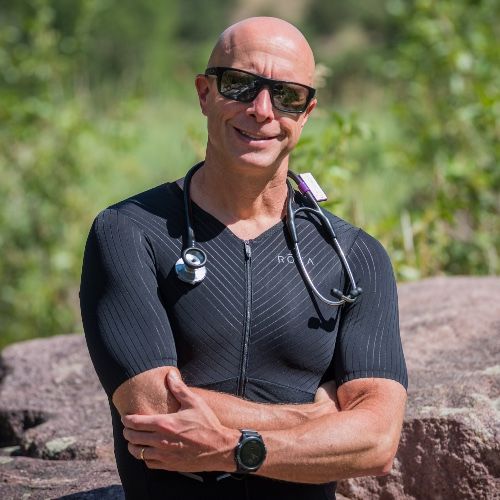
Matthew Marquardt crushed Kona and came home third overall — yes, third — but the real headline is how he did it: grit, discipline, and a refusal to let a three‑minute drafting penalty turn his day into a meltdown. I gush like a proud parent for about two minutes, then we actually unpack the race — the messy double‑pass on the bike, the calm T2 choices (yes, he tied his shoes on purpose), smart cooling tricks like gloved hand‑ice for evaporative cooling, and how he mentally ran his own race when guys sailed by. We also get nerdy: Juliet and I dive into the Baroshift gadget in the medical mailbag — the short version is the breathing science is real and useful, but the app’s hyped claims and $300 flex? Not so much; slow breathing helps, you don’t need a magic band to do it. Matthew talks residency reality too — spoiler: he’s not quitting triathlon, he’s just getting clever about racing less and racing smarter while he finishes med school. There’s a bit of humblebragging, some dad‑bragging about college acceptances, and a lot of practical takeaways for anyone who races, trains, or is tempted to buy a wellness gadget that promises to fix your life. Stick around for the full convo if you want tactics, temperance, and the occasional parental‑level gushing. If you want a clinic on squeezing elite triathlon into a med-student life, Matthew’s story is our textbook. I sit back and let him explain how he discovered his cramp trigger (spoiler: insane pre-race carb binges, not just ‘‘more salt’’), how he dialed nutrition back to actually stop cramping, and how repeated adjustments beat mystery. He also shares the day-in-the-life stuff that makes fans go faint: surgical rotations, research blocks, social-media hustle, and still somehow elite training. The theme? Don’t put limits on what’s possible — adapt, prioritize, and pick the races that matter when life gets busy. We close on the residency question — the scary, glorious unknown — with his refreshingly realistic plan: maybe fewer races, more selectivity, and a mapped-out fourth year to keep both medicine and triathlon alive. My take (with a proud-dad-level of bragging): this is how you marry long-term career goals to short-term athletic dreams — ruthless prioritization, realistic humility, and a willingness to iterate. If Matthew’s day-to-day is any guide, elite performance doesn’t require giving up life, it demands smarter life design.
Segments:
[8:41]- Medical Mailbag: Baroshift
[35:54]- Interview: Matthew Marquardt
Links
Transcript
Yeah, so maybe I talked about this more last time, but I think the biggest lesson that I've had throughout this kind of four, four to five year journey is to never put a limit on what you think is possible because I never thought that I'd get this far.
Speaker A:Residency is.
Speaker A:It's a huge unknown, but also third year was a huge unknown.
Speaker A:Getting to this point was a huge unknown.
Speaker A:4Th year will be a huge unknown.
Speaker A:But I think if anything, we found ways to make it work again and again.
Speaker A:Each time I'm like, oh, I can't do this.
Speaker A:We found a way to make it work.
Speaker A:So I guess I very much see residency the same way.
Speaker A:Maybe racing looks different.
Speaker A:Maybe I race less often.
Speaker A:Maybe I'm more selective about what races I do.
Speaker A:And we'll just figure it out as we go along.
Speaker B:Hello and welcome once again to the Tridog Podcast.
Speaker B:I'm your host, Jeff Sankoff, the tridog.
Speaker B:An emergency physician, a triathlete, a triathlon coach, and a multiple Ironman finisher.
Speaker B: ,: Speaker B:I'm coming to you as always from beautiful sunny Denver, Colorado.
Speaker B:The voice you heard at the beginning of the podcast is that of my guest today, a return guest.
Speaker B:I am excited to have him back for the third time.
Speaker B:And three is the magic number for this individ.
Speaker B:That person, of course, is Matthew Marquardt.
Speaker B:Matthew, a absolutely phenomenal day just a couple of short weeks ago in Kona where he was the top American finishing third overall on the day.
Speaker B:And he joins me once again to talk about that race, about how he has accomplished so much in a short period of time and what he's looking forward to going forward, how he can improve even still.
Speaker B:He is just an amazing human being.
Speaker B:More than just a triathlete, of course, a medical student, a researcher.
Speaker B:His day in the life posts on Instagram continued to be just mind blowing in terms of what he's able to accomplish in a 24 hour period.
Speaker B:And he remains incredibly humble.
Speaker B:He is just a pleasure to talk to and I am eternally grateful that he has made a point of coming on this podcast three times in about a year now.
Speaker B:Really great to have him on board and I know that you are gonna enjoy that conversation.
Speaker B:That's gonna be in just a little while.
Speaker B:Before that, I'm gonna have a medical mailbag segment.
Speaker B:Of course, this time not answering a question from a listener, but rather dealing with an email that I received.
Speaker B:I received frequently emails from the purveyors of various types of supplements or equipment or books or all manner of things related to triathlon endurance sport, and sometimes not even related to either of those things.
Speaker B:Today I'm going to be addressing something that came to me in an email from the maker of a product called Baroshift.
Speaker B:Now, if you look at the website for Baroshift, you would tend to believe that this is a product that can cure pretty much anything that ails you, and you would believe that it does so a little bit magically.
Speaker B:It's an app that goes on your phone, it interacts with a proprietary heart rate strap, and in doing so, it allows you to train your Baroreflex sensitivity.
Speaker B:What does this mean?
Speaker B:Does it work?
Speaker B:Is there science to support any of their claims?
Speaker B:We're going to get into all of that, and that's going to be coming up in a very short bit.
Speaker B:Before I get to that, I do want to comment on a couple of big goings on this weekend.
Speaker B:Of course, it's Halloween coming up just tomorrow, and I want to give you Tridoc permission.
Speaker B:When you are taking your parent tax from your children's Halloween candy bag, please do know that those are carbohydrates.
Speaker B:They can be used for training, and I support this fully.
Speaker B:So if your children ask why you are doing it, that is why.
Speaker B:You need your carbs, you need to train.
Speaker B:And the parent tax, it's got a training rationale.
Speaker B:So there you go.
Speaker B:Armamentarium to add to your negotiating tactics for this year's raid on the Halloween candy bags.
Speaker B:The other thing going on this weekend, of course, is that the clocks are turning back.
Speaker B:And that is a point of consternation for a lot of people.
Speaker B:Although getting in and out back in the fall is never as big of a problem as losing the hour in the spring.
Speaker B:We know that the clock shift does tend to cause some health and morbidity and even mortality issues, especially among the elderly.
Speaker B:It's much more significant in the spring than it is in the fall.
Speaker B:There are a growing number of places that are resisting the change of the clocks, but I will be interested to see if that sticks because it has been changed in the past or it has been resisted in the past.
Speaker B: Back in the: Speaker B:And that lasted, I think, for one year because people realized that the darkness in the morning became a real problem for kids going to school.
Speaker B:And there was a real big increase in traffic collisions and pedestrian fatalities.
Speaker B:And that kind of overwhelmed any inconvenience that changing the clocks had so I'll be interested to see if this time people kind of decide that they can put up with it.
Speaker B:Do you live in one of these areas where you're not changing the clock this year?
Speaker B:I'd like to hear what your experience is.
Speaker B:Let me know.
Speaker B:Especially when we get to January and February and it's really dark in the morning, then I'll be particularly interested if it's something you still think is a good idea or not.
Speaker B:We'll see.
Speaker B:The other news to report is really more triathlon focused.
Speaker B:Three new races released by Ironman in the last couple of weeks.
Speaker B:Two 70.3 events.
Speaker B:One of them in St. George Lake St. George, New York which is already sold out super quickly.
Speaker B:One in Utah.
Speaker B:A little bit dubious as to why it's scheduled in mid August in Utah could be particularly hot.
Speaker B:I know that the Ironman folks feel comfortable that it's at altitude, not going to be quite as hot as otherwise might be.
Speaker B:But I don't know.
Speaker B:Colorado has altitude and it gets real hot in mid August.
Speaker B:So we'll see.
Speaker B:We'll see what the Utah event is like.
Speaker B:Certainly going to be a spectacularly beautiful course and hopefully better supported than what we saw in St. George in the latter years of that event.
Speaker B:So we'll see.
Speaker B:And then the third event is a full distance iron up in Montana, another beautiful course it looks like and hopefully is going to draw a good crowd because I think that is a race that looks like it's going to get good community support and it would be really great to see that one succeed.
Speaker B:So we'll see.
Speaker B:I can tell you that Juliet and myself as LifeSport coaches will be giving the webinars on at least two of those events, the one in Utah and the one in Montana.
Speaker B:So as those events come closer, we'll keep you posted as to the conquer the course dates and you can also watch on the event Facebook pages where there'll be more information.
Speaker B:That's pretty much what I have to say about the Ironman events.
Speaker B:The other thing that was in the news this week was the announcement that World Triathlon is pairing up with Hyrox.
Speaker B:Now Hyrox has been around for a little while.
Speaker B:It always struck me as kind of a modified CrossFit sort of competition.
Speaker B:I am not entirely sure what it has to do with triathlon.
Speaker B:World Triathlon as we know has been a bit of a cash strapped kind of organization.
Speaker B:They paired up with T100 and I haven't seen T100 in quite a while.
Speaker B:So I don't know how that's going.
Speaker B:And now they're pairing up with Hyrox and I find myself wondering why it's not really a triathlon thing.
Speaker B:They obviously are trying to broaden their reach for finances, maybe broaden their appeal to get Hyrox people into triathlon.
Speaker B:They don't really strike me as similar events or similar kind of people who would be doing the two events.
Speaker B:I know that people have gone from triathlon to hyrox, but I don't know if Hyrox people are coming to triathlon.
Speaker B:I don't know.
Speaker B:What do you think?
Speaker B:Does this make sense?
Speaker B:Is this a marriage made in heaven or is this a war of the roses type of situation?
Speaker B:Personally, I'm not entirely sure I understand it.
Speaker B:Certainly it doesn't bother me in any way.
Speaker B:But I'm wondering what the point is and I guess time will tell.
Speaker B:That is the news that's fit to print at this point.
Speaker B:I think it's time then to get to the medical mailbag and look at the barrow shift.
Speaker B:An application that promises to do a lot of good.
Speaker B:Can it actually back itself up with the science?
Speaker B:Or is it yet another I don't know, thing that you need to pass by?
Speaker B:We're going to take a look at it.
Speaker B:We're going to get into all the science that's out there.
Speaker B:And that's coming up right after this short break.
Speaker B:It is time again for me to welcome my friend and colleague, Juliet Hockman, which means only one thing.
Speaker B:It must be the medical mailpad.
Speaker B:Juliet, how are you today?
Speaker C:I am great.
Speaker C:How are you?
Speaker B:I'm doing very well because now people listening to the podcast are going to hear this segment before the interview segment.
Speaker B:But this doesn't usually happen.
Speaker B:I don't usually record segments on the same day.
Speaker B:But as it happens, before chatting with you, I had our interview subject for this episode, my fave, Matthew Marquard.
Speaker C:No.
Speaker B:Yes, sir.
Speaker B:Rebuk.
Speaker B:Your name came up.
Speaker B:Your name came up.
Speaker B:He is.
Speaker B:I think he's remarkable.
Speaker B:Yeah, as always, just a very humble, soft spoken guy.
Speaker B:Just, just an amazing conversation.
Speaker B:I highly encourage people to stick around through the end of this segment to hear Matthew speak.
Speaker B:For sure.
Speaker B:We talked about his day, we talked about things that he thought went well, some of the things that he would like to do differently.
Speaker B:He graded himself.
Speaker B:You know what grade he gave himself for that day?
Speaker B:A B plus.
Speaker C:A B plus.
Speaker C:A B plus.
Speaker C:Yeah, that's what I would have guessed.
Speaker C:Yeah.
Speaker C:A B.
Speaker B:Plus,.
Speaker C:Right.
Speaker C:So let me guess, let me try to think what he might have done wrong.
Speaker C:Okay.
Speaker C:So obviously the penalty.
Speaker C:He probably regrets that a little bit.
Speaker B:Yeah, he thinks.
Speaker C:The.
Speaker B:Penalty, obviously.
Speaker C:Yep.
Speaker C:He had a reasonable swim.
Speaker C:He didn't get any cramping.
Speaker B:Very.
Speaker C:Happy with.
Speaker B:The swim.
Speaker B:Yeah.
Speaker C:Yeah.
Speaker C:He made some good decisions about his transitions and what to do when.
Speaker C:How did he feel about his nutrition?
Speaker C:Was that something that he would have given.
Speaker B:Mentioned?
Speaker B:And he actually told me he's.
Speaker B:Look, I'm not going to get into real details.
Speaker C:Oh, fair enough.
Speaker C:That's a competitive.
Speaker B:Thing.
Speaker C:But.
Speaker B:He did make some noise about how he thought that on the bike he could have executed better in certain aspects of the day, which I thought was amazing because even with his penalty, he still gets off the bike in second.
Speaker B:Right.
Speaker B:So I thought that was pretty.
Speaker B:And.
Speaker C:That boy ran hard.
Speaker B:He ran hard.
Speaker B:He was very.
Speaker B:Yeah.
Speaker B:We talked and you know how you mentioned when we chatted after Kona and how you said it's just an example of how you stick to your day and you don't worry.
Speaker B:He was so sanguine.
Speaker B:He goes.
Speaker B:And people will hear this when he talks, but he says stuff like, yeah, you don't worry about people who pass you, because if they pass you, you're, like, good on them, but we'll see.
Speaker B:And sure enough, that's exactly the right approach because Christian goes by and he's like, huh, I'm doing my thing.
Speaker B:And there goes Christian in the rearview mirror.
Speaker C:Yeah, yeah, yeah.
Speaker C:No, I think all of.
Speaker C:I think I just really feel that this Kona rep. And we talked about this in the last podcast, it really reinforced for age groupers and age group coaches, after example of, again, sticking to your plan, not worrying about what's happening in front of you, behind you, running your own race, even in the midst all of this activity and chaos and competition and everything else, you just gotta stay.
Speaker C:You gotta do your own thing out there, which is tough.
Speaker B:Yeah.
Speaker C:So anyway, no, it's great.
Speaker C:It was great examples, for sure.
Speaker B:He is.
Speaker C:On site to hear it.
Speaker B:Lovely guy.
Speaker B:Can't wait for people to hear it.
Speaker B:I look forward to hearing what they have to say.
Speaker B:But for now, before we get to that, we do have a medical mailbag quiz.
Speaker B:That's not a question.
Speaker B:This is one of those times when somebody has reached out to me.
Speaker B:So, Juliet, what are we talking about today?
Speaker C:So this is a little bit of a different take, as we know a number.
Speaker C:A lot of people reach out to Jeff to request to be a guest on the podcast.
Speaker C:And most often these are individuals who have a product that they would like to.
Speaker C:Would Shill be a good word.
Speaker B:I think it's not a bad word.
Speaker C:I thought of something they would like to defend and have put out there in the world and hopefully to get death stamp of approval.
Speaker C:We know how hard that is though.
Speaker C:But anyway, it gets a lot of these requests and this one is interesting and it's got the reason that it was created, has some good science behind it.
Speaker C:But whether or not this product works is a different question.
Speaker C:It's on Baroshift.
Speaker C:It is a whoop like product that goes on your wrist.
Speaker C:It looks like a sort of a sleek wristwatch that connects to an app on your phone.
Speaker C:And it's intended for everybody in the world.
Speaker C:But it has.
Speaker C:It would if it worked.
Speaker C:And we'll learn more about that in a moment.
Speaker C:A lot of benefits for endurance athletes in particular.
Speaker C:So not so much an athlete question, but more a product that has some interesting science behind it that is worth discussing.
Speaker C:So tell us what you know about Baroshift.
Speaker B:All right, I'm going to get into this.
Speaker B:This is a complicated subject.
Speaker B:We're going to try and make it as easy and digestible as possible.
Speaker B:I'm going to Juliet.
Speaker B:I've told her before we started going to hold me accountable.
Speaker B:So I'm going to.
Speaker C:Wave wildly if I need to ask a question.
Speaker B:Okay, so.
Speaker C:Here we go.
Speaker C:Fishing rod if I need to bring you back in again.
Speaker B:So.
Speaker B:So I've talked in the past about this concept of homeostasis, about how all of our physiologic systems in our body are basically designed to maintain a homeostatic milieu.
Speaker B:Basically the idea if we start getting too hot, we have all of these systems that work to shed heat.
Speaker B:So we just turn the system back to a normal temperature.
Speaker B:If we get too cold, we have other systems that will heat us up.
Speaker B:So everything keeps things the same.
Speaker B:Our cardiovascular system is exquisitely controlled to keep blood flow moving and oxygenating our cells, removing waste and just basically maintaining blood flow at all times.
Speaker B:And the system is such that we have to maintain blood pressure within a specific range.
Speaker B:And you can imagine that the system is a cruise control in your car.
Speaker B:So imagine you're driving along and suddenly the road pitches upwards.
Speaker B:If your cruise control didn't do anything, you would start moving up a hill and the car would just slow down.
Speaker B:But as soon as the computer in the car senses that the car is slowing down, the accelerator depresses and the car will speed up to maintain the preset speed.
Speaker B:Our body has a preset blood pressure that it wants to maintain.
Speaker B:And we have these receptors mostly within the blood vessels around the heart.
Speaker B:We have baroreceptors, which is basically a pressure receptor in the walls of the arteries, the large arteries around the heart.
Speaker B:And if you stand up, for example, it's a perfect example when you're seated, your blood pressure is a certain thing.
Speaker B:When you stand up, you'll probably notice that you have this momentary feeling of kind of lightheadedness, and then it goes away.
Speaker B:And the reason it goes away is because you have this baroreceptors that detect a sudden decrease in blood pressure, because when you stand up, your blood suddenly gravity pulls blood to your lower extremities, and you need to restore blood flow to your head by increasing the blood pressure.
Speaker B:So what happens is, as you stand up, your blood pressure kind of drops very transiently.
Speaker B:It's sensed by these viral receptors.
Speaker B:Your heart rate speeds up, your vascular tone squeezes a little bit more, and all of that restores your blood pressure to normal and allows for this normostasis.
Speaker C:Or you pass out and hit the kitchen counter and chip your tooth, which is what.
Speaker B:Happened.
Speaker C:To my husband.
Speaker B:And so that is the thing.
Speaker B:When you stand up and your blood pressure drops precipitously like that.
Speaker B:It's called orthostatic hypotension.
Speaker B:Orthostatic just means a change in position.
Speaker B:So when you have blood pressure that drops in, your reflexes don't work to improve your blood pressure right away.
Speaker B:And that can happen for a variety of different reasons.
Speaker B:Sometimes medications, sometimes you're a little dehydrated, sometimes you have nervous system dysfunction, whatever.
Speaker B:Then you get that orthostatic hypotension, which in worst case causes fainting spell.
Speaker B:In best case, it might just cause some transient sort of lightheadedness.
Speaker B:At any rate, this reflex of your baroreceptors in your blood vessels, stimulating, sending a signal to your brain stem, which then sends a signal to your heart rate to increase heart rate and your vascular tone to increase.
Speaker B:That is called a baroreflex.
Speaker B:And the baroreflex happens very quickly, usually within a couple of seconds.
Speaker B:It can be a little bit longer.
Speaker B:It can sometimes take five to 10 seconds.
Speaker B:And if you have a little bit of a delay, that's called a baroreflex delay.
Speaker B:That's not abnormal necessarily.
Speaker B:It's abnormal if you have precipitous decline in blood pressure, causing you to faint.
Speaker B:But otherwise, it's just a delay.
Speaker B:Okay.
Speaker B:All right.
Speaker B:Now, the baroreflux can have varying degrees of sensitivity.
Speaker B:So some people, they stand up the baroreceptors are super sensitive, and so immediately they will sense this change in blood pressure, and immediately the heart rate will spike up.
Speaker B:Other people, their barosensitivity is a little bit less, and it may take them a little bit of time for their receptors to detect things, for the nervous system signals to do what they're doing, and for everything to kick in.
Speaker B:All right,.
Speaker C:And are the.
Speaker C:Is this genetically predetermined or is this affected by environmental factors?
Speaker B:It's affected by, generally it's hardwired, so genetics, but generally it's a hardwired thing.
Speaker B:But it can be influenced by things like your level of fitness, by medications you might be on, things like that.
Speaker B:So there's a variety of things that can affect it.
Speaker B:There is one other thing, and baroreflux sensitivity is known to be correlated with disease states.
Speaker B:For example, somebody who has a very, very sensitive baroreflex is more prone to have hypertension because every time, if their baroreceptors are constantly stimulated, they're constantly jumping their blood pressure, and they actually tend to run at a higher blood pressure.
Speaker B:So a very sensitive baro reflex is known to be associated with hypertension.
Speaker B:Just as an example.
Speaker B:All right, there's one other concept we need to understand before we talk about the baro shift, and that is resonance frequency breathing.
Speaker B:All right, the idea of resonance frequency breathing is that when you breathe at a specific rate, it synchronizes with your baroreflex and your barosensitivity.
Speaker B:And the reason for that is every time you take a breath in, you actually improve venous return to your chest.
Speaker B:So when you take a breath in, there's a negative pressure in your chest.
Speaker B:And so blood is pulled from your lower extremities into the chest.
Speaker B:It fills the heart more, and so you have a larger cardiac output on an inspiration.
Speaker B:And therefore, the baroreceptors feel that, and they're going to decrease your heart rate.
Speaker B:When you breathe out, you tend to reverse that.
Speaker B:You breathe out, you have a smaller amount of venous return, a smaller cardiac output on that particular stroke.
Speaker B:And therefore the baroreceptors go, oh, not quite as much.
Speaker B:And so we're going to send a stimulus to increase heart rate.
Speaker B:So that kind of change in heart rate associated with respiration is normal.
Speaker B:It's a respiratory variation of heart rate.
Speaker B:And there is actually a resonance frequency where if you breathe at a certain rate, your heart rate will actually form this kind of almost wave pattern in terms of its changing frequency of beats.
Speaker B:And that is called Resonance frequency, and everybody's resonance frequency is around between.
Speaker B:In a range of between 4.5 to 6 breaths per minute.
Speaker B:Now, you're probably aware, you, Juliet, and those of you listening are probably aware of the concept of mindfulness meditation techniques.
Speaker B:All of these things that have you breathe slowly, right?
Speaker C:Yes.
Speaker B:In through your nose, out through your mouth, really controlled breathing.
Speaker B:And we know when you do that, your heart rate slows down quite a lot.
Speaker B:Right.
Speaker B:The reason it slows down quite a lot is because every time you breathe in very deeply like that, you improve your venous return, you improve your cardiac output, and so your heart doesn't have to breathe as quickly.
Speaker B:You improve your parasympathetic tone.
Speaker B:And what you're essentially doing is that you're doing that resonance frequency breathing when you do slow, purposeful, conscious, deep breathing.
Speaker B:There is science that shows that doing that slow breathing, especially if you can get into that resonance frequency range between 4.5 and 6, actually is really beneficial in a lot of ways.
Speaker B:There's a lot of science that has been done on this, which is super interesting.
Speaker B:So, for example, there have been papers that have shown that resonance frequency breathing for periods of eight to 10 minutes, for example, has been associated with things like improved heart rate variability.
Speaker B: are Studies, for instance, a: Speaker B:Okay.
Speaker B:This was a paper that said, oh, if you can find an individual's optimal breathing rate somewhere between 4.5 and 6.5 breaths per minute, then you can really synchronize your cardiovascular rhythms around that and you improve their heart rate variability.
Speaker B:If they do that every day for several minutes of time.
Speaker B:Pretty cool question,.
Speaker C:But I feel like we know this as athletes.
Speaker C:We know this intuitively.
Speaker C:If we can use the breath to calm nerves, to bring our heart rate down faster during a really short rest interval, say when you're on the side of the pool or between hill repeats, if we've only got a minute or 30 seconds or 10 seconds to bring our heart rate down, being really mindful about our breathing, our exhale, this feels like common sense to me.
Speaker C:Okay.
Speaker B:Yeah.
Speaker B:Okay.
Speaker B:I don't disagree.
Speaker B:I think we all intuitively have learned this, that when we're anxious before a race, if we slow our breathing down and get mindful, we've all learned this.
Speaker B:Or if.
Speaker C:We can't sleep.
Speaker C:And if we can't.
Speaker B:Sleep.
Speaker C:In the middle of the night.
Speaker C:Right.
Speaker C:And we're bothered by which are keeping us awake and we get into a breathing pattern.
Speaker B:Right, exactly.
Speaker B:It Slows our heart rate down, it reduces our cortisol because it's a parasympathetic stimulus.
Speaker B:That's exactly what all these papers show.
Speaker B:2021.
Speaker B:Baroreceptor modulation of the cardiovascular system, pain, consciousness and cognition.
Speaker B:This was a super interesting study, but basically showed that even our perception of pain, which I think we all know again from our own experiences.
Speaker B:When you talk to your kids when they have a cut or so you say, hey, slow your breathing down.
Speaker C:Yeah, right, right.
Speaker B:Just like to focus on just breathing slowly, big breath and their pain gets better.
Speaker B:Right.
Speaker B:So kind of know a lot of these things.
Speaker B:There was a paper that looked at improved cognition with breathing as well, which I thought was very interesting.
Speaker B:Effective resonance breathing on heart rate variability and cognitive functions in young adults.
Speaker B: ntrolled trial, this one from: Speaker B:They actually, it was this very small study.
Speaker B:50 Healthy men randomized to a breathing intervention group and a control group that had no intervention and basically showed that if they had a cognitive assessment, the people who went through this breathing technique actually did better with the cognitive assessment.
Speaker B:They had better tests for executive function, stress scores.
Speaker B:Felt was really interesting, very small study, only on men, young men.
Speaker B:And there was no, the control group was really not even a placebo group.
Speaker B:It was just like they didn't do anything.
Speaker B:So not really clear that this was so much better than anything else.
Speaker B:But still.
Speaker B:Okay, so all of this to say, what the heck is Baristim and why would you ever need it?
Speaker B:So Barostim is that wearable armband and it measures the user's pulse.
Speaker B:And what it does is you do this 8 minute calibration where you breathe and it measures your pulse along and it's, it purports to find your resonance frequency for breathing.
Speaker B:And it's really funny because the, the website says, oh, everybody's resonance frequency is very different.
Speaker B:It's all between a range of 4.5 and 6.5,.
Speaker C:6.5.
Speaker B:And I'm like, how different can it be then?
Speaker B:But anyways, whatever,.
Speaker C:Yeah,.
Speaker B:So they say that they will identify your specific breathing rate.
Speaker B:It's not clear how they do that, but they say, okay, we're going to find your specifically and then we're going to train you, we're going to teach you eight minutes a day to do this resonance frequency breathing.
Speaker B:And man, are you going to be so much better.
Speaker C:A rock star.
Speaker B:You're going to be a rock star.
Speaker B:Now we've seen there is some science to suggest that this does work.
Speaker B:What they're saying is that they you can actually shift your baroreceptor sensitivity by doing their technique.
Speaker B:By using their technique, you can make your barrow sensitivity less.
Speaker B:And we know that a less sensitive baroreflex is associated with improved heart rate variability and decreased overall kind of morbidities from things like high blood pressure, stuff like that.
Speaker B:Which is great if it's true.
Speaker B:The problem is they're making all these claims without any evidence whatsoever that it's true.
Speaker B:So of the claims that they make, they make a ton of claims, but there's really four claims I think that we could take from their website.
Speaker B:So does resonance frequency breathing improve or change cardiovascular physiology in some way?
Speaker B:Yes, that is supported by the literature.
Speaker B:The evidence does suggest that this is true.
Speaker B:Whether or not you need to do resonance frequency breathing or you can just breathe slowly, that's not so clear.
Speaker B:Most of the studies have shown that people who use just a slow breathing technique in the range of 4.5 to 6.5, it doesn't matter if it's personalized to you at 4.8, if you just breathe slowly, you actually will see decreased blood pressure.
Speaker B:Now these studies that show that are people who have essential hypertension, is this going to improve cardiovascular health for a normotensive, a person without high blood pressure like an athlete?
Speaker B:That's not so clear.
Speaker C:There's.
Speaker B:No evidence that says that for sure.
Speaker B:But there is evidence that says if you have some pre existing hypertension, then slow breathing can meaningfully have an impact.
Speaker B:Again, does it have to be this resonancy frequency breathing?
Speaker B:That's not clear.
Speaker B:Does doing this technique give some kind of benefits to heart rate variability beyond the eight minutes that you use it for?
Speaker B:Yes, there are studies that show that again, do you have to use their app?
Speaker B:Do you have to actually do this, what they're saying is personalized to you or can you just spend eight minutes a day doing meditative breathing?
Speaker B:They say on their website, oh no, you need to do this our way in order to get right.
Speaker C:Of course, yeah, yeah, right.
Speaker B:But that's not totally clear to me.
Speaker B:They don't have any, they don't have any studies.
Speaker B:I'll tell you what they say.
Speaker B:If you look at their website, they say 75% of users report improved.
Speaker B:I can't remember but I think if you look at the website, they have this thing at the top of one of the pages.
Speaker B:Yeah.
Speaker C:70%, 70% Users feeling less anxious, 65% users reporting in better moods, 1% users feeling more energy.
Speaker C:That's.
Speaker B:Okay.
Speaker B:So those are really impressive numbers.
Speaker B:Now look at the very small prints below those numbers.
Speaker B:Can you see it?
Speaker B:The very small print says it's.
Speaker B:I'll tell you what it says.
Speaker B:Self reported.
Speaker B:Yeah,.
Speaker C:Yeah.
Speaker C:By 105 pilot study users.
Speaker C:Yeah.
Speaker C:Self reported.
Speaker B:So these were 105 people who self reported whether or not doing this made them feel better.
Speaker C:And.
Speaker B:They could have used the device multiple times.
Speaker B:So if one person used the device 10 times and said I felt better five times and that would be a 50%.
Speaker B:It's not.
Speaker B:That's not people who used it versus people who didn't.
Speaker B:That's people who self selected to actually use this.
Speaker B:So of course, if you're going to use this, you're likely going to.
Speaker C:Yeah.
Speaker C:Escalation of commitment.
Speaker B:Exactly.
Speaker C:Yeah.
Speaker C:But we also, again, if you had the discipline to sit down and do mindful breathing for eight minutes every day, you'd probably also feel better.
Speaker C:So do you have to do it?
Speaker B:Yeah.
Speaker B:So that number, those numbers that they're reporting there, it's selection bias.
Speaker B:It's also just the fact that Mikey likes it kind of biased too.
Speaker B:Right,.
Speaker C:Right, right.
Speaker C:Okay.
Speaker B:Now, so we've talked about the two things that there is support for.
Speaker B:The fact that slow breathing can have an impact on cardiovascular physiology and that those, those heart rate variability biofeedback can persist.
Speaker B:But the two things that are potentially.
Speaker B:One thing is plausible but not really established is that this personalized breathing is better than just doing a fixed pace.
Speaker B:There is no study of that anywhere that suggests this.
Speaker B:All of the studies have suggested that just generic slow breathing will produce a lot of these results.
Speaker B:The fact that they want to charge you a dollar a day to use their app and their little band, and that this is somehow magical, especially when the range is between is so small, 4.5 to 6.5.
Speaker B:It's not that meaningful.
Speaker B:Right.
Speaker B:You were going to say.
Speaker C:Something.
Speaker C:Right.
Speaker C:We don't know if like on what scale.
Speaker C:I don't know exactly.
Speaker C:It'll be interesting to, to try to breathe four times in a minute versus six times in a minute and see how different that sounds.
Speaker C:But yes, no, I agree.
Speaker B:Yes, I.
Speaker C:Get, I get.
Speaker B:The biggest, the most important thing is they have made these connections that, oh, doing this breathing personalized is going to improve your heart rate variability.
Speaker B:It's going to improve your baro reflex, hypersensitivity and all that jazz.
Speaker B:And that is directly going to lead to durable improvements in stress recovery, sleep, cognition and overall health, not to mention improved recovery from hard training efforts.
Speaker B:They are making that up.
Speaker B:There is zero evidence to connect Those dots, it's not even something you can extrapolate to.
Speaker B:They literally are making that up.
Speaker B:Now, is it plausible that some of those things might be true?
Speaker B:Maybe.
Speaker B:But is it plausible that those things could be true without using their device?
Speaker B:100%?
Speaker B:And that's.
Speaker C:Yeah.
Speaker C:Once again, it's like people who need an app to do their 30 minutes of core every day or people who need an app to stay on a certain caloric intake every day.
Speaker C:You need, if you are able to still do the breathing without the app, probably does have some benefits in terms of stress reduction and all the other things.
Speaker C:But I guess can you make an argument that says the app.
Speaker C:The app drives compliance.
Speaker B:And that.
Speaker B:That is one of the questions that I think is important to consider.
Speaker B:Whether or not you need this app, though it's not inexpensive.
Speaker B:A dollar a day for this?
Speaker C:No, it's $300 for the year.
Speaker C:If.
Speaker B:You.
Speaker C:Pay for a whole year.
Speaker C:Three.
Speaker B:Bucks, that's pretty expensive.
Speaker B:There's a lot of apps that will do this that you could pay a lot less for.
Speaker B:You know, there's mindfulness apps that will tell you every day and remind you to do your slow breathing.
Speaker B:It'll even give you soothing music.
Speaker B:It.
Speaker B:All kinds of things which you know, which will accomplish essentially the exact same thing.
Speaker B:And if you have a Garmin, you could just watch your heart rate come down while you're doing it, if that's something you want to do.
Speaker B:Because like I said, the science here is plausible in some regard.
Speaker B:Is it going to make you recover better from training?
Speaker B:I'm not convinced.
Speaker B:Is it going to make you sleep better?
Speaker C:I.
Speaker B:Don't know.
Speaker B:Maybe.
Speaker B:It's certainly not going to hurt you.
Speaker B:Certainly no downside.
Speaker B:My only thing is that while the science here is interesting, the.
Speaker B:Their claims related to this app and their device are really off the rails.
Speaker B:Definitely hyperbole.
Speaker B:And that's the issue because they've taken legitimate science, legitimate theoretical, plausible stuff, and they have run with it big time.
Speaker B:And that's why I think I said to you before, I said this is definitely putting the cart before the horse.
Speaker B:Right.
Speaker B:And then they don't have really any validations.
Speaker B:They haven't validated their thing versus a $10 app that will do mindfulness.
Speaker B:So,.
Speaker C:Yeah,.
Speaker B:That to me is really the greatest concern and what I take away from this.
Speaker B:So, I.
Speaker C:Mean, interesting, interesting science.
Speaker B:It is.
Speaker B:Once.
Speaker C:Again, we need to figure out if the product is really.
Speaker B:Yeah.
Speaker C:Doing what it says it does.
Speaker B:And this, this notion that you can actually shift your baroreflex Sensitivity, the way they say that.
Speaker B:Also not proven, not shown.
Speaker B:They're just speculating on that.
Speaker B:So that's another.
Speaker B:Another big question.
Speaker B:So again, I would not tell somebody, look, if they feel like this is going to help them commit to their mindfulness, if this is going to commit to doing this and they really feel like, hey, I could use something to help me slow down and then.
Speaker B:And you've got the 300 bucks, like, sure, it's not going to hurt.
Speaker B:It's definitely not going to hurt.
Speaker B:Just.
Speaker C:I've got a better idea.
Speaker C:Buy a pair of Normatec boots.
Speaker B:And lie them.
Speaker B:There's your 30 minutes.
Speaker C:Ye glide.
Speaker B:On.
Speaker C:The couch for 10 to 30 minutes every day and breathe deeply while the Normatec flutes work.
Speaker C:And then you kill two birds with one stone.
Speaker B:Yeah, yeah, absolutely.
Speaker B:Do I get to finish with a little bit of a dad brag?
Speaker B:I think I can dad brag.
Speaker C:Yeah.
Speaker C:I think if worthy.
Speaker C:I think the news is worthy of a dad break.
Speaker B:All right, so last week I'm just gonna.
Speaker B:We're done with the medical mailbag.
Speaker B:I'll get to the medical mailbag questions in the future in a second.
Speaker B:But just before we do, I just want to proudly say that my daughter Lauren, we did our college visits.
Speaker B:She had multiple offers.
Speaker B:It was very stressful.
Speaker B:It came down to a couple of school, multiple.
Speaker C:Offers to go and poll vaults, let's be clear.
Speaker C:At different schools because that's her thing.
Speaker B:And she's decided to continue, as the kids say these days, continue her athletic and academic career by committing to the admissions process at Tuft University in Boston.
Speaker C:She's going to be an elephant.
Speaker B:She's going to be a jumbo and friend of the podcast.
Speaker B:Brian Dunn is a the alumnus of Tufts.
Speaker B:He was very excited to hear about it.
Speaker B:Brian,.
Speaker C:As I.
Speaker B:Told.
Speaker C:You, my nephew goes to Tufts.
Speaker C:My future daughter in law went to Tufts.
Speaker C:Oh, great school.
Speaker C:She's gonna have a great time.
Speaker B:Yeah.
Speaker B:So we're excited for her.
Speaker B:And yeah, little jumbo in the house.
Speaker B:All right, that's all the exciting family news at this point.
Speaker B:And I will say that's the end of our medical mailbag for this week.
Speaker B:Thank you, Juliet.
Speaker B:Once again,.
Speaker C:It's a pleasure.
Speaker B:I hope this made sense to everybody listening.
Speaker B:I did my best to try and keep it all together.
Speaker B:If you have a question for the medical mailbag, I hope that will send it along.
Speaker B:You can email me@tridocloud.com or of course you can head on over to the private Facebook group on that platform.
Speaker B:Search for Tridoc Podcast, answer the easy questions, I'll gain you admittance.
Speaker B:Join the conversation about everything you've heard here and leave a question for a future segment.
Speaker B:We will get to it and be happy to include it in a future program until the next episode.
Speaker B:Julia, thank you so much for being here.
Speaker B:I look forward to chatting on the next show.
Speaker C:Looking forward to it.
Speaker B:I have made no secret of my unabashed fawning and fanboy ism for my guest today.
Speaker B:He is returning to the program for a third time.
Speaker B:I'm so fortunate.
Speaker B:But I'm gonna say that I was one of his fans early and as a podcaster, so I think that I was on the train earliest and so I'm really excited to have him back.
Speaker B:Matthew Marquard is of course a just a phenom in life as well as in triathlon.
Speaker B:He is a successful medical student.
Speaker B:He blows us all away with his social media days in the life of accomplishing more in a 24 hour span than most of us accomplish in a week.
Speaker B:And then he goes out and has a his first professional wins on the Ironman circuit last year and follows it all up with just an amazing day in Kona just a few short weeks ago, finishing on the podium in third place and capturing the hearts of so many who to that point maybe thought he was just an interesting American and yet now the top American on that day.
Speaker B:Matthew Marquardt, congratulations.
Speaker B:Thank you so much for joining me again on the Trident podcast.
Speaker B:Guests, it's such a pleasure as always to chat with you.
Speaker A:Yeah, no, thank you so much.
Speaker A:It's great to be back and it's been lots of fun over, over the times we've done it.
Speaker A:More than happy to Come on.
Speaker B:All right, I have lots of questions.
Speaker B:First of all, I should tell you, I do not endorse, I do not pay for my guests.
Speaker B:But full disclosure, I have made a donation to Matthew's charity and my daughter Lauren, who's a cancer survivor, her initials is on Matthew's bike.
Speaker B:But he is appearing on his own without any inducements.
Speaker B:All right, Matthew, that's been a wild ride for you.
Speaker B:You were there a couple years ago in Kona.
Speaker B:You had a not, you're not the kind of day you thought you could, you went to nice, had a phenomenal day.
Speaker B:Did you ever.
Speaker B:Obviously you did because you're a professional.
Speaker B:You always have this belief in yourself.
Speaker B:But did you think deep down was this the likely outcome that she would finish third in this wild ride?
Speaker A:Yes.
Speaker A:The short answer is yes, but it was like the stretch goal.
Speaker A:I think it's always important to have goals, but also to have reason behind them.
Speaker A:Anyone can say they want to win a world title.
Speaker A:Anyone can say they want to climb Everest or whatever, but I think it's always really important to maybe take what your biggest dream is and knock that down a little bit to something that's a little bit more attainable.
Speaker A:And.
Speaker A:And, yeah, based on the things that we knew about, like how I was progressing last year, how I did at Nice in spite of the cramps and a crash, we had a feeling that if I played my cards right at Kona this year, and both in terms of the lead up to Kona as well as on race day, that I certainly could have a shot at being on the podium.
Speaker A:So this was the goal for the year.
Speaker A:But also at the same time, I didn't come into Kona expecting to be on the podium either.
Speaker A:I think it's really important to have humility for the race and know that things can go sideways pretty substantially.
Speaker A:So, yeah, it wasn't unexpected, but it also wasn't expected either.
Speaker B:I think that's a very fair answer.
Speaker B:At what point during the day you come off the bike in second.
Speaker B:You had that.
Speaker B:Okay.
Speaker B:Actually, you know what?
Speaker B:I have a lot of questions about your day.
Speaker B:First, let's get back to the cramps for a second because that's something that Matt Shrank Sharp and I have speculated on quite a bit.
Speaker B:What do you think for you was the solution to overcoming them and be able to have such success without them?
Speaker A:Yeah, so the simple way is it's like a relative overload of carbohydrate intake the day before the race.
Speaker A:So it's not necessarily about the absolute number of carbs.
Speaker A:Like, I've had training days where I've consumed well over a thousand grams of carbs in a day.
Speaker A:But the issue is that in the lead up to a race, you're obviously reducing your volume, you're reducing your kind of overall expenditure.
Speaker A:And what I experienced in a very patterned way was that if I did a carb load where I overdid it and had closer to somewhere between a thousand to thirteen hundred grams of carbs in a day before a race, I would always cramp coming right out of the swing.
Speaker A:Why that is, I think, is still very much up for debate.
Speaker A:But there was a very clear pattern where before I started having the cramps, I was eating normally the day before.
Speaker A:So I was having 600 or so grams of carbs the day before race.
Speaker A: where I was pushing More like: Speaker A:And then when I kind of reduced things again to back to 6 to 700 grams, they went away.
Speaker A:Sometimes in life, there's things where, like, you want to really understand why things happen, but sometimes, like, you just have to be like, okay, I know the trigger, and I know that if I avoid the trigger, things are fine, so let's just leave it at that.
Speaker B:That's really fascinating.
Speaker B:And I've talked on this program about cramping and how it's so multifactorial and age groupers love to just attribute cramping to salt and all this stuff.
Speaker B:And I have over and over again looked at the literature and come back with, no, it is not electrolyte.
Speaker B:No, it is not temperature.
Speaker B:Invariably it tends to be multifactorial.
Speaker B:A combination of fatigue, potentially some electrolytes, but it's not one thing.
Speaker B:And clearly you found something that was inducing it.
Speaker B:You were able to tweak that and have a result.
Speaker B:So that's great.
Speaker B:And that's what I encourage people all the time to do.
Speaker B:If you're having muscle cramps, look at what your routine is most of the time.
Speaker B:For age groupers, it's going to be.
Speaker B:Cramping is going to come about because of.
Speaker B:It's a warning sign.
Speaker B:You are overdoing a load on your muscles and your muscles are saying, we've had enough.
Speaker B:We're worried about rupture, and so we're going to cramp to make you stop.
Speaker B:So that's usually what it is for age groupers.
Speaker B:But somebody performing at your level, obviously it's going to be something else, especially so early in the race.
Speaker B:Let's get back to Kona for a second.
Speaker B:You get out of the water in terrific position.
Speaker B:I think you were top nine.
Speaker B:I think when you got out of the water, we were watching the broadcast and I saw you come out early and I thought, oh, this is perfect.
Speaker B:You're really in a good place.
Speaker B:Rocketed to top five by the time you got to Hawi.
Speaker B:And then we're in second coming down.
Speaker B:You got that penalty.
Speaker B:We didn't see the penalty on tv.
Speaker B:What happened there?
Speaker B:Were you upset about it?
Speaker B:What was the story?
Speaker A:Yeah, yeah.
Speaker A:I was going back, I think, to the swim.
Speaker A:Was super happy with how I got out of the.
Speaker A:With my position.
Speaker A:We knew that the swim was something that we really needed to focus on coming out into this race.
Speaker A:I have a swim background, and so we knew that we could get to a level that I needed to be at.
Speaker A:I just needed to prioritize it a little bit more in training than I had been.
Speaker A:So we really focused on it in the lead up to Kona.
Speaker A:And I had a great swim.
Speaker A:Was very controlled, very relaxed.
Speaker A:Did.
Speaker B:The rough water get into it at all for you?
Speaker B:I know, because we could see it.
Speaker B:I.
Speaker A:Was fine with it.
Speaker A:It was quite rough.
Speaker A:Kona is always a little bit rough, especially on the return.
Speaker A:But it was definitely a little more rough than normal, which.
Speaker A:I don't know.
Speaker A:The harder conditions, the better.
Speaker A:I love any sort of challenging condition because I think that just makes the race more honest.
Speaker A:But yeah, no.
Speaker A:So I thought this one went great.
Speaker A:And the start of the bike was obviously quite good.
Speaker A:And I was very controlled and everything.
Speaker A:And so actually the.
Speaker A:The penalty is.
Speaker A:So Ironman had.
Speaker A:On YouTube, Ironman had the stream, like the broadcast stream, but then they also had separate streams where basically they were running every camera that was on the course, even if the broadcast wasn't having commentary on it.
Speaker A:And the penalty actually is on one of those streams.
Speaker A:And then it's predominantly on the broadcast.
Speaker A:Basically when I was given the penalty, which you can see on the broadcast, is when the penalty happened.
Speaker A:And long story short is it was like a double pass scenario where Magnus was in front, Barnaby came around me.
Speaker A:I couldn't really tell exactly if I was within the draft zone or not because since Barnaby was passing me, he was blinking red.
Speaker A:And then he gets in front of Magnus.
Speaker A:And so it was just a super messy situation.
Speaker A:And then ultimately when Barnaby passed Magnus, I realized I was in the red.
Speaker A:So I then had to pass Magnus.
Speaker A:And when I passed Magnus, I still was not like I basically was now.
Speaker A:It's.
Speaker A:It's super complicated.
Speaker A:Like I was.
Speaker A:I never.
Speaker B:Got in a drop zone that you couldn't get out of.
Speaker A:And it was one of those things where I had not had 20 meters of separation with Barnaby yet.
Speaker A:And so I was not allowed to pass him.
Speaker B:Okay.
Speaker A:But also at the same time.
Speaker A:So what I did is I dropped back and waited for the blue to come.
Speaker A:But basically when I did that, the referee told me that the move I should have made was to pass Barnaby.
Speaker A:But I was like.
Speaker A:But I couldn't have done that because I hadn't dropped back 20 meters yet.
Speaker B:Got it.
Speaker A:And so it's the.
Speaker A:The simplest explanation is that it was a super messy double pass scenario that I think if you had five different refs, you'd have five different interpretations of what the penalty was and how the penalty should be handled, if there's a penalty at all.
Speaker B:Yeah.
Speaker A:And truthfully, like, when you have something that's that subjective, it should not be a call at a world championship race, because a penalty at a world championship race should be objective and should be very clear.
Speaker A:And I've asked Ironman for an explanation of what I did wrong so that I don't do it again.
Speaker A:And I've been waiting almost two weeks now.
Speaker B:Your explanation afterwards on social media, where you kind of just said, look, I got a penalty.
Speaker B:I just dealt with it.
Speaker B:And I think, to me, that is the message that everybody needs to hear because occasionally you do get caught up.
Speaker B:I myself have gotten caught up in these packs where I'm trying desperately to get out of a pack.
Speaker B:And in trying to get through a pack, I wasn't able to clear the lead guys.
Speaker B:And so I tried to get out of the draft zone.
Speaker B:And then, of course, unintentionally, you end up with a penalty because you didn't pass everybody.
Speaker B:And so you have two choices at that point.
Speaker B:You can get super frustrated and super angry and ruin the rest of your day, or you can do exactly what you did, which was like, I have this penalty, I'm gonna maximize my benefit from it, which was you get into the penalty tent, you cool yourself down, you take in your nutrition, your liquids, and then you just get back to exactly what you were doing before.
Speaker A:Exactly.
Speaker A:And that was very much my mindset of when the penalty happened.
Speaker A:I was like.
Speaker A:Like, I probably just.
Speaker A:I was like, this penalty probably just cost me the race.
Speaker A:But I also knew what the race looked like because Javi had only been like 30 minutes before.
Speaker A:So I knew what the gaps were looking like and what the dynamics were playing out out to be.
Speaker A:And so I knew that while three minutes was a massive amount, it also wasn't the end of the world.
Speaker A:And so I really wanted to make sure that the race was not negatively defined by the penalty.
Speaker A:I think in some ways it has been, mainly because in the moment I didn't let it negatively define.
Speaker A:But now there's obviously these huge what ifs that everyone brings up.
Speaker A:But, yeah, no, it's just about.
Speaker A:There's no.
Speaker A:Like, it's.
Speaker A:I think the most important thing that I've learned about Ironman as well as in medicine, just in general, is you control what you can control.
Speaker A:If you're in the clinical setting, yeah.
Speaker A:When the patient is in the room with you, you can control that.
Speaker A:But as soon as they leave that door, you've lost all control.
Speaker A:And you, like, it's not worth the energy to perseverate or stress excessively over things that you have zero control over.
Speaker A:And this penalty was a situation where you can't challenge penalties.
Speaker A:That.
Speaker A:That's the Ironman rules.
Speaker A:And so I talked to the ref in the moment, tried to understand why he gave me the penalty, and when it was very clear he wasn't going to change, his mind was like, okay, we're just going to move on and we're going to do the best that we can with the cards that we've been dealt.
Speaker A:So, yeah, so that's why it happened.
Speaker A:And on the penalty tent, I wanted to make the most of the three minutes.
Speaker A:And then when I got back on the bike, it was also very important not to overdo it because I know people have gotten penalties before, and then they try and make up more time than they should, and then they end up digging themselves in a hole that they can't get out of on the run.
Speaker B:And it's like, you have this plan, you've got to stick with it.
Speaker B:You can't change your plan because you had this penalty.
Speaker B:The three minutes are done.
Speaker B:They're in the rearview mirror.
Speaker B:You just got to move forward.
Speaker B:And despite that, you still come roaring back, pass a couple of guys, and end up coming off the bike in second.
Speaker B:So were the conditions on the day worse?
Speaker B:You've been to Kona.
Speaker B:This is your third time, I believe, right?
Speaker A:Correct.
Speaker B:Were the conditions similar to previous days?
Speaker B:Were they better?
Speaker B:Worse?
Speaker A: initely more challenging than: Speaker A:So there was a lot more wind, especially in the section kind of between Mauna Lani and Habi.
Speaker A:There is definitely a lot more wind in that section than normal.
Speaker A:And, I don't know, maybe slightly more of a headwind on the way back into town from Mauna Lani back into town.
Speaker A:But really what made the day challenging was that it was.
Speaker A:The conditions were sneaky in that we started the day, it was raining.
Speaker A:It was still 75 degrees, even though it was raining.
Speaker A:But you had overcast skies.
Speaker A:It was raining.
Speaker A:And I think that gave a sense, a false sense of security for a lot of people.
Speaker A:And then you get out on the bike course and it's hot and it's a little windy and it's sunny.
Speaker A:And so I think people weren't necessarily ready for that.
Speaker A:And then you get back into town and it's overcast again.
Speaker A:But then, like, when you get to the energy lab, it's sunny.
Speaker A:And so there was just.
Speaker A:It was more, I think that the conditions were highly variable, like, much more variable than they have been in the past and much less predictable.
Speaker A:And so I think that made really figuring out the best tactics for a lot of people more challenging.
Speaker A:But it certainly was not the windiest day ever.
Speaker A:It was not the hottest day ever, but I think the weather definitely made it maybe a more challenging race than it has been in the past, which is great.
Speaker A:I think the harder the race, the better.
Speaker B:Incredible run.
Speaker B:Both the men and women obviously just had incredibly compelling stories, storylines going on throughout the, like, the top 10, 20 even.
Speaker B:And it was a reminder yet again that the race is not over at any point, because you just never know what's going to happen up the road.
Speaker B:It looked, for all intents and purposes, all the way through the Energy Lab, like this was Magnus's race and the race was really for the lesser placings.
Speaker B:And then all of a sudden, Magnus is done.
Speaker B:It looked as if Solveig was totally in control, and then all of a sudden he's not.
Speaker B:How are you handling your personal journey through that race course?
Speaker B:You're in second for the longest time, and then all of a sudden, several guys go past you.
Speaker B:Early on, I guess Sam went past you, but then he pulled out pretty soon after that.
Speaker B:But you had to deal with Vincent and Christian going by.
Speaker B:I believe there were others who passed you as, well, blanking right now, but you just kept persevering, you just kept running your race.
Speaker B:And at any point, did you just think, I'm just running for what I'm running, or did you continue to believe, no, I'm going to catch these guys?
Speaker A:Yeah.
Speaker A:I think the most important thing is it's not over till it's over.
Speaker A:And, yes, people passed me, but I didn't necessarily count myself out because of that.
Speaker A:I knew that I was in control and that I was running the race that I wanted to run.
Speaker A:And.
Speaker A:And so, yes, I was taking them into consideration on a lot of things, but also not over focusing on them either, or catastrophizing being passed.
Speaker A:And, yeah, you just.
Speaker A:I think overall in the run, I had a great flow state throughout most of it.
Speaker A:And when Christian and Vincent passed me, truthfully, I was like, oh, wow, it took them a lot longer to pass me than I thought.
Speaker A:So I wasn't necessarily worried, necessarily.
Speaker A:And I think sometimes in races when someone passes you, you're like, oh, they've passed me for good.
Speaker A:But I think especially with Kona and a couple other races, someone passes you and you're kind of just, okay, we'll see.
Speaker A:Maybe this is their day, maybe it's not.
Speaker A:And I think that was kind of more my philosophy of, okay, let's just see how this plays out.
Speaker A:Maybe this is their day.
Speaker A:But, like, maybe it's not.
Speaker A:And clearly it wasn't for Christian, but it was for Vincent.
Speaker A:And so, yeah, so you just take that into your ever evolving calculus of how you're pacing things, and then Obviously, the last 45 minutes of the run is just you leave everything that you have out there while still making sure that you get to the finish line.
Speaker B:You had a really nice social media post about your transition, your T2, and how so many wise, sage people had commentary about the third best male in the world about how his T2 could have been better.
Speaker B:I thought that was hilarious.
Speaker B:But I think your message is right on point, of course.
Speaker B:But also I think it's very valuable for any age grouper to hear.
Speaker B:So myself and my colleague Juliet Hoffman, we're always talking about.
Speaker B:Talking about practicing your transitions, making sure your transitions are as fast as possible because it's free time.
Speaker B:But your point is so important.
Speaker B:Free time should not be at the expense of suffering later in the race.
Speaker B:And you made the point that, yeah, I stopped and tied my shoes because, for me, I knew that was vital to my being able to run efficiently and more with pain.
Speaker B:So could you go into your planning of your transition and why you took a little more time in T2 than other people might have preferred that you take?
Speaker A:Yeah, so it's.
Speaker A:It's lessons that I've learned over time, I think.
Speaker A:I don't know.
Speaker A:I've done 15 or 16 Ironmans at this point.
Speaker A:And as we've said, I've done multiple Konas, and I've had times where I've blown through T2 super quickly and then later regretted it, either because I didn't take care of myself or I didn't do my equipment properly.
Speaker A:And so I really just wanted to make sure that I was setting myself up for success on the run more than anything else.
Speaker A:And, yes, could my T2 have been faster?
Speaker A:Probably.
Speaker A:I do think it's important to practice your transition, but also there's.
Speaker A:There's a fatigue, and no transition ever goes quite perfectly.
Speaker A:And so, like, I mentally rehearse what I'm gonna do in transition, but there's always gonna be something that, like, doesn't quite work in the video.
Speaker A:Like, I dropped my bib, like, when I was putting it on, or, like, there was the very Nice volunteer who was offering me ice.
Speaker A:So, like, I put one shoe on and then put ice in my hat and then put the other shoe on.
Speaker A:So there's always gonna be things that you have to adapt to.
Speaker A:And so the.
Speaker A:The most important thing is having the general structure, what you want to do in your general game plan, but knowing that there's going to be external factors that will impact that.
Speaker A:And as long as you stick to your focus of I'm setting myself up for success on the run, that's what's most important.
Speaker A:So.
Speaker B:And Juliet's a fan of saying that when you head into transition, your IQ is down by a good 20 to 30 points.
Speaker B:So make it as simple as possible and make sure you've rehearsed it.
Speaker B:You are nothing if not incredibly intentional about everything you do on the race course.
Speaker B:And so I want to ask.
Speaker B:We have talked on this program about cooling, and we have talked about the use of hand cooling, and it was noticed by many of my listeners who have reached out to me and asked me to talk about the gloves you were wearing.
Speaker B:I have.
Speaker B:As I said, I've talked about hand cooling before, but we're gonna revisit it because of your success.
Speaker B:So tell us about hand.
Speaker B:What led you to wear those gloves and how they worked for you?
Speaker A:The simplest explanation is that in Kona, you have a lot of heat from the air.
Speaker A:You have a lot of heat coming off the earth and coming off the lava and the roadway.
Speaker A:Then you also have wind.
Speaker A:So even though there's an aid station every six to eight minutes for the pros, so about every mile, that combination of factors means that you dry out, actually really quickly.
Speaker A:Like you.
Speaker A:Like it sounds wild, but you will go like I was in six to eight minutes if I just had pure skin exposed.
Speaker A:It's dry, and water is your friend.
Speaker A:Water and ice is your friend on a race like Kona because of evaporative cooling.
Speaker A:And so the gloves basically provided additional material so that I could.
Speaker A:I could, quote, unquote, hold more water with me to enhance that evaporative cooling effect.
Speaker A:So, yeah, so that's why I wore them.
Speaker A:And, like, I. I liked them.
Speaker A:I'll probably do it again next year.
Speaker A:I have no reservations about looking funny.
Speaker B:I don't think you look funny at all.
Speaker B:If you finish third, my friend, you can wear whatever the heck you want.
Speaker B:You could wear a tutu.
Speaker A:Exactly.
Speaker A:Won't.
Speaker B:Look funny.
Speaker B:Exactly.
Speaker B:The cooling of the blood through the Palmer Arch is also very important and that.
Speaker A:We've.
Speaker B:Talked about holding ice and things like that.
Speaker B:So, yeah, yeah,.
Speaker A:It's one of the.
Speaker A:It's one of the most effective areas on your body to cool, like, anatomically.
Speaker A:So, yeah,.
Speaker B:I want to look back just a little bit more and then I want to look forward.
Speaker B:But how did it feel turning onto a li' I drive?
Speaker B:You looked like you were suffering, but I hope you took some time to enjoy the moment.
Speaker B:How did it feel?
Speaker A:Yeah, the final mile of Kona, I think, is the worst final mile of any ironman out there.
Speaker A:It's just, it's.
Speaker A:It is predominantly downhill, but, like, there's a little incline and because you kind of go around the block, it's like the longest feeling mile ever and you're just completely shot going down.
Speaker A:And so, yes, I very much tried to enjoy it as much as possible, but it's also incredibly challenging, too, because, like, I didn't know how to far behind Barnaby was from me, and I was not going to take the risk of looking back and then falling or something like that.
Speaker A:So, yeah, no, it's just get to the finish line and you always try and enjoy that finish line feeling.
Speaker A:But, like, I definitely think it took a couple days, if not a couple, if not a week or two, for it to fully sink in.
Speaker A:Just because it's obviously a really big deal in the triathlon community to make it on the podium.
Speaker A:But I really tried to.
Speaker A:To make this race as normal of a race as possible and minimize the importance of it in my mind.
Speaker A:And getting third at the moment, like, I knew it was super impressive.
Speaker A:It was my goal.
Speaker A:I was super happy.
Speaker A:But also at the same time, sometimes the way you understand the significance of what you did is by seeing how other people react to it.
Speaker A:And so I think that's really what's helped me really fully appreciate it even more, is talking about, talking to fans, seeing the response it's had in the greater community.
Speaker A:Yeah, so it's been pretty great.
Speaker B:Anytime you run away from a finish line before you run to a finish line, it's always awful.
Speaker B:And yeah, I remember you get to the bottom of Pilani and you have to turn left and run away.
Speaker B:And it's like, God, I just want to get there.
Speaker B:Yeah.
Speaker B:Okay, so looking back, one last question.
Speaker B:How do you grade critically your day?
Speaker B:Because clearly you must be thinking, okay, I need to do better next time.
Speaker B:So where do you see things that you would improve and where do you see things that you just executed perfectly?
Speaker A:I'm not going to tell you what those things are because that's a competitive advantage.
Speaker A:Fair.
Speaker B:Enough.
Speaker B:But.
Speaker A:But I. I would give myself like a B where it was a good day, but obviously there's the drafting penalty.
Speaker A:I think there was other.
Speaker A:Some other performance related things that I can clean up for next year.
Speaker A:So I don't think that it was nearly as great of a day as a lot of people think that it was.
Speaker A:So.
Speaker B:Okay, that's very self critical.
Speaker B:That's very.
Speaker B:Matthew, it's okay to indulge yourself in a little bit of congratulatory celebration too.
Speaker B:All right, So I asked you this the first time we talked about a year ago.
Speaker B:I was like, dude, you're a medical student.
Speaker B:You got to be going into residency soon.
Speaker B:And then you told me, no, I'm doing a research period.
Speaker B:So that's great, but that's got to end and residency is looming.
Speaker B:But you did make mention that you're going back to Kona next year.
Speaker B:Your plans are.
Speaker B:So how are you marrying the need to do a residency with the ability to stay a professional triathlete?
Speaker B:Inquiring minds like me who are in the medical field desperately want to know that you will be around in both spheres.
Speaker A:Yeah, so maybe I talked about this more last time, but I think the biggest lesson that I've had throughout this kind of four, four to five year journey is, is to never put a limit on what you think is possible because I never thought that I'd get this far.
Speaker A:Residency is.
Speaker A:It's a huge unknown, but also third year was a huge unknown.
Speaker A:Getting to this point was a huge unknown.
Speaker A:4Th year will be a huge unknown.
Speaker A:But I think if anything, we found ways to make it work again and again.
Speaker A:Each time I'm like, oh, I can't do this.
Speaker A:We found a way to make it work.
Speaker A:So I guess I very much see residents see it the same way.
Speaker A:Maybe racing looks different.
Speaker A:Maybe I race less often.
Speaker A:Maybe I'm more selective about what races I do.
Speaker A:And we'll just figure it out as we go along.
Speaker A:The plan as of right now is that I have four more months of third year rotations, which I'll start back up again in January.
Speaker A:And so I'll do those rotations and then we've mapped out what fourth year will look like.
Speaker A:So for listeners that don't know, the first six months of fourth year are incredibly critical.
Speaker A:They're super busy, like long hours.
Speaker A:You need to perform super well, things like that, especially for surgical specialties.
Speaker A:I've sat down with some mentors and whatnot, and we've actually mapped out, I think, a really great schedule.
Speaker A:That will enable me to excel in school as well as do triathlon.
Speaker A:So, yeah, even though, like, I think that they're that.
Speaker A: And that's like,: Speaker A: And then: Speaker A:We'll see, and we'll figure it out and adapt as we go along.
Speaker B:It's not unprecedented what you're doing.
Speaker B:There is a former professional football player who played for the Kansas City Chiefs, who went to my alma mater, McGill University Medical School.
Speaker B:There have been hockey players who have managed it.
Speaker B:Triathlon, obviously not at the same kind of level in the cultural mindset as some of these other professional sports, but it's not unheard of for somebody to be able to balance being a professional athlete and going to medical school.
Speaker B:It's very fortunate that your school is able to support you in the way that they have.
Speaker B:And clearly they recognize the value you bring them as a spokesperson and with all the research that you have done.
Speaker B:And it's just incredible.
Speaker B:And I just want to say, yet again, please, please forgive me for fawning a little bit, but I think that there are many in the sport who have been huge fans of people like Lionel Sanders.
Speaker B:Lionel, a very vulnerable individual with a very great backstory that he's always been willing to share.
Speaker B:Somebody who's really put himself out there as a human as well as an athlete.
Speaker B:And for that, he deservedly has the affection of people.
Speaker B:And you have done something very similar.
Speaker B:The fact that you put Lego on your bike, something that I think any boy growing up would be able to relate to, the fact that you pay tribute to cancer survivors and victims with initials on your bike, the fact that you post your days in the life, which, as absurd as they are, still impress everybody and are so humble and are just generous with your time coming on here to talk to me and just so approachable.
Speaker B:Your fans love you for a reason.
Speaker B:And I can't say enough about what you've meant to this sport, certainly what you've meant to me personally and my daughter as well.
Speaker B:And I just want to thank you again for coming and talking with me and for just being the terrific person that you are.
Speaker B:And I wish you nothing but continued success.
Speaker B:And I promise.
Speaker B:I promise.
Speaker B:It's a promise that you may not like, but I'm going to come back and bother you again in the future.
Speaker A:That's totally fine.
Speaker A:That's totally fine.
Speaker A:Yeah, no, it's all.
Speaker A:It's always a pleasure for sure.
Speaker B:I see that the pediatric resident has arrived home so I will let you go and greet her and say hello.
Speaker B:My wife, the pediatric surgeon, would want me to let you go and do that right away.
Speaker B:So thank you again, Matthew Marcourt for being here.
Speaker B:I am so grateful for your time, so happy for your success and look forward to many more years as much as possible.
Speaker B:Continued success both in medicine and triathlon.
Speaker A:Yeah, thank you so much.
Speaker D:Hi, I'm Sam Sankoff and I'm the proud editor of the Tridock Podcast.
Speaker D:The Tridoc Podcast is produced by Jeff Sankoff, my dad, along with his amazing interns Gazette Rhodes and Sarah Lopez.
Speaker D:You can find the show notes for everything discussed on the show today as well as archives of previous episodes@www.tridockpodcast.com.
Speaker D:Do you have questions about any of the issues discussed on this episode or do you have a question for consideration to be answered on a future episode?
Speaker D:Send j an email@tridocloud.com if you are interested in coaching services, you really should.
Speaker D:Please visit tridococcing.com or visit lifesportcoaching.com where you can find a lot of information about Jeff and the services that he provides.
Speaker D:You can also follow Jeff on the Tridoc Podcast Facebook page, Tridock Coaching on Instagram and the TriDoc coaching YouTube channel.
Speaker D:And don't forget to join the Try Tidoc Podcast private Facebook group.
Speaker D:Search for it and request to join today.
Speaker D:If you enjoy this podcast, I hope that you will consider leaving a rating and a review as well as subscribe to the show wherever you download it.
Speaker D:And of course there's always the option of becoming a supporter of the podcast@patreon.com tridockpodcast the music heard at the beginning and at the end of the show is radio by empty hours and is used with permission.
Speaker D:This this song and many others like it can be found at www.revverbeenation.com where I hope that you will visit and give small independent bands a chance.
Speaker D:The Tridock Podcast will be back again soon with another medical question and answer and another interview with someone in the world of multisport.
Speaker D:Until then, train hard and train healthy.